Dagenham, Halewood and the British Ford
Ford opened its plant at Dagenham, on the Essex bank of the Thames, in 1931, on a site chosen for the deepwater access that let coal and steel arrive by ship. Over its life as a vehicle plant it built nearly eleven million cars and tens of millions of engines, and at its 1950s peak it employed around 40,000 people and was one of the largest car factories in Europe. It was the heart of Ford of Britain, and through the post-war “Export or Die” years, when steel was rationed and the home market starved, it sent cars abroad to earn the country hard currency.
A second plant followed at Halewood on Merseyside, opened in 1963 to build the small Anglia and, from 1967, the car that replaced it: the Escort. Between them, Dagenham and Halewood built the cars that fill the rest of this guide, though by the 1970s the story had grown beyond Britain, as Ford merged its British and German operations into a single Ford of Europe and began building the same cars on both sides of the Channel.

Ford at auction
What a classic Ford sells for at auction
- Median sale, 2025
- £9,939 Down from £11,081 in 2021
- Sales in 2025
- 680 The most we have recorded in a year
- Sold when offered
- 68.8% Of the cars put up for auction since 2004
- The record
- £494k Escort RS200, RM Sotheby's, August 2023
The small Fords: Anglia and Prefect
Before the Escort there were the small Fords. The upright Prefect, built from 1938, was Ford UK’s four-door “sit up and beg” saloon, brought up to date as the full-width 100E of the 1950s; the cheaper sit-up-and-beg Ford Popular 103E and the two-door Anglia sold alongside it. The Anglia 105E of 1959 added a sharp reverse-rake rear window and the first of Ford’s long-running Kent engines, put more than a million families on the road, and found new fame decades later as the flying car in Harry Potter. Both are among the cheapest and friendliest ways into classic-Ford ownership.
The pre-Escort story has two more names worth knowing. The Ford V8 Pilot of 1947–51, a flathead V8 in a stately pre-war body, was the company’s early flagship and remains a favourite of wedding-hire fleets; and the Corsair of 1963–70, the V4-engined middleweight between Cortina and Zephyr, is now among the rarest mainstream Fords of its era. Coachbuilder Crayford, meanwhile, turned many a saloon Ford into a convertible, and a genuine Crayford conversion carries its own collector premium today. On the working side, the Ford Thames badge covered the light commercials of the 1950s and 1960s, the Ford Thames 400E van above all, until the Transit swept the lot away in 1965.
The big saloons: Consul, Zephyr and Zodiac
Above the small cars sat Dagenham’s big-saloon family, sold as a three-model range. The four-cylinder Consul was the base car and, with the six-cylinder Zephyr, the first British Ford built with modern unitary construction; the luxury Zodiac was the flagship above them. In finned Mk2 form of 1956 the trio became known as the Three Graces, all chrome and transatlantic glamour, while the Zephyr earned lasting fame as the patrol car of the BBC series Z-Cars. They remain affordable, characterful ways into 1950s and 60s big-saloon motoring.
The Cortina dynasty
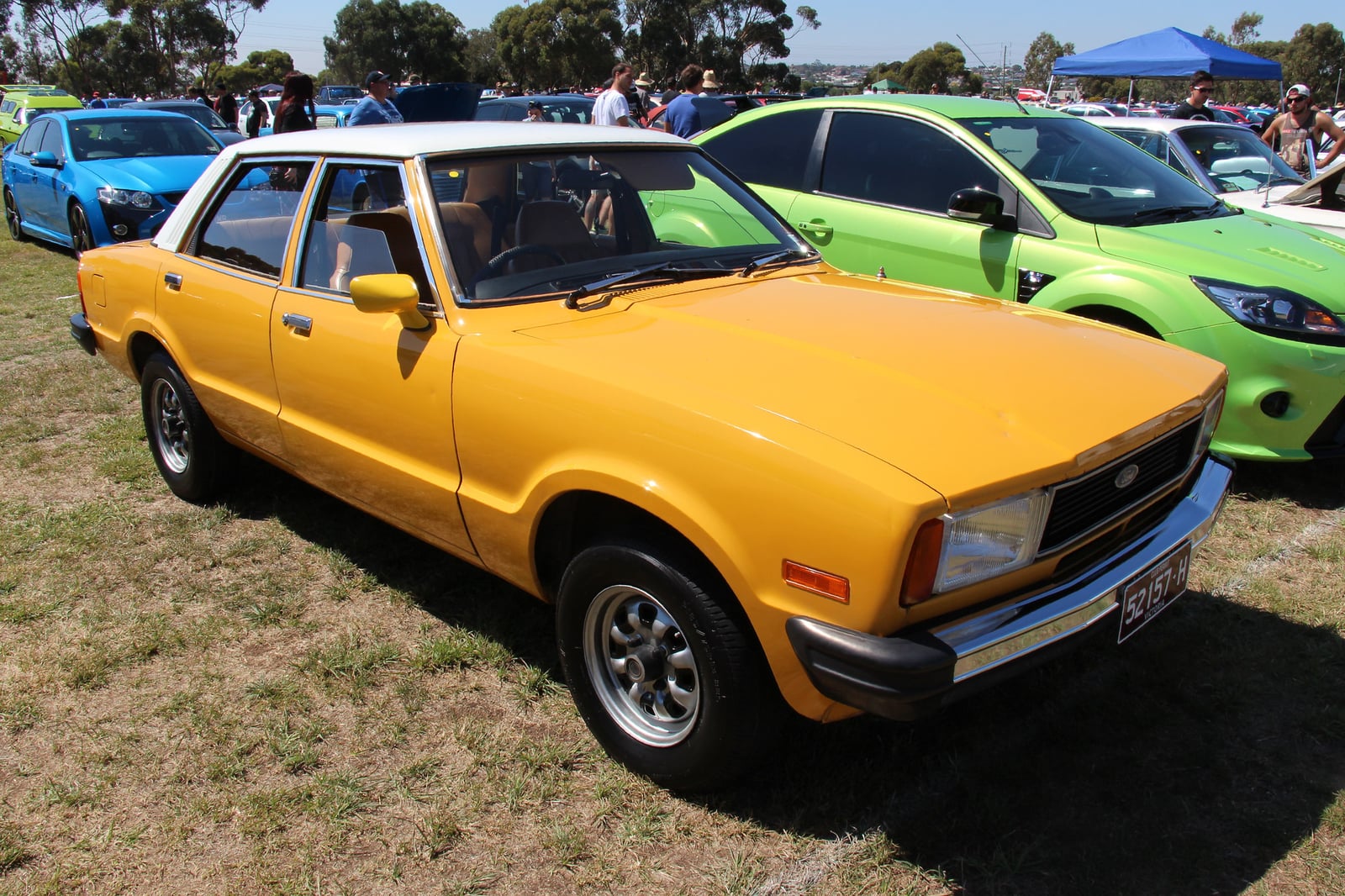
The Cortina was the heart of it. Across five generations from 1962 to 1982 it defined the British family saloon and the company-car fleet, and it was Britain’s best-selling car for most of the 1970s, the Escort pipping it only in 1976. The later cars carried that lead to the very end. The squared-off Cortina Mk4 of 1976 and the facelifted Cortina Mk5, which Ford sold as the Cortina 80, kept Ford at the top of the charts until the radical Sierra replaced the whole rear-drive idea in 1982.
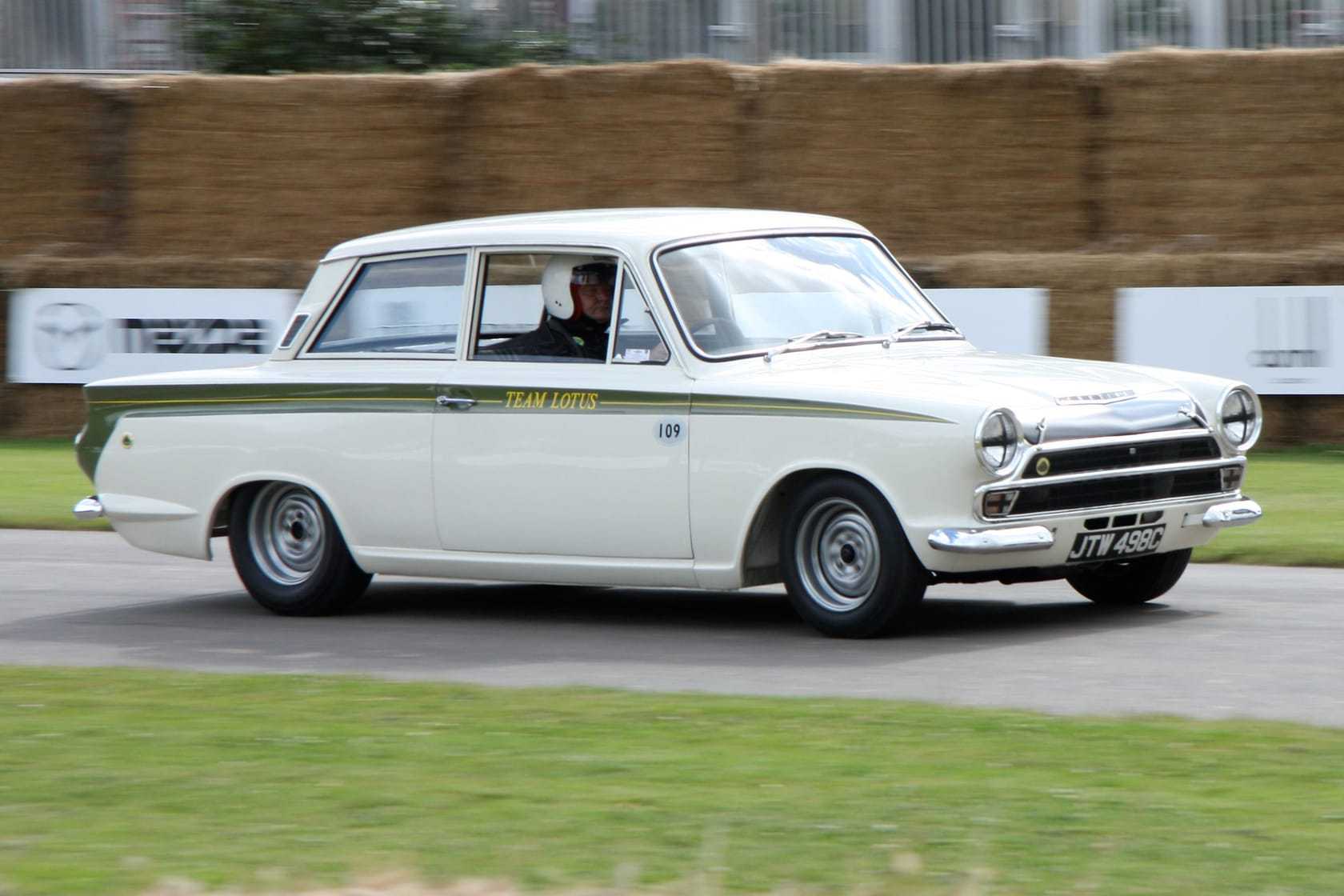
The Cortina is also where the Anglo-German convergence shows most clearly. From the Mk4 the British Cortina and the German Taunus became essentially the same car under different badges, sharing their floorpan and most major panels. The earlier cars, the Mk1 to Mk3, and especially the Lotus Cortina, are the ones the enthusiast market chases hardest, but the late saloons are the ones that left the deepest mark on how Britain drove.

The Capri
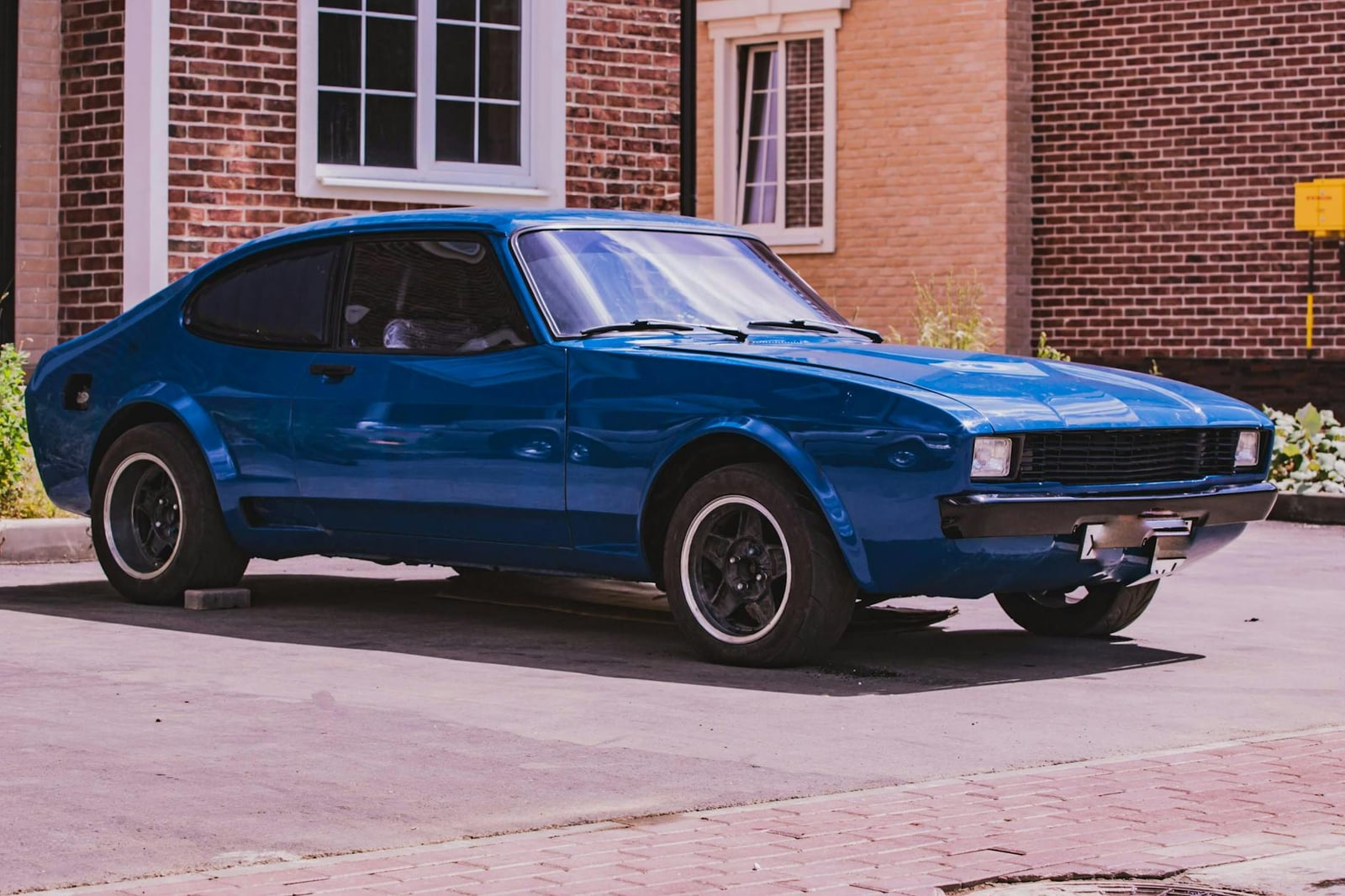
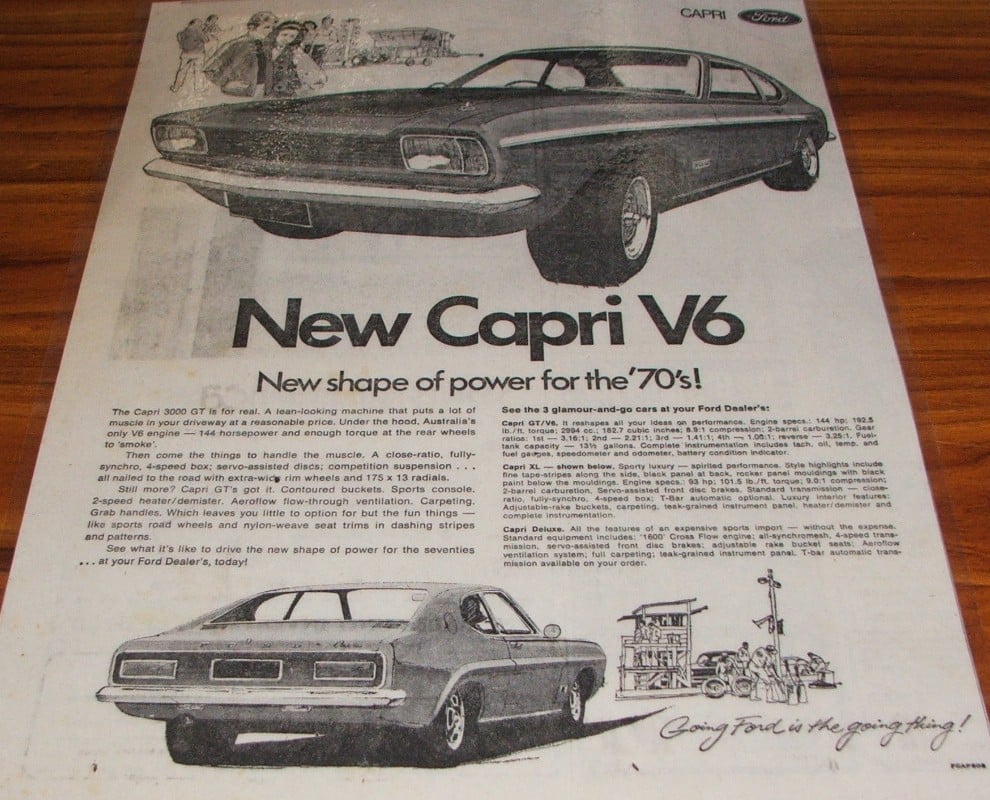
No British Ford is more loved than the Capri. Launched in 1969 as Europe’s answer to the Mustang, it took the Cortina’s running gear and wrapped it in a long-bonnet fastback coupe, then sold it with everything from economy fours to snarling Essex and Cologne V6s. Pitched as “the car you always promised yourself”, it put sporting looks on an ordinary budget and real pace within reach further up the range. The V6 cars, and above all the Mk3 2.8 Injection, are the ones enthusiasts chase now, though any Capri carries the same everyman appeal that sold nearly two million.
The Escort, from rally weapon to repmobile
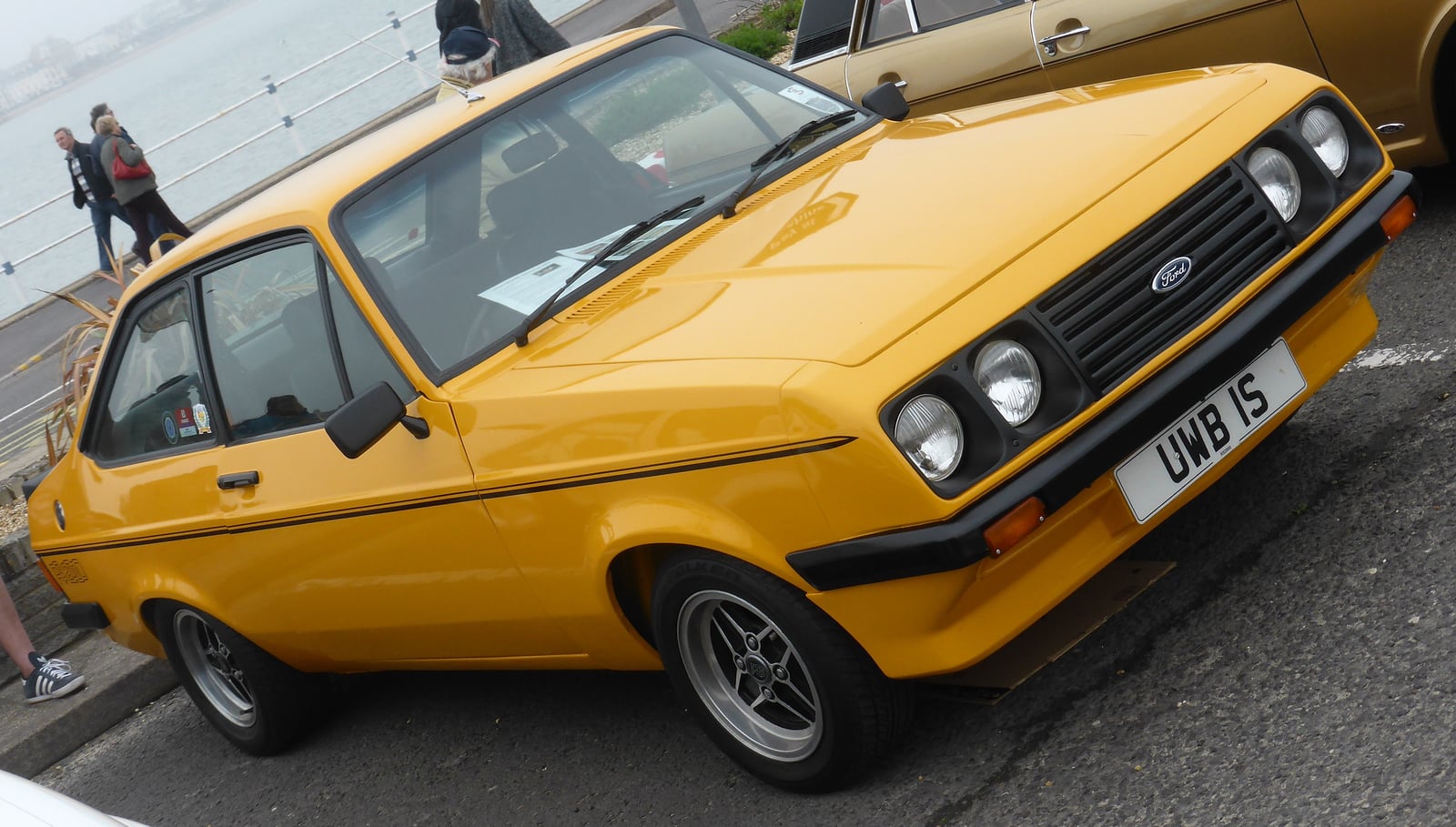
If the Cortina sold the volume, the Escort won the trophies. The rear-drive Escorts of the 1970s, and the Escort Mk2 in particular, gave Ford a rally programme that took the 1979 World Rally Championship and turned the RS and Mexico badges into something close to folklore. The same car, in 1.1-litre form, did the school run for hundreds of thousands of families who never gave a thought to a special stage.
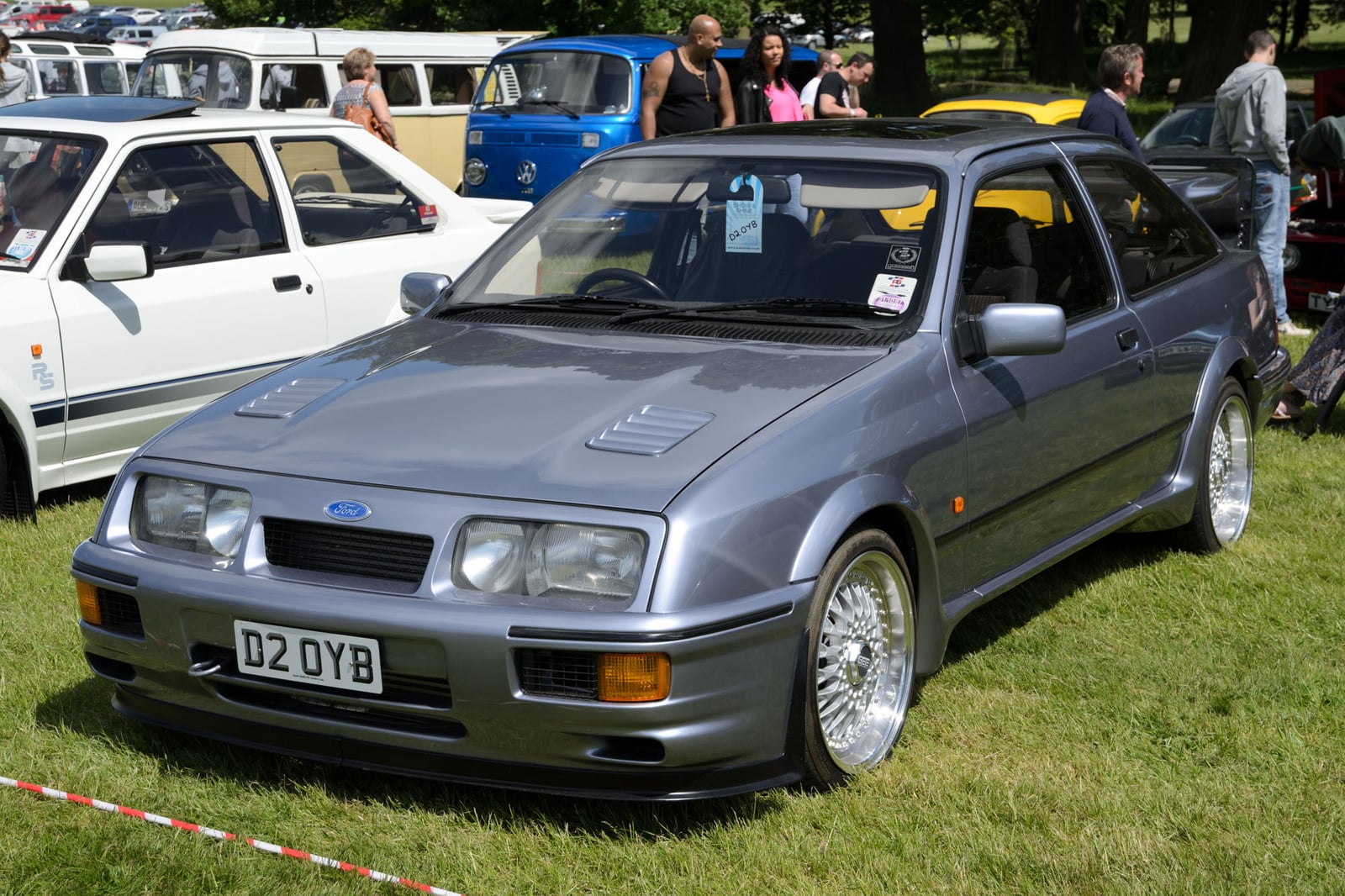
The front-drive Escorts that followed were built for a different and more ordinary job. The Escort Mk5 of 1990 launched to some of the harshest reviews Ford had ever received, and was rescued at the top of the range by the rally-homologation Escort RS Cosworth, a car that has nothing under its skin in common with the family hatchback it resembles.

The Granada and the executive Ford
At the top of the British Ford range sat the Granada, the executive saloon that put Ford against Rover and the German marques. Britain knew it as the Granada; most of Europe knew the same car as the Scorpio. The aerodynamic Granada Mk3 of 1985 was the most advanced of them, a hatchback-bodied executive car that won the European Car of the Year title for 1986 and made anti-lock brakes standard across its range before its German rivals did. It was designed and built by Ford in Cologne rather than at Dagenham, a reminder that by the 1980s the British Ford was a European Ford with a British name.

Performance Fords
The fast Fords are a story of their own, and the reason so much of the classic Ford market runs hot. It begins with the Lotus Cortina and Jim Clark in the mid-1960s, runs through the rally Escorts, the RS1600, RS1800, Mexico and RS2000, and arrives at the turbocharged, four-wheel-drive Cosworth era: the Sierra RS Cosworth and RS500, the Sapphire, and the Escort RS Cosworth, before closing with the V6 Mondeo ST220 of the 2000s and the three generations of Focus RS that carried the badge to 2018. These are the cars that carry the competition heritage, and the prices that go with it.

Buying and owning a classic Ford
Classic Fords are among the most approachable cars to own, which is much of their appeal. Specialist knowledge runs deep, the mechanicals are simple and shared across models, and a great deal of what you need to know overlaps with the general business of running any old car. The catch is always rust, and the real question on any survivor is how honest the bodywork is beneath the underseal. Most of these cars are now old enough to qualify for historic vehicle status, with the road-tax and MOT exemptions that brings, which makes the ordinary ones genuinely cheap to keep even as the rare ones climb out of reach.
More photos