From safety bicycles to Solihull
Rover is older than the motor car and helped invent the bicycle: John Kemp Starley’s Rover safety cycle of 1885 set the pattern the world still rides, and the company’s Viking-ship badge carried that roving name onto motorcycles by 1902 and cars by 1904. The first great saloons made Rover the choice of the professional classes between the wars, and after 1945 the company settled into its bombed-out shadow factory at Solihull, where two very different legends began: the dignified saloons covered here, and the Land Rover, the 1948 stop-gap that conquered the world.


Auntie and the state car
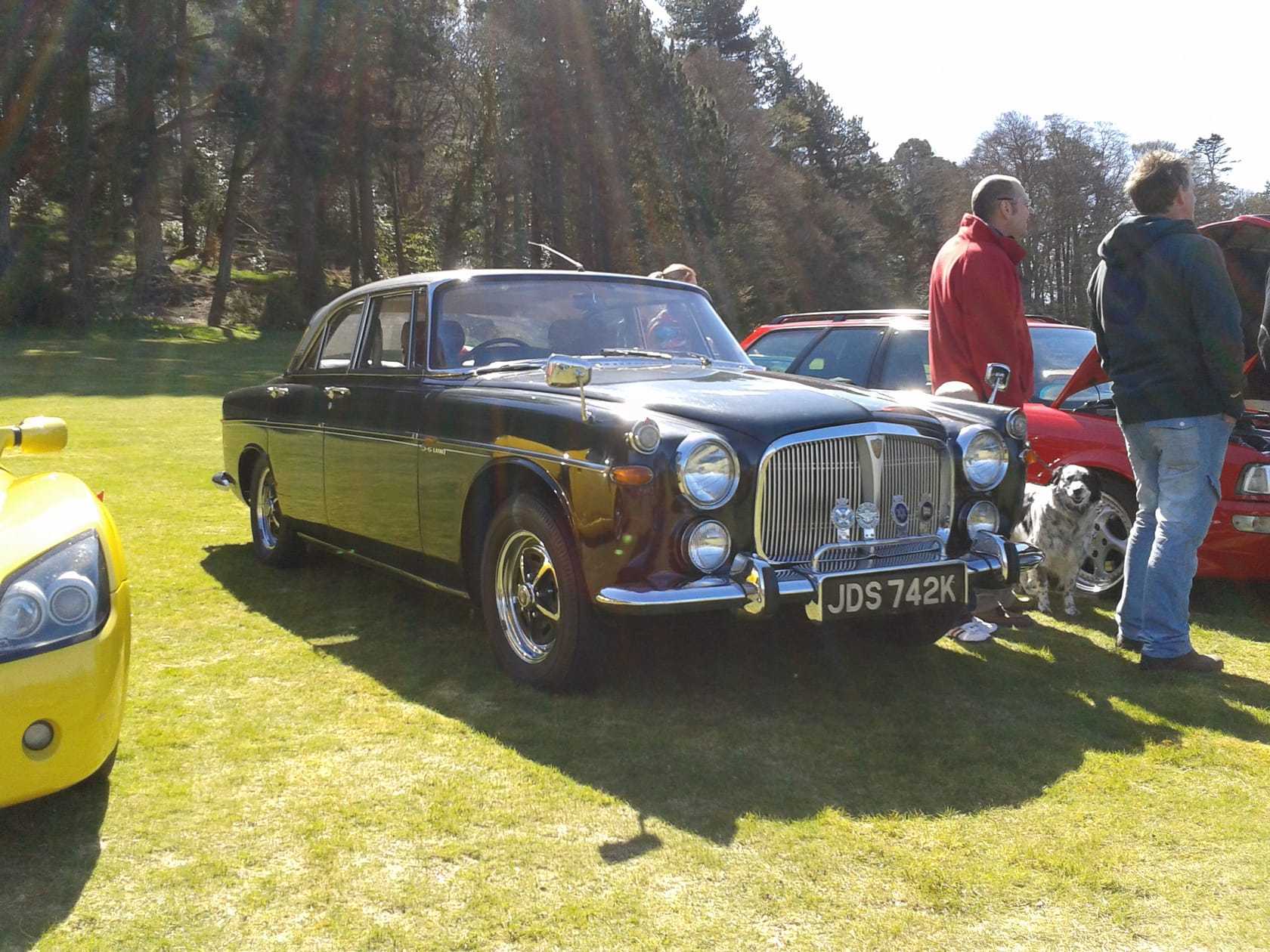
The P4 of 1949 earned the nickname “Auntie” for its upright decency, and its 75, 90 and 100-badged generations became the default transport of bank managers, doctors and the quietly comfortable for fourteen years; our P4 guide tells that story. Above it from 1958 sat the P5, the big 3-Litre and then the V8-engined P5B, which became the British state car outright: Harold Wilson, Edward Heath, Margaret Thatcher and the Queen all used P5Bs, and Downing Street kept them running years after production ended. The P5 guide covers the saloons, the lovely lowered coupes and the state fleet.
The P6 revolution
In 1963 the quiet engineers went radical. The P6 2000 wrapped a skeleton base-unit structure in bolt-on panels, added de Dion rear suspension and disc brakes all round, and drove like nothing in its class; the judges of the newly created European Car of the Year made it the award’s first winner, a verdict recorded by the official ECOTY body. The Buick-derived aluminium V8 arrived in 1968 to create the 3500, giving the advanced saloon the pace its chassis begged for and beginning the engine’s long reign at the heart of British performance motoring.

SD1: the last great Rover
The SD1 of 1976 replaced both the P6 and Triumph’s big saloons with one audacious shape: a Ferrari-flavoured five-door fastback drawn by David Bache, V8 up front, and a second European Car of the Year title in the cabinet. Motorway police forces made it their icon, Tom Walkinshaw’s racers made it a touring-car winner, and Solihull’s build quality made it a cautionary tale, the SD1 page tells both halves honestly. When SD1 production ended in 1986, the marque’s engineering identity passed into the Honda-partnership era, whose first car, the Rover 800, is now old enough to have crossed into classic territory itself.

The Rover that Leyland swallowed
Rover entered British Leyland in 1968 as its jewel and spent the 1970s fighting for air alongside Jaguar and Triumph; the badge survived the wreck better than most, eventually naming the whole surviving group. The classic era’s other adventures deserve their footnotes: the gas-turbine cars that ran Le Mans in the early 1960s, the experimental safety cars, and the engineering bench that kept producing firsts long after the money ran out. It is a marque remembered for dignity that was, underneath, one of Britain’s most adventurous.
Owning a classic Rover today
Classic Rover ownership is gentler than the cars’ stature suggests. The V8 is one of the cheapest great engines to run, with parts shared across decades of production; P4 and P5 mechanicals are sturdy and club-supported; and values remain modest for the size and history on offer, with only the best P5B coupes commanding serious money; all but the very last SD1s now sit in the historic vehicle tax class as well. The enemies are rust, which attacks all of them structurally, and neglected wood and leather, which cost more than mechanical work to put right. Each model page carries the detailed checks, and the marque’s clubs are as devoted now as its old customers were then.