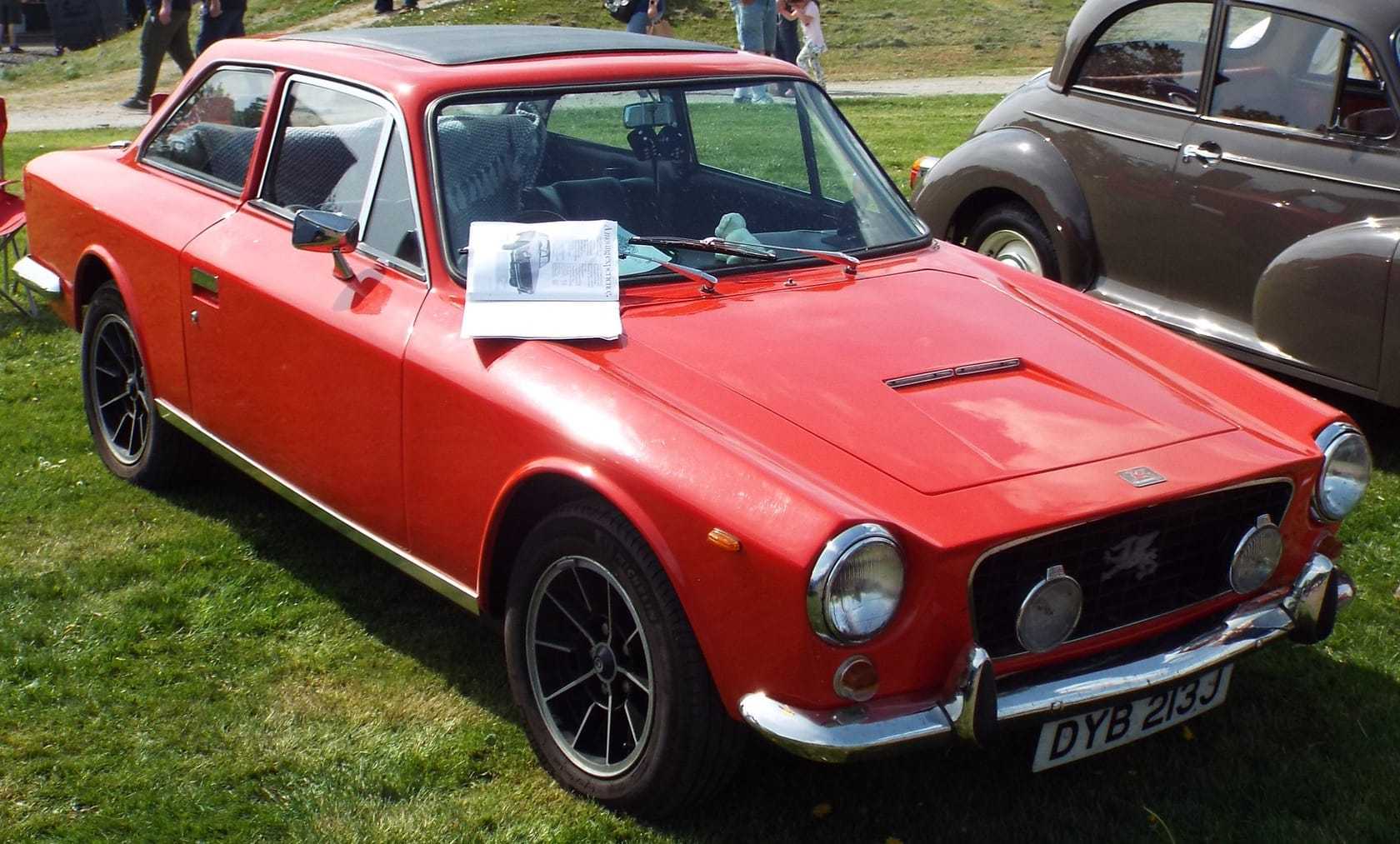
Why Britain built so many kit cars
The whole industry rests on a quirk of the old purchase-tax system. A finished car attracted purchase tax; a car supplied as a set of components did not. So a small manufacturer could sell you almost the entire car, the body, the chassis, the trim, as a “kit”, leave you to bolt in the running gear from a donor, and undercut a factory-built rival by a third or more. The rule was strict enough that makers were careful not to supply assembly instructions in the box, since that would have made it a car rather than components, so the kit-car magazines of the day filled the gap by publishing build guides separately.
Two things turned that loophole into a flood. One was the Lotus Seven, the spare, light, build-it-yourself sports car that became the template every Seven-style kit has chased ever since. The other was the supply of cheap, mechanically simple donor cars: the Mini and its subframes, the rear-engined Hillman Imp, and above all the rust-prone but plentiful Ford Escort and Cortina, whose running gear could be lifted out of an MOT-failure for very little money.
The party ended in 1973, when VAT replaced purchase tax and was applied to component cars too. The tax advantage that had sustained the component-car makers vanished almost overnight, and a string of them, the makers of the most interesting period cars, closed within a year or two. The home-build kit trade survived because its appeal was never only the tax: it was the low price and the satisfaction of building a kit car with your own hands. That trade carried on into the era of the Single Vehicle Approval test and its successor, the Individual Vehicle Approval test, which is how a newly built kit car is signed off as road-legal today.

The makers worth knowing
The most collectable British kit cars are the component-car GTs, the makers who sold a near-complete car as a kit to dodge the tax. Gilbern is the one every enthusiast names first, the only series-production car ever wholly built in Wales, a glass-fibre GT that grew from a Pontypridd butcher’s loft into a genuine grand tourer. The Ginetta G15 and the Clan Crusader came at the idea from the other end: both were tiny, light, rear-engined coupes built around the all-alloy Hillman Imp engine, and both were killed by the 1973 tax change just as they were finding their feet. The bigger Marcos GTs and the pioneering Rochdale Olympic belong in the same company and will join this guide as it grows.
The Mini-based specials are a category of their own. The Mini Marcos is the famous one: a half-tonne glass-fibre coupe on Mini subframes that became the only British car to finish the 1966 Le Mans 24 Hours. Around it sat a cottage industry of Mini-powered fibreglass cars, the Mini Jem, the Midas, the mid-engined GTM and Unipower, all chasing the same trick of turning humble Mini mechanicals into something quick and individual.
Then there are the home-build kits, where the volume really was. No one made more than Dutton, the Sussex firm reckoned to be the most prolific kit-car maker in the world, which sold cheap glass-fibre sports cars and estates on Triumph and then Ford Escort running gear, and once beat Ford in court for the right to keep calling one of its cars the Sierra. Robin Hood took the same idea to its cheapest conclusion in the 1980s and 1990s, selling Lotus-Seven-style cars built around a single scrap Ford donor, its lineage continuing today as the maker of the GBS Zero. Beyond them are dozens more, the VW-based Nova with its lift-up canopy, the Imp-based Davrian, the Ford-based Falcon, each a small chapter in the same story. The tradition continues in current hands too: Westfield kit cars carried the Seven formula from the 1980s until the firm’s 2022 collapse and revival, and Hawk kit cars build some of the most respected replica bodies in the trade.

The Cobra question
No account of British kit cars can skip the biggest genre of all: the AC Cobra replica. The sixties original is a million-pound rarity, so for five decades a whole industry of specialist makers has offered Cobra kit cars and component cars, from budget ladder-frame kits to hand-built recreations good enough to fool a concours crowd, and more replica Cobras now exist than AC ever built genuine cars. They occupy their own honest tier of the market: valued on the quality of the build and the running gear rather than the badge, welcomed at most events, and registered under the same Q-plate and IVA rules as any other kit build. For buyers, the rule is simple: buy the builder and the paperwork, not the silhouette.
Building one, and the law
The thing that catches buyers out is not the car, it is the paperwork. A kit car’s value and usability depend heavily on how it is registered. The DVLA judges a built-up car on a points system that rewards an original, unmodified chassis and running gear taken from a single donor; score well and the car can keep a registration matching the donor’s age, which is what you want. Fall short, or build on a modified or second-hand chassis, and the car is given a Q-plate, which records the age as unknown and tends to dent both value and insurance options. A newly completed car also has to pass the Individual Vehicle Approval test before it can be registered at all. For the registration plate side of all this, see our entries on the Q-plate and the age-related plate.

Why they are collected now
Kit cars were cheap, built at home, used hard and almost never cherished, which is exactly why good ones are valued now. The genuine period cars qualify as historic vehicles like any other forty-year-old classic, with the tax and MOT exemption that brings, and they have an appeal nothing mainstream can match: a Gilbern or a Ginetta is a car most people at a show will never have seen, built by a handful of people in a small workshop, and survivors are scarce enough to be interesting. They are also a genuinely affordable way in. The component-car GTs sit in the low five figures, the home-build kits often in the hundreds to low thousands, and the running gear underneath is usually cheap, simple Mini, Imp, Triumph or Ford mechanicals that any home mechanic can keep going.
These cars belong to the same decades that produced the rest of Britain’s classic cars: the component-car GTs to the 1960s and early 1970s, the home-build kits to the 1980s and after.

More photos


