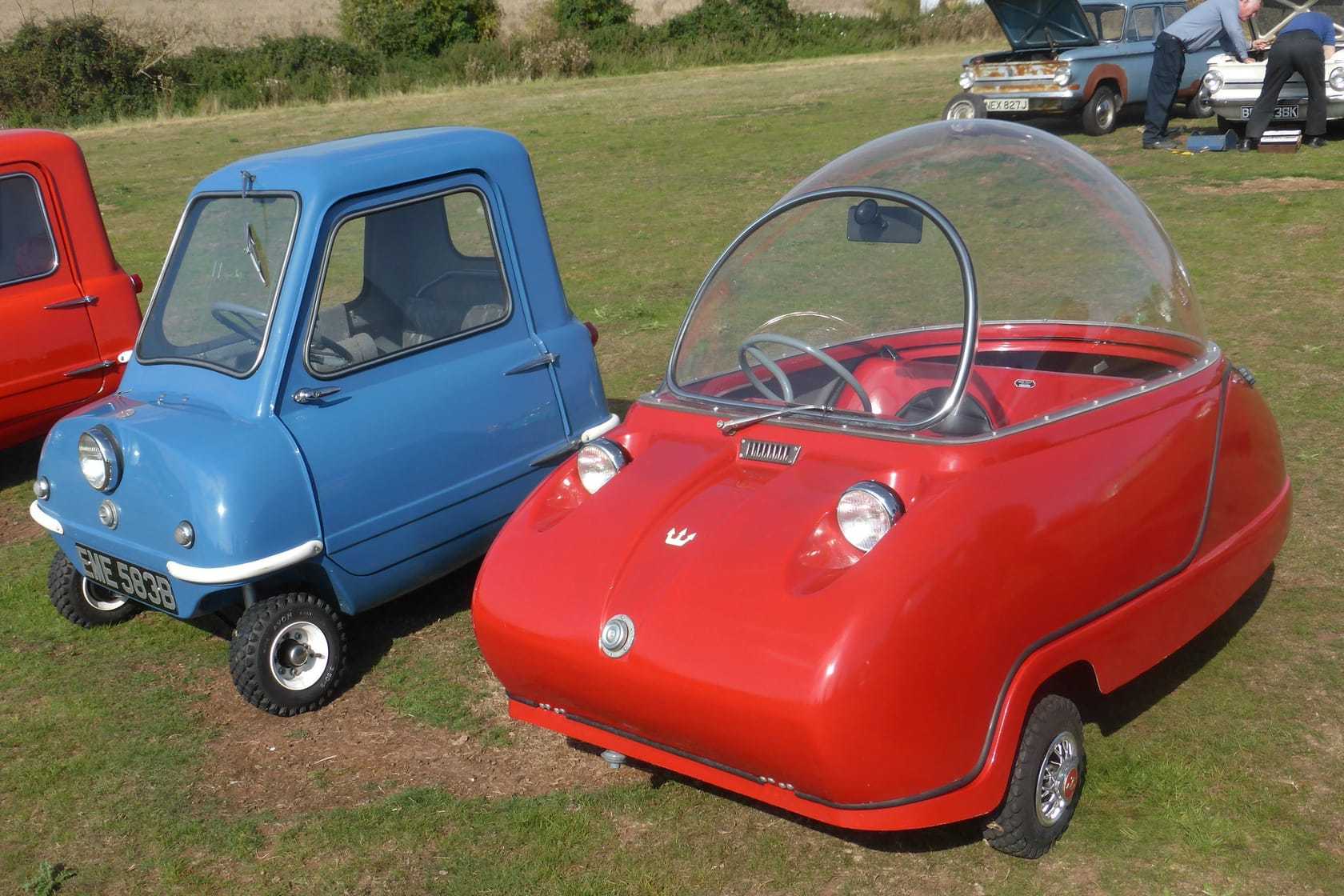
Why Britain built so many small cars
Two forces created the British microcar. The first was money. The years after the Second World War were lean, petrol was rationed into the 1950s, and the Suez crisis of 1956 brought fuel shortages that sent buyers looking for anything cheap to run. A car with a motorcycle-sized engine that returned enormous fuel economy made sense in a way it never quite has since.
The second force was the law. British tax and licensing rules treated a three-wheeler weighing under a certain figure as a tricycle rather than a car, which meant it could be driven on a motorcycle licence and taxed at a lower rate. That single quirk created a whole class of British vehicle. It is why Reliant built three-wheeled saloons for decades, why the Bond Bug had three wheels rather than four, and why so many small British firms saw a three-wheeler as a way into the car market without competing head-on with the giants.
The result, through the late 1950s and into the 1970s, was a stream of small, odd, and often brilliant little vehicles, some imported, many home-grown, built by firms whose names mostly did not survive: Peel, Bond, Berkeley, Scootacar, Frisky, and others.

The cars worth knowing
The Peel P50 is the one everybody has now seen, usually on television being driven down an office corridor. Built on the Isle of Man in the early 1960s, it is a single-seat, three-wheeled car barely over four feet long, with a 49cc engine and no reverse gear, because the driver simply picks the back up by a handle and turns it round. It holds the Guinness record as the smallest production car ever made, and originals now change hands for sums that would once have bought a house.
The Bond Bug is the other end of the British three-wheeler story: not austerity transport but a deliberate piece of fun. Reliant launched it in 1970, styled by Tom Karen of Ogle Design as a wedge- shaped two-seater in bright tangerine orange, aimed at young buyers who wanted something that looked like nothing else on the road. It failed commercially, was dropped after four years, and is now a beloved cult classic whose shape is often said to have inspired the Star Wars landspeeder.

Why the survivors matter
Microcars and three-wheelers were treated as disposable when new, which is exactly why the survivors are valued now. They were cheap, they were small, and most were scrapped without ceremony, so a clean original is genuinely rare. They are also pure period documents: a Peel P50 explains the fuel-shortage economics of its moment, and a Bond Bug explains the brief early-1970s optimism that produced it.
For collectors they have practical appeal too. They are tiny, so they store in a corner of a normal garage. They are simple, so they are easy to maintain. And they have personality out of all proportion to their size, which is why one of these will draw a bigger crowd at a show than a far more valuable saloon parked next to it.
For the wider periods these cars belong to, see British classic cars of the 1960s and British classic cars of the 1970s, part of the decade-by-decade guide.


