From a farm in Anglesey to Solihull
The Land Rover was the idea of Maurice Wilks, chief designer at the Rover Company, and his brother Spencer, Rover’s managing director. Maurice ran a war-surplus Jeep on his farm in Anglesey and wanted a British equivalent, a go-anywhere light vehicle with a power take-off for farm work. The first prototype, nicknamed the Centre Steer, was built on a Jeep chassis, and the production car was launched on 30 April 1948 at the Amsterdam Motor Show.
It was very much a product of austerity Britain. Rover’s Coventry works had been bombed in the war, so the company had moved to a vast shadow factory at Solihull, built to make aircraft engines. Steel was rationed, and Rover’s allocation was tiny, so the body was hand-formed from Birmabright, a corrosion-resistant aluminium-magnesium alloy left cheap and plentiful by the wind-down of wartime aircraft production. The earliest cars even wore surplus aircraft-cockpit green paint. The aluminium body was the trigger of necessity, but it brought lasting advantages: it did not rust, and it could be hand-formed on simple jigs without costly press tooling. Conceived as a low-investment export earner to keep the factory busy, the Land Rover quietly outlived the saloons it was meant to support, and Solihull has built Land Rovers ever since.

Land Rover at auction
What a classic Land Rover sells for at auction
- Median sale, 2025
- £19,057 Down from £21,761 in 2021
- Sales in 2025
- 1,227 The most we have recorded in a year
- Sold when offered
- 74.4% Of the cars put up for auction since 1997
- The record
- £400k Defender 90, Bonhams, December 2015
The cars worth knowing
The classic Land Rover comes in three families.
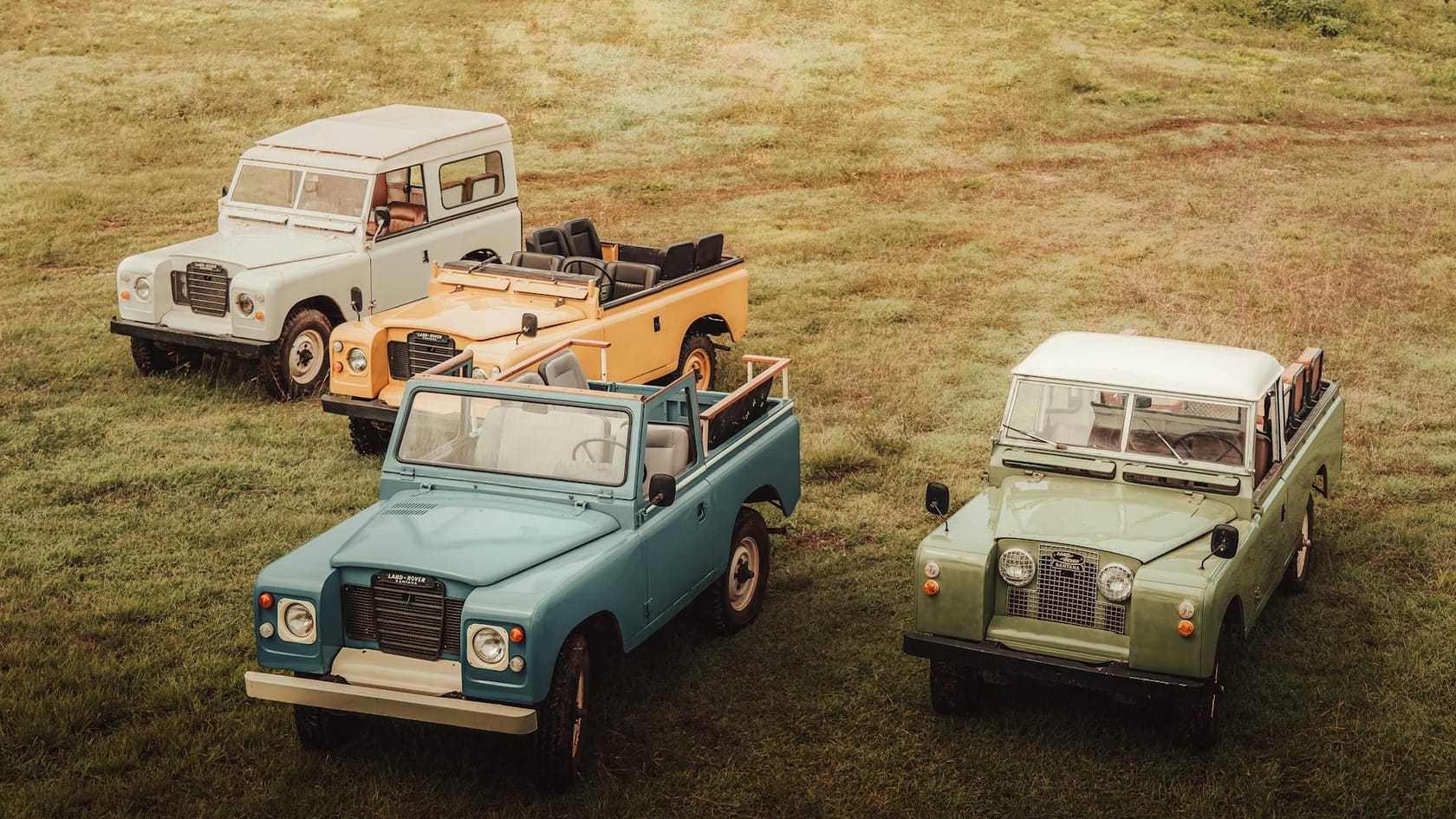
The original utility line ran through three Series. The Series I (1948–1958) was the spartan, aluminium original. The Series II and IIA (1958–1971) brought the enduring 2.25 engine and a subtle restyle, and the IIA is widely held to be the toughest of all. The Series III (1971–1985) was the most numerous, recognised by its plastic grille and full synchromesh gearbox.
In 1983 the leaf springs finally gave way to coils with the One Ten, renamed the Defender in 1990, the shape that for most of the world simply is a Land Rover, and which stayed in production until 2016.
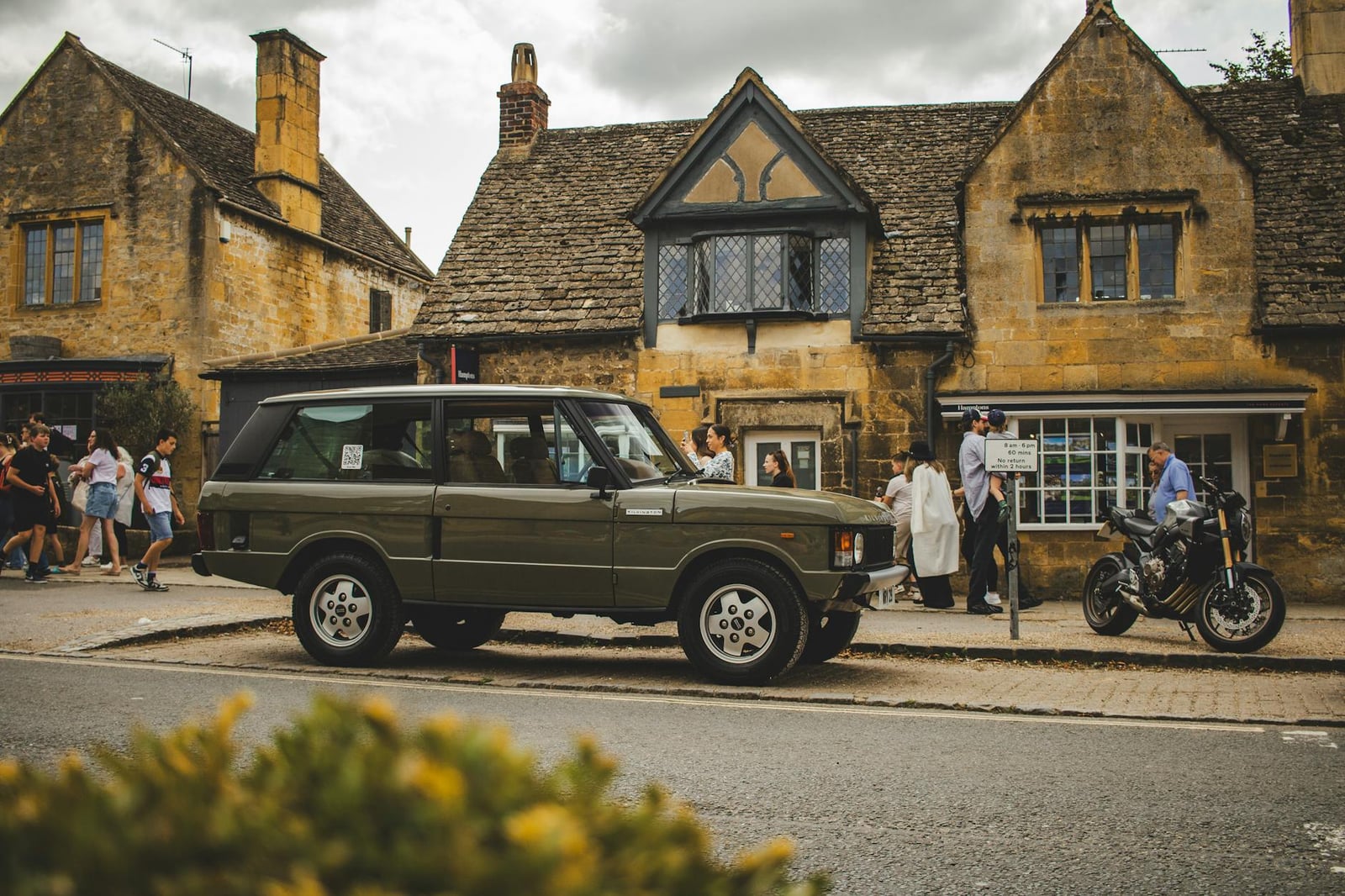
Alongside the working cars, from 1970, came the Range Rover, now called the Range Rover Classic. It was not the luxury car it would later become, but a more comfortable, road-capable companion to the utility Land Rover, and it introduced the coil-spring suspension the Defender would inherit.
A fourth name completed the classic-era family in 1989: the original Land Rover Discovery took the Range Rover’s underpinnings, added a taller, Conran-designed interior and a family price, and became the company’s best seller almost overnight. The first-generation cars ran to 1998 and have crossed into classic territory themselves, the last of the marque’s coil-sprung originals to do so. The Freelander of 1997, Solihull’s first monocoque and for five years Europe’s best-selling four-wheel drive, is the next in line. For the practical side of all of them, see our guide to Land Rover parts, restoration and running costs.

Who owned Land Rover
Land Rover’s owners changed many times, while the cars carried on. Rover was independent until 1967, when it joined Leyland; the giant British Leyland was formed in 1968. Land Rover became a separate subsidiary in 1978. The Rover Group was sold to British Aerospace in 1988, then to BMW in 1994, and Land Rover passed to Ford in 2000. Since 2008 it has been part of Jaguar Land Rover, owned by Tata Motors of India. Through every change of badge in the boardroom, Solihull kept building much the same honest vehicle.

Why they are collected now
Classic Land Rovers are collected above all because they are so usable and so fixable. The body-on-frame construction, the bolt-together aluminium panels, the deepest parts supply of almost any classic and one of the largest owners’ communities anywhere mean that a competent enthusiast can keep one going more or less forever. The great enemy is corrosion in the steel chassis and bulkhead hidden beneath the aluminium skin, which is why a sound or galvanised chassis matters so much, as our parts and restoration guide explains.
Land Rover history is also unusually rich for a working vehicle: the farm machine that earned export dollars for a broke country, the workhorse of armies and expeditions, the Camel Trophy and the royal estates. The military Land Rover story is its own collecting field, from the air-portable Lightweight to the ex-MOD 109-inch workhorses now sold into civilian hands, while County trim marked the plusher station wagons, Santana built Land Rovers under licence in Spain, and converted ambulances and fire tenders keep turning up in barns. The Rover V8 that powered the Range Rover and later utility models gives the classic landrover world (one word, as half the classifieds spell it) its lazy, unmistakable soundtrack. The cars span the whole classic era, from the 1940s to the 1990s, and qualify as historic vehicles once they pass forty, with the tax and MOT exemption that brings, which now covers all the Series cars and the earliest Defenders.

More photos