From a backyard in Tamworth
Reliant began in 1935 when Tom Williams, lately of the Raleigh cycle company, built a three-wheeled delivery van in his back garden and set up shop in Tamworth, Staffordshire, to make more. The formula was set from the first day: three wheels, light weight and low cost, sold to people who needed transport rather than status. After the war that meant motorcyclists with families, because a light three-wheeler could be taxed and, for many years, driven on a motorcycle licence, and Reliant owned that corner of British motoring almost outright.
The company that grew from it was far more capable than its image. Reliant became an early master of glassfibre bodywork, built its own all-aluminium engine in 1962, among the first mass-produced alloy engines in Britain, and by the 1970s was, at times, the biggest wholly British-owned carmaker after British Leyland. It engineered complete cars for Turkey, Greece and India on the side.

Reliant at auction
What a classic Reliant sells for at auction
- Median sale, 2025
- £3,972 Up from £1,988 in 2021
- Sales in 2025
- 50 The most we have recorded in a year
- Sold when offered
- 77.2% Of the cars put up for auction since 2004
- The record
- £41,625 Regal, Silverstone Auctions, November 2017
The three-wheelers: Regal and Robin
The Regal of 1953 to 1973 is the founding line: a glassfibre-bodied family three-wheeler and, in Supervan form, the tradesman’s friend, one of which became the most famous van in Britain in the hands of the Trotters of Peckham. The Robin of 1973 modernised the idea with crisp Ogle styling and carried it, through the Rialto years and endless television mockery, all the way to the early 2000s. Between them they made Reliant the most successful three-wheeler maker Britain ever had, and their story connects sideways to the Bond Bug, the orange wedge Reliant built after buying its only real rival, and to the wider world of British microcars and three-wheelers.

The sports cars: Scimitar and SS1
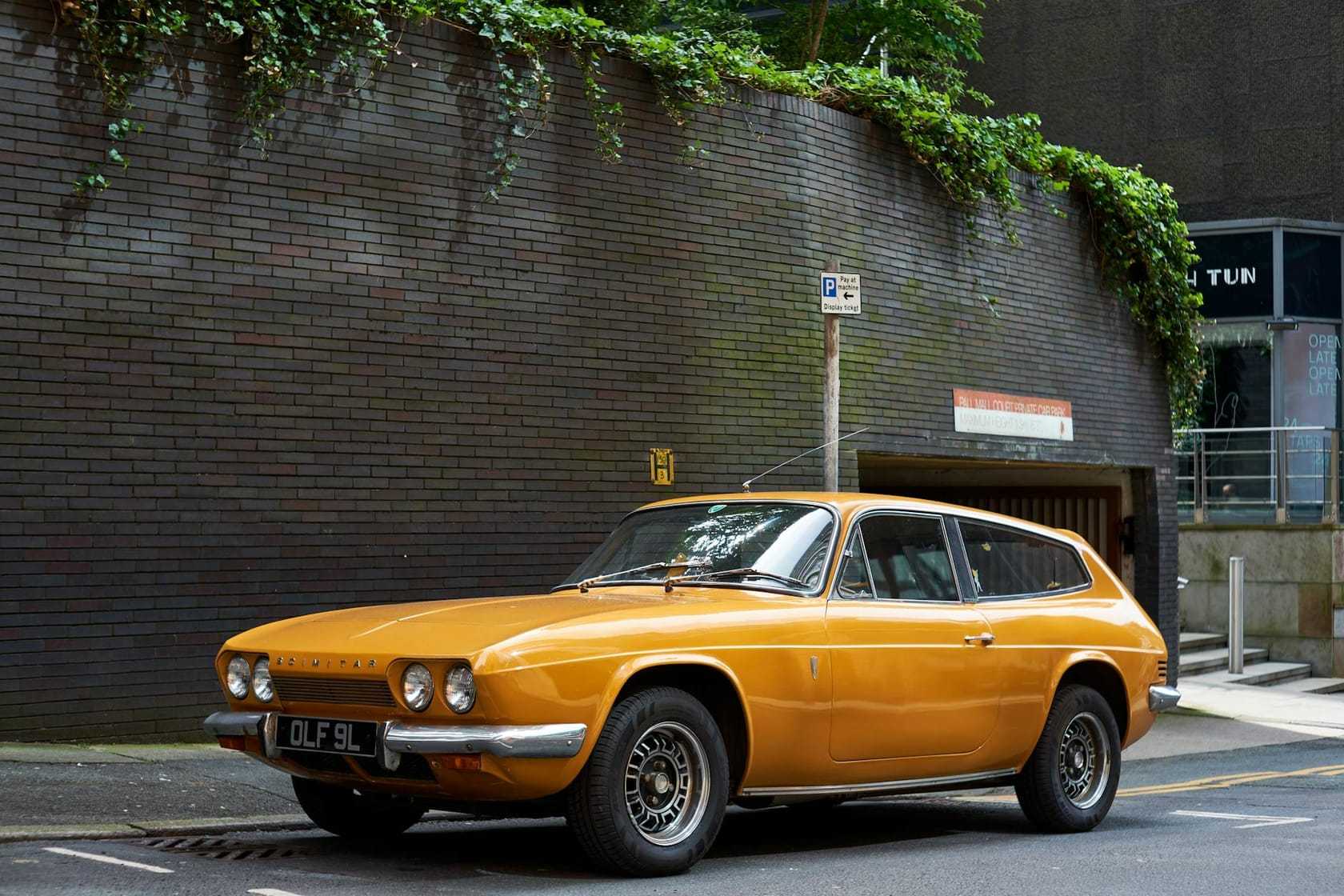
The other Reliant wore its glassfibre differently. The Scimitar began as a handsome Ford-powered coupe in 1964, and in 1968 the GTE version invented a class: the sporting estate, fast, practical and glamorous enough that Princess Anne owned a string of them. It ran to 1986 and was briefly revived by Middlebridge afterwards. The SS1 of 1984, styled by Michelotti, was an affordable back-to-basics roadster whose Nissan-turbocharged version embarrassed far more expensive machinery. Neither gets the respect its ability earned, which keeps prices honest.

The four-wheeled underdogs: Rebel and Fox
Reliant’s small four-wheelers are the marque’s best-kept secrets. The Rebel of 1964 was a tough little glassfibre saloon and estate powered by the company’s own alloy engine; its successor the Kitten did the same job in the 1970s, and the Fox of 1983 turned the idea into a canvas-backed utility that out-thought the early leisure pickups. All were built in small numbers, which makes them rare sights and cheap curiosities today.

Buying and owning a classic Reliant
Reliant ownership starts with a pleasant surprise: the glassfibre bodies do not rust. The checks move underneath instead, to the separate steel chassis, which corrodes exactly where mud collects, and to the condition of the gel coat, since tired glassfibre needs skilled rather than expensive repair. The mechanicals are simple and well supported, the three-wheelers by a devoted club scene and the sports cars by Ford parts availability, and running costs are among the lowest in the classic world. The three-wheelers bring their own quirks, a careful driving style above all, and every Reliant here is old enough for historic vehicle status. The general questions, storage, insurance and the rest, are the ordinary kind.