Reliant Fox: the glassfibre farmhand that came home from Greece (1983–1990)
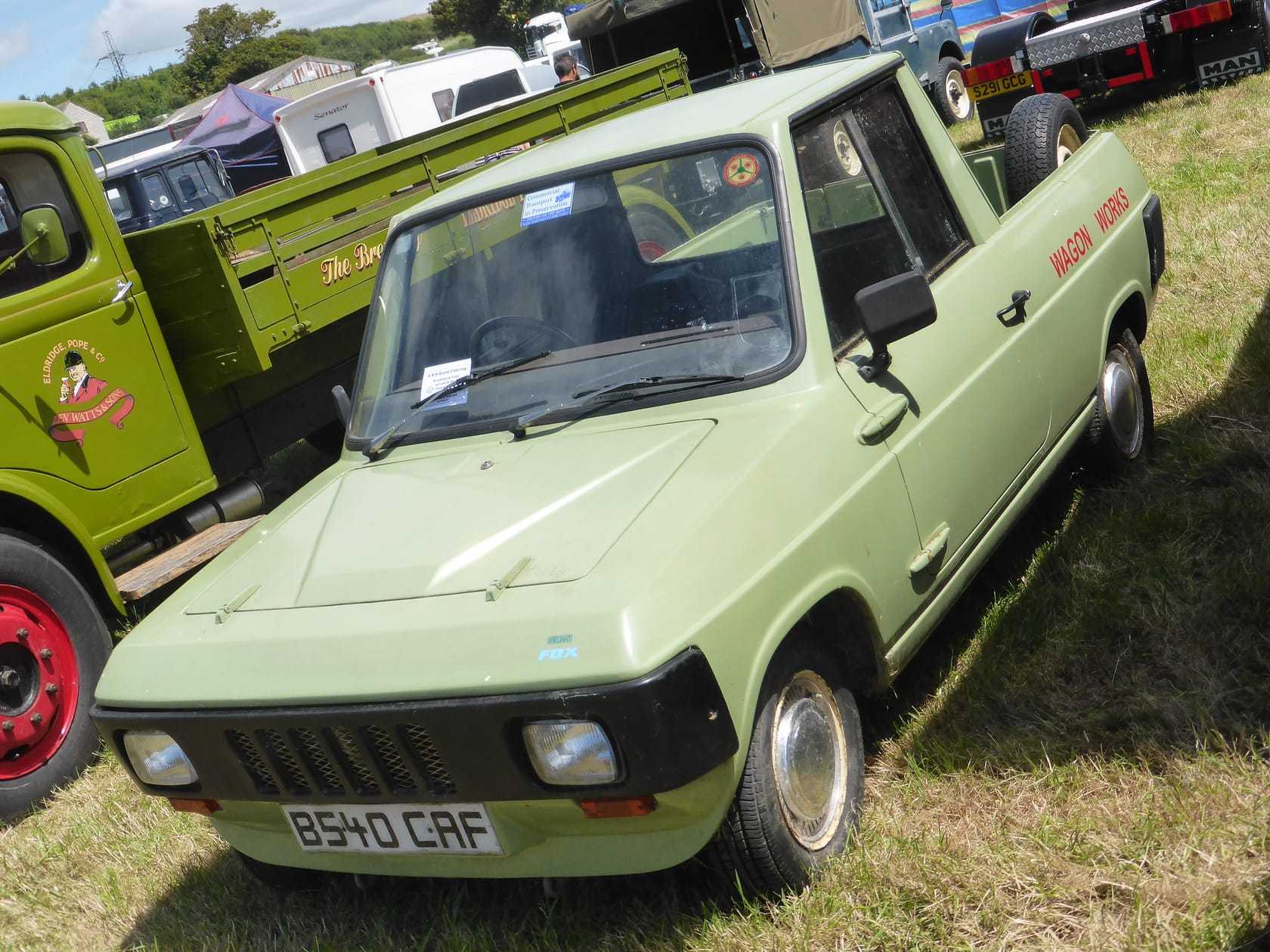
The Reliant Fox was a tiny glassfibre-bodied utility with a canvas back, developed for the Greek market and then built at Tamworth for Britain's smallholders and seaside councils. A guide to where the Fox came from, what it shares with the Kitten, why so few were built, what to check, and what this rare curiosity costs today.
Built 1979–1990 2 recorded sales
At a glance
- Years
- 1983–1990 (UK production); Greek assembly from 1979
- Body styles
- Two-seat utility pickup with canvas or hard rear tops
- Drivetrain
- Front engine, rear-wheel drive
- Engines
- Reliant all-aluminium 848cc four
- Power
- Around 40 bhp
- Trim levels
- Single model; various rear-body configurations
- Production
- A few thousand at most; UK-built cars in the low thousands
- Assembly
- Tamworth, Staffordshire; earlier MEBEA assembly in Greece
- Designer
- Reliant, on Kitten running gear
- Values
- Usable from around £2,000; good examples £3,500-£6,000
- Origin story
- Designed for Greece's MEBEA before coming home to Tamworth
- Party piece
- Glassfibre body, canvas back, and a use for every farm and beach
The models
Not many British classics owe their existence to a Greek tax break. The Reliant Fox began life in the late 1970s as a design-and-engineering job for MEBEA of Athens, one of several complete vehicles Reliant engineered for other countries, and when the Greek arrangement wound down, Tamworth brought the little utility home and built it from 1983 for Britain’s smallholders, beach patrols and anyone who wanted a farmhand that ran on pennies. Fewer than a few thousand were made, and today the Fox is the rarest kind of classic: one most enthusiasts have simply never seen.
Engineered for Greece, built for Britain
Reliant’s export engineering was a quiet sideline with loud results, Turkey’s Anadol saloon among them, and the Fox followed that pattern: a simple, rugged, light utility suited to rough roads and thin wallets. On MEBEA’s behalf Reliant packaged its 848cc all-aluminium engine and Kitten running gear under a two-seat glassfibre cab with a pickup bed and canvas tilt. When Tamworth took production over in 1983 the Fox gained a home-market brief: cheap council runabout, estate hack, seaside workhorse. Buyers proved scarce, but the ones it found used it exactly as intended, hard. A handful were converted into miniature campers in period, the so-called Tandy conversions, which now rank among the most improbable motorhomes in the classic world.

A Kitten in working clothes
Under the utility body the Fox is the Kitten, Reliant’s small four-wheeler of the 1970s, itself the successor to the Rebel. That means rack-and-pinion steering, a light separate chassis, and the all-alloy 848cc four driving the rear wheels: around 40 bhp, outstanding economy and a mechanical package a home mechanic can service entirely with ordinary tools. The glassfibre bodywork shrugs off the knocks a working vehicle collects, and the canvas back turns the Fox from pickup to covered van in a minute.

Why it stayed rare
The Fox’s problem in period was arithmetic: it cost close to proper small vans that carried more, faster, so it sold in dribbles, a few thousand across seven years at most. Its charm operates now in reverse: nothing else looks like it, the running costs remain motorcycle-cheap, and the survivors’ community, shared with the Kitten and Rebel, treats every one as family. As a first unusual classic, or a working vehicle for a smallholding that enjoys a conversation, the Fox makes a surprisingly rational case.

What a Fox is like to live with
Fox ownership is closer to keeping a friendly farm animal than running a classic car. It starts on the button every time, carries feed sacks, hay, garden waste or a flat-pack wardrobe without complaint, and sips fuel at a rate that makes the tax and insurance feel like the expensive part, which they are not. The unassisted controls are light because there is so little car to move, visibility is total, and the tight turning circle makes gateways and market-day parking trivial. Fifty miles an hour is happy cruising; motorways are possible but purgatorial, and missing the point besides.
The compromises are honest ones. The cab is snug for two, weather sealing is agricultural in spirit, and refinement never troubled the specification sheet. In exchange the Fox will do actual work decades after the pickups it undercut have dissolved, and its rarity means the person walking over at the show has usually never seen one before, which never stops being fun. Spares shopping doubles as social life, since the parts network runs on the same forums and field meets. Owners report the same experience as Robin keepers: universal goodwill, endless questions, and a village-fete celebrity no ordinary classic buys at any price.

Buying a Reliant Fox today
Inspect a Fox like the working vehicle it was. The chassis carries the usual Reliant caveat, rust where mud sat, especially at spring hangers and outriggers, while the glassfibre cab needs only cosmetic honesty. Confirm the Fox-specific pieces are present and sound: the rear tilt and its frame, tailgate fittings, seats and lamps, because these are the parts that cost patience to replace. Mechanically the news is all good, shared Kitten parts and a simple alloy engine that asks only for clean coolant and oil.
The survivors’ register run through the owners’ community tracks known cars, and joining it is the quickest route to parts, history and honest advice before a purchase.
Values are still curiosity-cheap: usable Foxes around £2,000 to £3,500, the best £3,500 to £6,000. For the money you get rarity no volume classic can offer and running costs from another era, and the Fox’s decade is in the cars of the 1980s. Few classics of any price earn their keep so literally, or make so many friends doing it.

More photos


Fox: the short history
- 1979Greek assembly begins under MEBEA, Reliant having packaged the 848cc alloy engine and Kitten running gear under a two-seat glassfibre utility.
- 1983Tamworth takes production home with a new brief: council runabout, estate hack, seaside workhorse.
- 1980sA handful become miniature Tandy campers, now among the most improbable motorhomes in the classic world.
- 1990UK production ends in the low thousands; the survivors' community treats every car as family.
The Fox viewing checklist
The working-vehicle inspection
- Chassis rust where mud sat: spring hangers and outriggers especially
- The glassfibre cab needs only cosmetic honesty
- Judge it as the farm tool it was, not the car it never claimed to be
- Hard-worked examples wear it honestly, which is half the charm
Fox-specific pieces
- The rear tilt and its frame
- Tailgate fittings, seats and lamps
- These cost patience rather than money to replace
- Tandy camper conversions are period-genuine and their own tiny market
Mechanical and community
- Shared Kitten parts and a simple alloy engine asking only clean coolant and oil
- The survivors' register tracks known cars; join before buying
- Greek-assembled and UK-built cars differ in detail
- Running costs make the tax and insurance feel like the expensive part
What the Fox sells for at auction
The Fox comes to auction only occasionally: 2 recorded sales since 2021, with recorded prices from £630 to £2,025 . With so few sales, treat any single result as a data point rather than a market price.
- £630Fox
- £2,025Fox
Thin evidence. Only 2 recorded sales: read the figures as a sketch of the market, not a price. Based on 2 sold results from public classic car auctions (2021 to 10 August 2026). Sold prices, not asking prices, and not a valuation: condition, history and specification vary from car to car.
Frequently asked questions
What is a Reliant Fox?
How many Reliant Foxes were made?
What engine is in a Reliant Fox?
Is the Reliant Fox related to the Kitten?
How much is a Reliant Fox worth?
What is the most expensive Fox ever sold at auction?
Related across themes
More from Reliant

Reliant Rebel: the four-wheeled Reliant nobody expected (1964–1974)

Reliant Scimitar: the sporting estate that invented its own class (1964–1986)

Reliant Robin: Britain's most famous three-wheeler, and most misunderstood car (1973–2002)

Reliant Regal: the three-wheeler that carried Britain's tradesmen, and the Trotters (1953–1973)
Recently added

British car records: the smallest, the fastest, the dearest

Morgan 4/4: the longest-running car name in the world (1936–2018)

Selling a classic car privately: what the law asks of you, what it does not, and how not to get stung
