Reliant Rebel: the four-wheeled Reliant nobody expected (1964–1974)
The Reliant Rebel was Tamworth's quiet experiment with a fourth wheel, a tough glassfibre small saloon and estate built in tiny numbers around the company's all-aluminium engine. A guide to why the Rebel existed, how it drove, the Kitten that continued the idea, what to check when buying, and what one costs today.
Built 1964–1974
At a glance
- Years
- 1964–1974
- Body styles
- Two-door saloon, estate and van
- Drivetrain
- Front engine, rear-wheel drive
- Engines
- Reliant all-aluminium 598cc, 700cc, then 748cc four
- Power
- Around 25 bhp to 32 bhp
- Trim levels
- Rebel 600, 700, 750
- Production
- Around 2,600
- Assembly
- Tamworth, Staffordshire
- Designer
- Reliant, with Ogle Design input
- Values
- Usable from around £2,000; good examples £3,500-£6,000
- The oddity
- A four-wheeler from Britain's three-wheeler company
- Successor
- The 1975 Kitten carried the small-Reliant idea into the Fox
The models
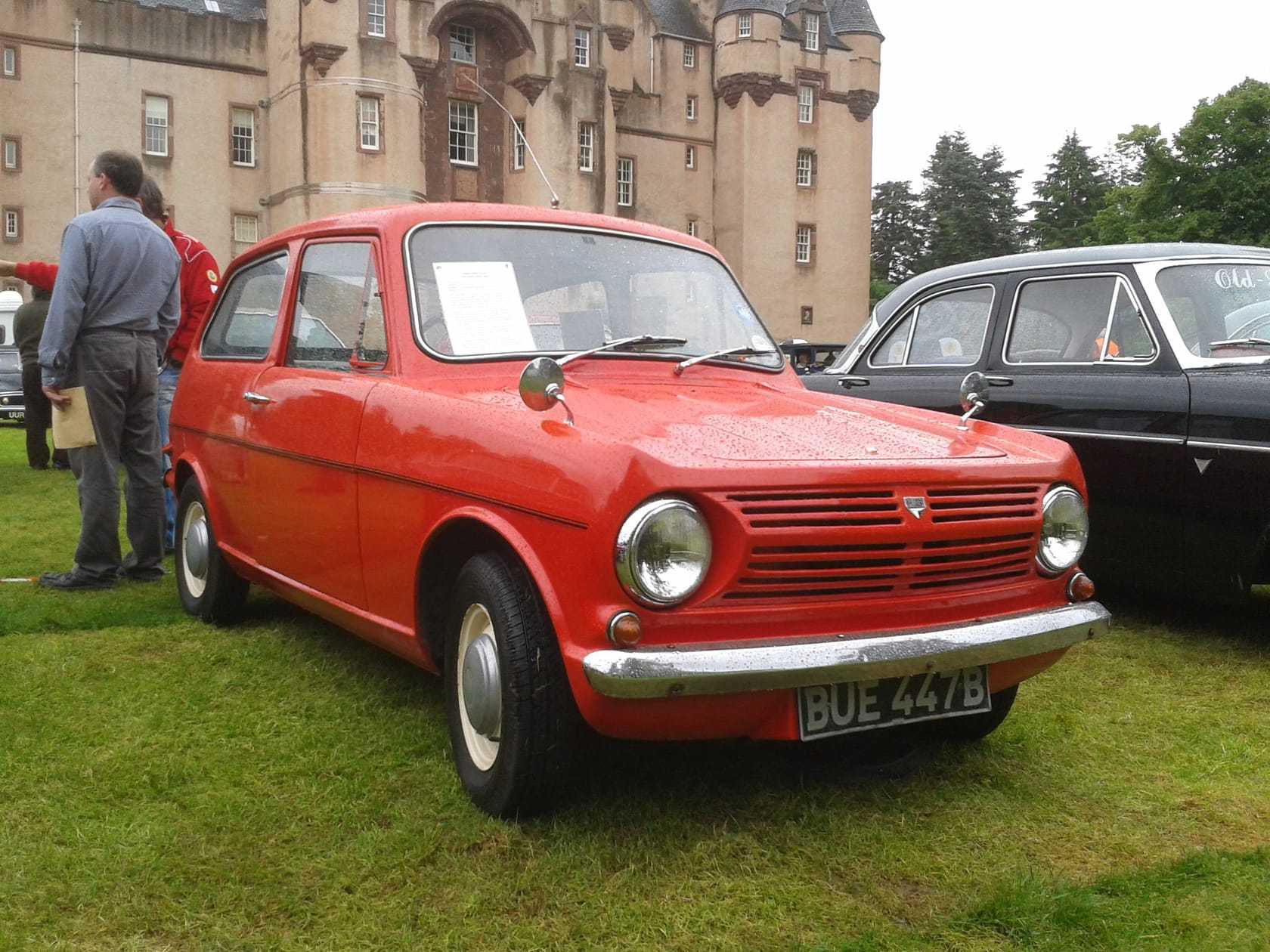
Britain’s great three-wheeler company kept its strangest secret on four wheels. The Reliant Rebel, built at Tamworth from 1964 to 1974, was a small glassfibre saloon, estate and van that answered a simple commercial question: what do you sell the customer who has outgrown a Regal but wants to stay in the family? Around 2,600 were built while the three-wheelers sold in their tens of thousands, and the Rebel settled into the role it holds today, the connoisseur’s Reliant.
Purpose-built, not improvised
The Rebel was no three-wheeler with an extra corner. Reliant laid out a proper light chassis, clothed it in glassfibre with tidy styling that had Ogle input, and fitted its own all-aluminium engine, at first the 598cc unit, then 700cc, and finally 748cc, driving the rear wheels. The result was featherweight and honest: modest pace, motorcycle running costs, no rust in the panels and a gearchange better than several full-sized rivals. Farmers and rural owners in particular found the light, tough estate would go where heavier cars sank.

Life in the Regal’s shadow
Selling the Rebel was always the struggle. It cost close to a Mini, which was faster and more modern, and Reliant’s dealer network and image were built on tricycles, so the Rebel remained the quiet choice of those in the know. Production across a decade totalled about 2,600 cars in saloon, estate and van forms. The idea outlived it: the Kitten of 1975 refined the small four-wheeled Reliant with the 848cc engine, rack-and-pinion steering and sharper styling, and its running gear later worked for a living under the Fox utility, a family line the enthusiast world now treats as one. The Kitten even had an overseas afterlife: Sipani of Bangalore built a version under licence for India, one more entry in Reliant’s surprising record of engineering cars for other countries. Kittens outnumber Rebels today and cost similar money, which makes the earlier car the rarity play and the Kitten the usability play within the same small family.

What a Rebel is like to own
A Rebel today is one of the cheapest genuinely rare classics in Britain. The alloy engine is willing and simple, parts interchange generously with the three-wheelers and Kitten, and the club scene’s knowledge runs deep. The checks are familiar Reliant fare: chassis corrosion where mud collected, kingpins and bushes, gel-coat crazing, and above all completeness, because bumpers, lamps, glass and interior fittings unique to so small a production run are the true rarities. An incomplete Rebel is a puzzle; a complete one is nearly free to run.

Driving a Rebel today
On the road the Rebel is defined by its lack of weight. The alloy engine has barely half a tonne to move, so performance is better than the bald figures suggest, and the unassisted steering and brakes stay light and communicative. It bowls along B-roads at a contented fifty, handles with the tidy, roll-free manner of a light car on modest tyres, and uses fuel at a rate that still astonishes at the pump. The estate in particular makes a plausible occasional errand car, which is more than can be said for most classics of its size and age.
Winter use holds no terror either, because the panels cannot rot and the simple mechanicals shrug off salt with basic care, though the chassis deserves its annual wax. Around town the Rebel’s compactness and visibility are pure pleasure, and on the showfield its obscurity does the entertaining: even seasoned enthusiasts often need the badge explained. The car’s whole character is understatement, a Reliant without the notoriety, which suits owners who like their conversations curious rather than comedic. It is also a car children adore on sight, being scaled, as several owners put it, somewhere between a real car and a toy one, and that gentle charm does the car no harm at all when the time comes to sell.
Values and the rarity paradox
Paperwork deserves a look too: with so few built, a Rebel that has lost its registration history is harder to put right than the metalwork, and the club’s records are the place to start. Estates and vans, always the scarcer bodies, reward the wait.
The market prices the Rebel like the footnote it never quite deserved: usable cars from around £2,000, the best £3,500 to £6,000, estates a touch stronger. That buys a car most show-goers have never seen, from the most fondly mocked marque in the country, with running costs to embarrass a moped. As rarity-per-pound goes, little among the cars of the 1960s comes close. The Rebel remains the Reliant for people who enjoy explaining what it is.

More photos


How the Rebel changed
- 1964Launched as the answer to the customer who outgrew a Regal but wanted to stay in the family: a proper light chassis, Ogle-input glassfibre and the 598cc alloy engine.
- 1967The 700cc engine arrives, followed by the 748cc.
- 1974Production ends at around 2,600 saloons, estates and vans.
- 1975The Kitten refines the idea with the 848cc engine and rack-and-pinion steering, and Sipani of Bangalore later builds a licensed version for India.
Rebel: what to check before you buy
Completeness, above all
- Bumpers, lamps, glass and interior fittings are the true rarities
- An incomplete Rebel is a puzzle; a complete one is nearly free to run
- Estates and vans, always the scarcer bodies, reward the wait
- The club's records are the place to start on any car
Structure and mechanicals
- Chassis corrosion where mud collected
- Kingpins and bushes
- Gel-coat crazing on the glassfibre
- The alloy engine is willing and simple, with parts shared across the family
Paperwork
- Lost registration history is harder to fix than the metal
- Kittens outnumber Rebels and cost similar money: the Rebel is the rarity play, the Kitten the usability play
- Verify which engine, 598, 700 or 748, the car actually carries
- The club scene's knowledge runs deep and is freely given
Frequently asked questions
What is a Reliant Rebel?
Why did Reliant build a four-wheeled car?
How many Reliant Rebels were built?
What replaced the Reliant Rebel?
How much is a Reliant Rebel worth?
Related across themes
More from Reliant

Reliant Scimitar: the sporting estate that invented its own class (1964–1986)

Reliant Robin: Britain's most famous three-wheeler, and most misunderstood car (1973–2002)

Reliant Regal: the three-wheeler that carried Britain's tradesmen, and the Trotters (1953–1973)

Reliant Scimitar SS1: Michelotti's last roadster and the bargain of the 1980s (1984–1995)
Recently added

British car records: the smallest, the fastest, the dearest

Morgan 4/4: the longest-running car name in the world (1936–2018)

Selling a classic car privately: what the law asks of you, what it does not, and how not to get stung
