From Wolseley to Longbridge
Herbert Austin learned his trade running the Wolseley company’s car side, then left in 1905 to found the Austin Motor Company, buying a derelict printing works at Longbridge on the southern edge of Birmingham. The site would define the company: over the next eight decades it grew into one of Europe’s biggest car plants, and “the Austin” became Birmingham shorthand for the factory itself. The early cars were sturdy Edwardian machines, but the company’s story really begins after the First World War, when Austin bet everything on going small.

Sevens, Tens and the pre-war rise
The Austin Seven of 1922 was the bet, a genuine four-seat car in miniature at a price the middle class could reach, and it changed British motoring outright: around 290,000 were built, BMW and Lotus both began with Seven bones, and the cyclecar was extinct within five years. The Austin Ten of 1932 repeated the trick one size up and quietly became Austin’s best-seller of the 1930s, the family car of pre-war suburbia. By the outbreak of war Austin stood with Morris as one of Britain’s two dominant carmakers, a rivalry that would end in the strangest of marriages.

The post-war years: Devons, Somersets and the A35
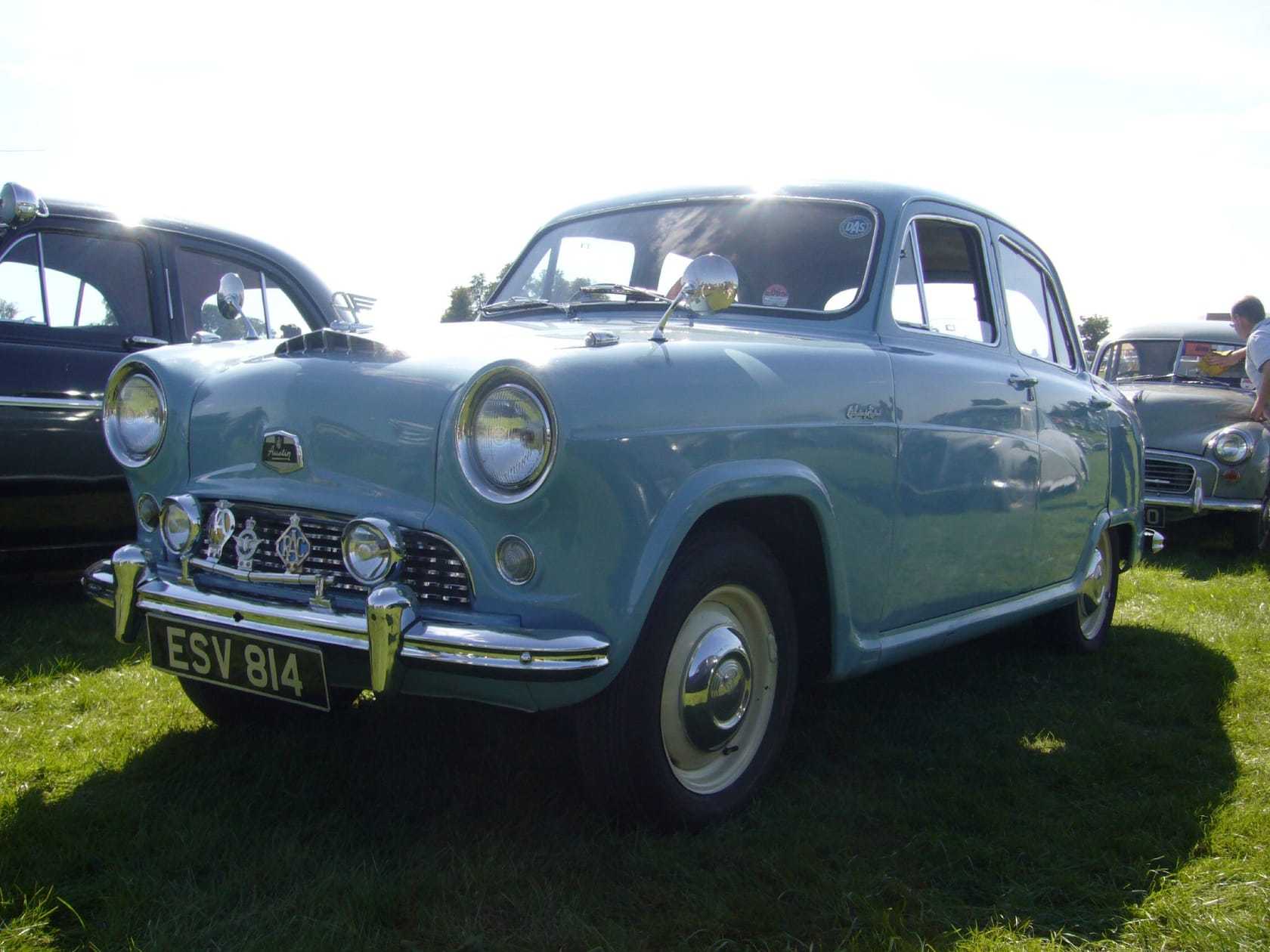
Post-war Austin named its cars after English counties, so the A40 Devon and Dorset, the Austin Somerset and the A90 Atlantic (the Austin Atlantic convertible built to woo America) followed the pre-war Austin Eight (the Austin 8), Austin 12 and Austin 16 into the showrooms, and were pushed hard into the export-or-die markets. At home the small cars mattered most: the A30 of 1951 brought unitary construction and the brand-new A-series engine, and its A35 successor became the definitive small Austin of the 1950s, cheap, tough and everywhere, with a racing afterlife that continues in historic saloon grids today. The grander Princess limousines, a separate strand covered with our 1970s saloons, kept the badge in civic service for mayors and undertakers across the country.

BMC, the Farinas and the front-drive revolution
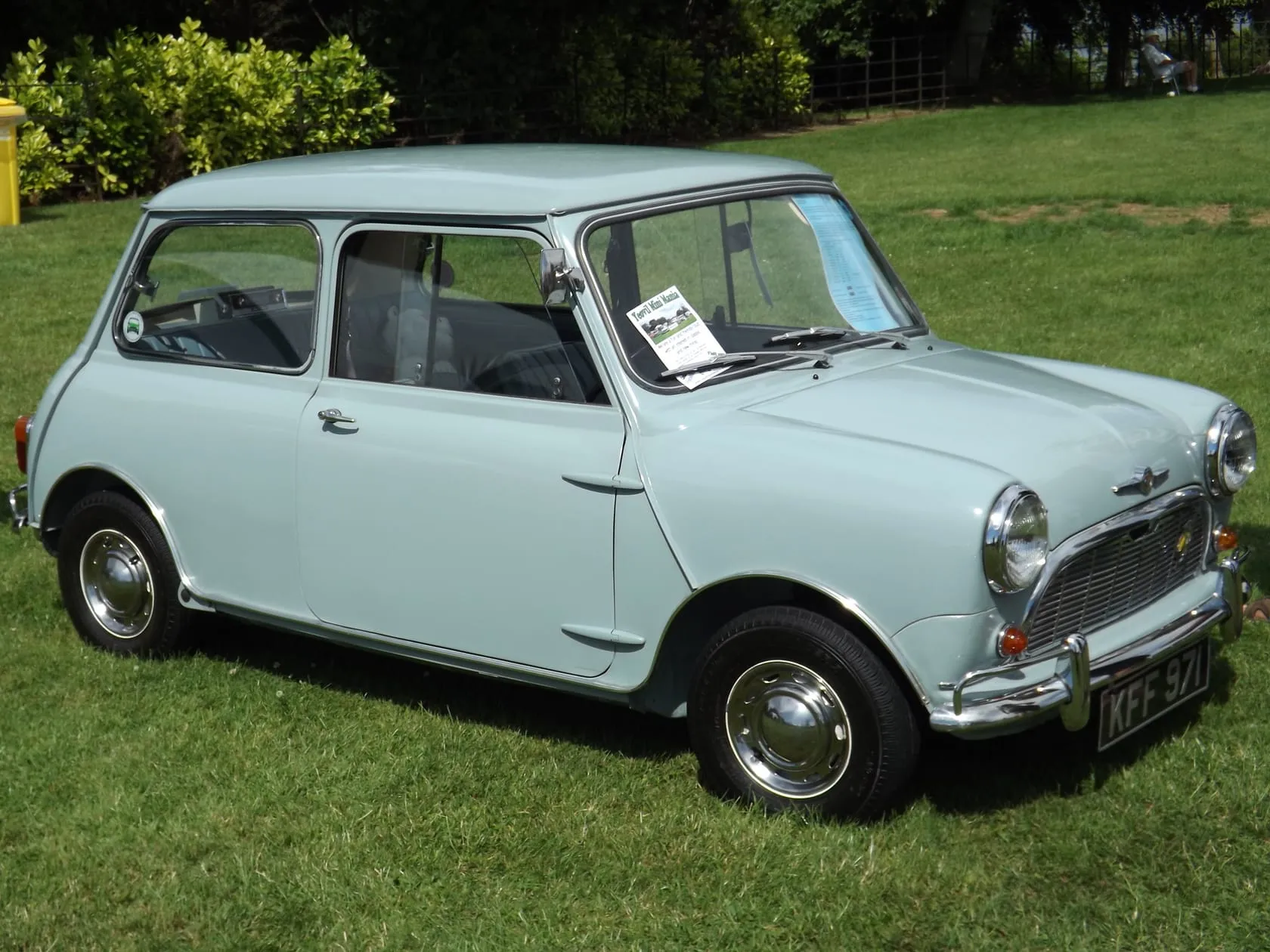
The 1952 merger with Morris created the British Motor Corporation and put Austin’s Leonard Lord effectively in charge of both badges. The Farina-styled A55 and A60 Cambridge and the six-cylinder Austin Westminster (with the coachbuilt Sheerline and the later Austin 3 Litre above them) dressed the range in Italian tailoring, but the revolution came from Alec Issigonis: the Mini of 1959, launched in Austin form as the Seven, then the Austin 1100 and Austin 1300 that out-sold everything in Britain for most of a decade, the roomy Austin 1800 “Landcrab” and the five-door Austin Maxi. Austin badges sat on the clever front-drive cars while Morris kept the conventional ones, a division that made less sense every year and dissolved entirely once British Leyland swallowed BMC in 1968.

Allegro, Metro and the long goodbye
The Austin Allegro of 1973 carried the badge through the company’s most difficult decade and collected a reputation it only half deserved; its full story, the jokes, the Hydragas suspension, the survivors now cherished at shows, gets its own page. The Metro of 1980 was the last great Austin success, selling over a million, but the badge itself was fading: in 1987 the Metro, the Austin Maestro and the Austin Montego all lost their Austin badges, and the marque that had motorised Britain slipped quietly out of production. Longbridge itself built cars until 2016, outliving the badge by nearly three decades.
Working Austins: vans, taxis and the Gipsy
Few marques worked harder off the driveway. The A35 and A40 vans were the light haulage of every high street, the FX4 taxi wore an Austin badge through decades of London service, the Champ and the Austin Gipsy (Gypsy, as often searched) chased Land Rover’s utility market, and the K-series lorries and wartime trucks carried the company through both wars. That working heritage matters to collectors now: the vans and pick-ups are far rarer than the saloons they served alongside, and draw bigger crowds at shows. Australia, meanwhile, built Austins of its own, the Tasman and Kimberley X6 saloons among them, and Longbridge returned the transatlantic favour with the Austin Metropolitan, the chubby two-tone runabout built from 1954 under contract for America’s Nash and sold at home under the Austin badge from 1957, now a cult classic on both sides of the ocean. It was all a reminder of how far the Longbridge badge once travelled.

Owning a classic Austin today
Classic Austin cars make some of the friendliest ownership in the hobby. Parts support is exceptional at both ends of the age range, the pre-war cars through the Seven and Ten clubs, the post-war cars through the vast A-series ecosystem shared with Morris and Mini, and the engineering is simple enough for driveway maintenance throughout. Rust is the standing enemy of the unitary post-war cars, and trim for the rarer variants takes patience to find. Values stay gentle across the range, which keeps Austins the classic-world’s great entry point, and age has carried every car here past the forty year rule, taking road tax off the bill; each model page carries its detailed buying checks and current auction price bands.

More photos