Austin A30 and A35: the little Austin that raced everything (1951–1968)
The Austin A30 was Longbridge's answer to the Morris Minor and its first unitary car, launched as the New Austin Seven; the improved A35 became one of the definitive small cars of the 1950s and, later, a giant-killing historic racer. A guide to both cars, the vans and Countrymen, the racing scene, and what to check before buying one.
Built 1951–1968 227 recorded sales
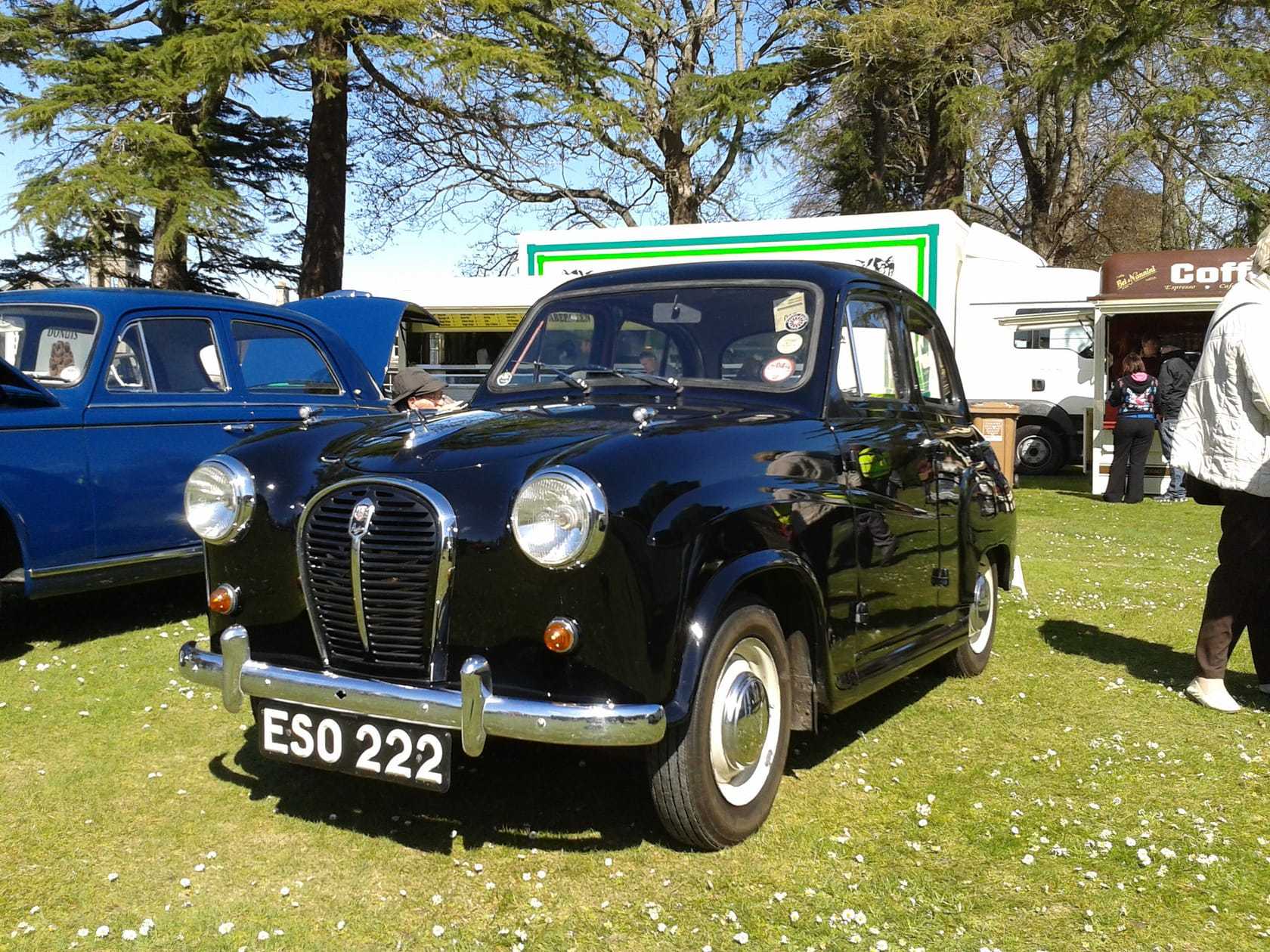
At a glance
- Years
- 1951–1968 (vans to the end)
- Body styles
- Two and four-door saloons, Countryman estate, van, rare pick-up
- Drivetrain
- Front engine, rear-wheel drive
- Engines
- 803cc (A30) and 948cc (A35) A-series
- Power
- Around 28 bhp to 34 bhp
- Top speed
- Around 62 mph (A30); 72 mph (A35)
- Trim levels
- A30 (launched as the New Austin Seven), A35; Countryman and van derivatives
- Production
- Around 500,000 A30s and A35s of all types
- Assembly
- Longbridge, Birmingham
- Designer
- Austin drawing office; body engineering with unitary pioneer work
- Values
- Usable from around £3,000; good cars £5,000-£8,000; racers and rare pick-ups beyond
- The debut
- Austin's first unitary-construction car, and the first home of the A-series engine
- The afterlife
- A fixture of historic saloon racing, hunting Jaguars into the corners
The models
Two cars, one story: the Austin A30 of 1951 and the A35 that perfected it in 1956 were Austin’s answer to the Morris Minor, the first home of the immortal A-series engine, the car half of Britain learned to drive in, and, in their unlikely second act, giant-killing heroes of the historic racing grid. Few small saloons have packed more into so little.
The New Austin Seven
Longbridge launched the A30 at Earls Court in 1951 under a freighted name: the New Austin Seven, borrowing the aura of the original Seven for its assault on the Morris Minor. The little car brought two genuine firsts: Austin’s first unitary-construction body, lighter and stiffer than the Minor’s, and the debut of the 803cc A-series, the engine family that would power BMC small cars for half a century. What it lacked was urge, 62 mph flat out, and the Minor’s sweeter steering; what it had was a price £30 lower and Austin’s dealer network behind it.

A35: the better one
The 1956 Austin A35 fixed the A30’s shortcomings in one move: the 948cc A-series with ten more horsepower, closer gear ratios, a painted grille and a bigger rear window. The result was transformed, genuinely usable at 60 mph and cheeky with it, and it became one of the definitive small cars of late-1950s Britain, the driving-school and district-nurse standard. Saloon production ended in 1959 when the Mini arrived to reinvent the class, but the A35 refused to die: the Countryman estate ran to 1962 and the van, remarkably, to 1968.

Vans, Countrymen and working A35s
The commercial A35s are their own collecting field now. The van kept the shape in production for a decade of small-trade haulage, the Countryman put windows and seats in it for families, and a handful of factory pick-ups top the rarity table. Because working vehicles worked until they dropped, honest survivors are scarcer than saloons and prized accordingly, and a van in period trade livery now steals any show it enters. The A35 van’s other claim to fame is animated: Wallace and Gromit’s antagonist drove one, which a certain generation never fails to mention.

The racing afterlife
Somewhere along the way the A35 became a racing car. Light, narrow and honest, with an A-series the tuning trade understood completely, it hunted bigger machinery in period saloon racing, and the historic scene has made it a star: A35s in the HRDC and similar grids routinely embarrass Jaguars into corners while the crowd takes their side. Speedwell, the period tuning firm with Graham Hill’s name attached, supplied the go-faster catalogue then, and its surviving conversions carry premiums now. The auction record lists A35 Competition cars as a category of their own, trading far above standard saloons.
Driving one today
A standard Austin A35 is momentum motoring at its most cheerful: wring the willing engine, carry speed through corners on the narrow tyres, plan the brakes, and grin. Sixty feels like ninety, every journey becomes an event, and parking takes half a space. It is small enough for modern lanes, simple enough for driveway maintenance, and characterful enough that nobody asks why you bothered. The A30 is gentler and more period; the A35 is the one to use. Many road cars wear mild competition-derived upgrades, brakes and carburation especially, which the club scene regards as entirely in the spirit of the thing.

Buying an A30 or A35 today
Rust decides: sills, floors, spring hangers, wing edges and the boot floor all rot, and the unitary shell makes structure the whole game. Mechanical parts are about as cheap and available as classic motoring gets, shared with the vast A-series ecosystem, and the clubs cover every variant. Check which engine a car really carries, 803s and 948s swap easily, verify a Countryman’s timber trim, and treat claimed competition history as unproven until documented. A sound, honest car beats a shiny one, and at these prices patience costs little.

Where the small Austins sit in the market
The A30 and A35 remain among the cheapest complete classic experiences in Britain, with vans, Countrymen and anything carrying racing paperwork above the saloons. The pairing also makes one of the hobby’s best first restorations: panels are small enough to handle alone, every job is documented by the clubs, and mistakes cost tens rather than thousands. The full record, 227 recorded sales with the A35 selling above the rarer A30 and the competition cars at three to four times a road car, is on the page covering what an A30 and A35 sell for. As an entry to the 1950s, only its old rival the Minor is as sensible, and the little Austin brings the racing grid’s blessing with it.
More photos


The A30 / A35 timeline
- 1951The A30 launches at Earls Court as the New Austin Seven: Austin's first unitary body and the debut of the 803cc A-series.
- 1956The A35 fixes the shortcomings in one move: 948cc, ten more horsepower, closer ratios, a painted grille and a bigger rear window.
- 1959Saloon production ends as the Mini reinvents the class.
- 1962The Countryman estate bows out.
- 1968The van finally ends the line, after around 500,000 A30s and A35s of all types.
Buying checklist: the A30 / A35 in front of you
Structure, the whole game
- Sills, floors and spring hangers
- Wing edges and the boot floor
- The unitary shell makes rot structural, not cosmetic
- A sound, honest car beats a shiny one, and patience costs little at these prices
Identity
- Check which engine a car really carries: 803s and 948s swap easily
- Verify a Countryman's timber trim
- Treat claimed competition history as unproven until documented
- Factory pick-ups top the rarity table and deserve scrutiny
Mechanical
- A-series parts are shared with half of classic Britain and cost little
- The clubs cover every variant
- Racing upgrades are plentiful and reversible, and the historic grids prove the recipe
- Vans worked until they dropped, so judge a commercial's structure hardest
What the Austin A30 & A35 sells for at auction
In 2025 the median Austin A30 & A35 sold for £4,781 across 33 sales, 66% up on 2024. In real terms, typical Austin A30 & A35 prices were down about 61% over the five years to 2025, once inflation is accounted for.
| Variant | Sold | Typical range | Median |
|---|---|---|---|
| A35 | 136 | £2,887 - £7,378 | £4,945 |
| A30 | 53 | £1,960 - £4,500 | £3,119 |
| A30 Seven | 25 | £1,894 - £5,500 | £3,494 |
| A35 Competition | 10 | £13,500 - £26,862 | £15,876 |
Show the year-by-year mediansHide the year-by-year medians
| Year | Sold | Median | In 2025 money |
|---|---|---|---|
| 2026 (so far) | 19 | £3,024 | |
| 2025 | 33 | £4,781 | £4,781 |
| 2024 | 21 | £2,878 | £2,988 |
| 2023 | 28 | £4,950 | £5,311 |
| 2022 | 20 | £3,484 | £3,989 |
| 2021 | 23 | £3,600 | £4,452 |
| 2020 | 18 | £9,662 | £12,244 |
| 2019 | 18 | £5,100 | £6,529 |
| 2018 | 10 | £4,692 | £6,108 |
| 2017 | 12 | £6,726 | £8,959 |
| 2016 | 9 | £4,600 | £6,285 |
| 2015 | 4 | £4,380 | £6,044 |
| 2014 | 4 | £2,291 | £3,174 |
| 2011 | 3 | £20,245 | £29,848 |
- £5,320A35
- £575A35
- £3,360A30
- £3,750A30
- £1,500A35
Strong evidence. 227 recorded sales and a dozen or more a year: the median and the range are well founded. Based on 227 sold results from public classic car auctions (2004 to 10 August 2026). Sold prices, not asking prices, and not a valuation: condition, history and specification vary from car to car. Inflation-adjusted figures use the ONS CPIH index, in 2025 money.
Frequently asked questions
What is the difference between the Austin A30 and A35?
Why do Austin A35s race?
Was the Austin A30 called the Austin Seven?
What is the top speed of an Austin A35?
How much does an Austin A30 & A35 sell for?
What is the most expensive Austin A30 & A35 ever sold at auction?
How often does an Austin A30 & A35 come up for sale?
Related across themes

More from Austin


Recently added

British car records: the smallest, the fastest, the dearest

Morgan 4/4: the longest-running car name in the world (1936–2018)

Selling a classic car privately: what the law asks of you, what it does not, and how not to get stung
