Heinkel Kabine and Trojan 200: the bubble car Britain built in Croydon (1956–1965)
The Heinkel Kabine was the aircraft-maker's bubble car, lighter and nimbler than the rival Isetta, and from 1960 it became an honorary British classic as the Trojan 200, built under licence in Croydon. A guide to the Kabine and Trojan story, how it differs from an Isetta, what to check, and what one costs today.
Built 1956–1965 51 recorded sales
At a glance
- Years
- 1956–1958 (Germany); licence-built to 1965, Croydon from 1960
- Body styles
- Front-door bubble car; three and four-wheel versions
- Drivetrain
- Rear engine, rear-wheel drive
- Engines
- 174cc, then 198cc single-cylinder four-stroke
- Power
- Around 9 to 10 bhp
- Trim levels
- Kabine 150, 153, 154; Trojan 200
- Production
- Around 12,000 German cars; several thousand more under licence
- Assembly
- Speyer, Germany; Dundalk, Ireland; Croydon, England
- Designer
- Heinkel Flugzeugwerke
- Values
- Usable from around £10,000; good cars £14,000-£22,000
- The British chapter
- Built in Croydon as the Trojan 200 from 1960 to 1965
- Against the Isetta
- Lighter and roomier than BMW's rival, with a proper four-stroke
The cars
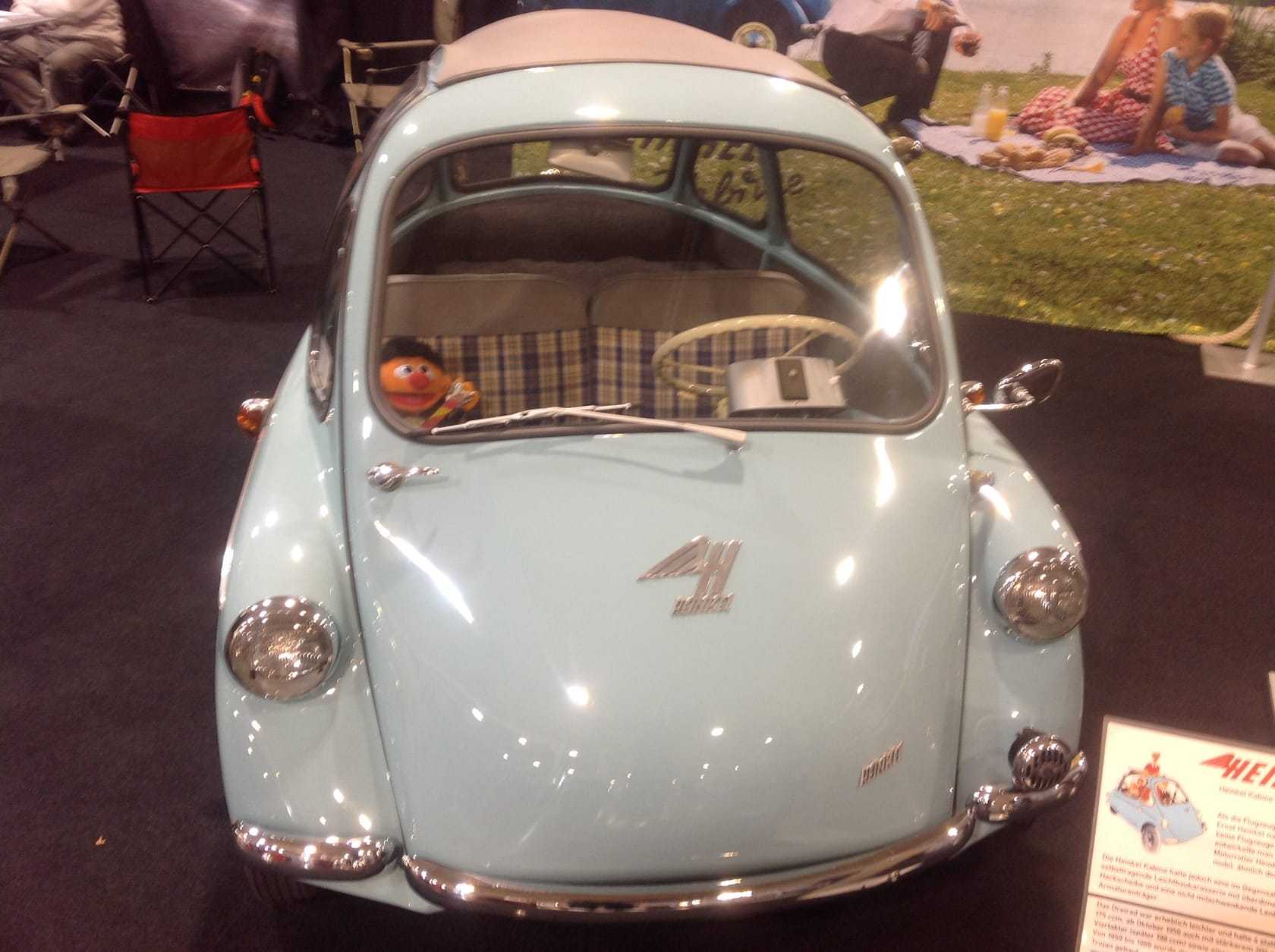
Of all the bubble cars that swarmed 1950s Europe, the Heinkel is the one with a British passport. Ernst Heinkel’s aircraft company designed the Kabine in 1956 as a lighter, cleverer answer to the Isetta, and when Germany’s aviation industry revived, the little car emigrated: from 1960 it was built in Croydon as the Trojan 200, which makes it both a classic of the microcar boom and, in its best-known form, a product of south London.
An aircraft-maker’s answer to the Isetta
Heinkel came at the bubble-car problem the way an aircraft company would: make it light. The Kabine undercut the rival Isetta’s weight substantially, sat its two occupants behind a full-width front door in a bright, airy glasshouse, and used a 174cc, later 198cc, four-stroke single of the company’s own design, mounted at the rear. The result was livelier and roomier than the BMW despite similar power, with handling that owners still describe as the sweetest of the bubble breed. Three-wheel and four-wheel versions served different licence and tax rules across Europe.


From Speyer to Dundalk to Croydon
Heinkel built the Kabine in Germany only until 1958, when aircraft work reclaimed the factory, and the design began its travels: licence production ran first in Ireland at Dundalk, and then, from 1960, at Trojan Cars of Croydon, a firm with van-making history and an eye on the bubble boom. As the Trojan 200 the car gained right-hand drive and detail refinement and stayed in production until 1965, outliving most of its rivals. For British buyers the Trojan is very much the home-team bubble of the whole boom: German engineering, Surrey build quality, Croydon builder’s plate.

Choosing a bubble: Heinkel, Isetta, Messerschmitt
Every Heinkel bubble car conversation eventually becomes a comparison, so here is the honest matrix. The Isetta has the fame, the BMW badge and the biggest club; the Messerschmitt has the drama, tandem seats and canopy theatre at a higher price; and the Heinkel quietly wins the practical categories, lightest of the three, airiest cabin, the only four-stroke of the trio, and usually the cheapest of the three to buy in comparable condition. Buyers wanting the definitive bubble-car experience with the least compromise consistently land here, and the Trojan badge adds a British-built story neither rival can offer.
The market has noticed slowly. Heinkel and Trojan values trail the equivalent Isetta by a meaningful margin and the Messerschmitt by more, a gap that owes everything to fame and nothing to the cars, which is exactly the kind of gap patient buyers like.

What it is like to own
Bubble-car ownership is its own cheerful world, and the Heinkel-Trojan sits at its practical end. The four-stroke single is simple, frugal beyond modern belief and happier on today’s fuel than two-stroke rivals; the light controls and tiny footprint make town driving genuine fun; and the front-door party trick never gets old at shows. The checks are microcar-typical: completeness above all, since chrome, glass, hood and cabin fittings are the scarce treasures that stall restorations for years, plus floor and subframe corrosion, and the mechanical state of the chain drive and clutch. Club knowledge, shared warmly across the bubble-car community, is the owner’s real workshop manual.

Driving a Heinkel today
On the road the Heinkel bubble car remains a genuinely usable town machine. The four-stroke single pulls away cleanly without the two-stroke ritual of mixing oil, the light weight makes the modest power feel adequate, and visibility through that glasshouse is total in a way no modern car approaches. The front door demands one habit change, nose-in parking against a wall is the classic beginner’s trap, and the swing-away steering column that moves with the door remains one of motoring’s most charming solutions. Cruising at forty with the fabric sunroof rolled all the way back, a Heinkel bubble car turns every errand into a small parade.

Values: the bubble boom’s quiet pick
The great bubble-car revaluation has carried the Heinkel with it. Projects surface around £5,000, honest usable cars sit £10,000 to £14,000, and the best restorations trade toward £22,000, still comfortably below equivalent Isetta money for a car many judges consider the better drive. The rare early 174cc Kabines and genuine low-owner Trojans carry premiums, and cars with documented Croydon build records hold particular appeal for British collectors, the home-built bubble being this corner of the hobby’s quiet patriotic pleasure. Like its Bond Bug and Peel neighbours in the microcar world, the Heinkel trades on charm per kilogram, and measured that way, few cars of any size or any price have ever carried more of it.

More photos


The Heinkel Kabine timeline
- 1956Ernst Heinkel's aircraft company designs the Kabine as a lighter answer to the Isetta: a full-width front door, an airy glasshouse and its own 174cc four-stroke single.
- 1957The 198cc engine arrives; three and four-wheel versions serve different licence rules across Europe.
- 1958German production ends as aircraft work reclaims the factory; licence-building begins at Dundalk, Ireland.
- 1960Trojan Cars of Croydon takes the design over as the Trojan 200, with right-hand drive and detail refinement.
- 1965Croydon production ends, having outlived most of the bubble boom's rivals.
Buying checklist: the Heinkel Kabine in front of you
Completeness, above all
- Chrome, glass, hood and cabin fittings are the scarce treasures
- Missing pieces stall restorations for years
- The front door's seals and hinges are the party trick and the wear point
- Club knowledge, shared across the bubble-car community, is the real workshop manual
Structure and mechanicals
- Floor and subframe corrosion
- The chain drive and clutch's mechanical state
- The four-stroke single is the practical end of the bubble world
- Three and four-wheel versions differ in registration as well as feel
Which one
- Rare early 174cc Kabines carry a premium
- Genuine low-owner Trojans, with documented Croydon build records, hold particular British appeal
- Kabine 150, 153 and 154 designations mark the German evolution
- The home-built bubble is this corner of the hobby's quiet patriotic pleasure
What the Heinkel Kabine sells for at auction
In real terms, typical Heinkel Kabine prices were down about 66% over the five years to 2025, once inflation is accounted for.
| Variant | Sold | Typical range | Median |
|---|---|---|---|
| Trojan 200 | 23 | £7,438 - £18,038 | £10,916 |
| Trojan | 7 | £9,100 - £18,476 | £13,440 |
| Kabine | 6 | £13,139 - £19,940 | £15,564 |
Show the year-by-year mediansHide the year-by-year medians
| Year | Sold | Median | In 2025 money |
|---|---|---|---|
| 2026 (so far) | 3 | £8,100 | |
| 2025 | 4 | £11,899 | £11,899 |
| 2024 | 4 | £15,984 | £16,598 |
| 2023 | 8 | £5,965 | £6,401 |
| 2020 | 3 | £27,399 | £34,720 |
| 2019 | 3 | £21,803 | £27,911 |
| 2018 | 4 | £12,650 | £16,469 |
| 2015 | 3 | £10,916 | £15,064 |
| 2013 | 7 | £23,287 | £32,725 |
- £10,100Trojan
- £3,087Tourist
- £8,100Trojan
- £16,798Trojan 200
- £2,166Trojan 200
Thin evidence. Only 51 recorded sales: read the figures as a sketch of the market, not a price. Based on 51 sold results from public classic car auctions (2005 to 10 August 2026). Sold prices, not asking prices, and not a valuation: condition, history and specification vary from car to car. Inflation-adjusted figures use the ONS CPIH index, in 2025 money.
Frequently asked questions
What is a Heinkel bubble car?
What is the difference between a Heinkel and a Trojan?
Is a Heinkel Kabine better than an Isetta?
How fast is a Heinkel bubble car?
How much is a Heinkel or Trojan bubble car worth?
What is the most expensive Heinkel Kabine ever sold at auction?
How often does a Heinkel Kabine come up for sale?
Related across themes
More from Microcars


Recently added

British car records: the smallest, the fastest, the dearest

Morgan 4/4: the longest-running car name in the world (1936–2018)

Selling a classic car privately: what the law asks of you, what it does not, and how not to get stung
