Jaguar XK150: disc brakes, wider shoulders and the last of the line (1957–1961)
The Jaguar XK150 closed the XK story with four-wheel disc brakes, a wider modern body and, in 3.8 S form, the pace that previewed the E-Type. A guide to the 3.4 and 3.8 cars, the S models, how the 150 differs from the XK140, what to check when buying, and what one costs today.
Built 1957–1961
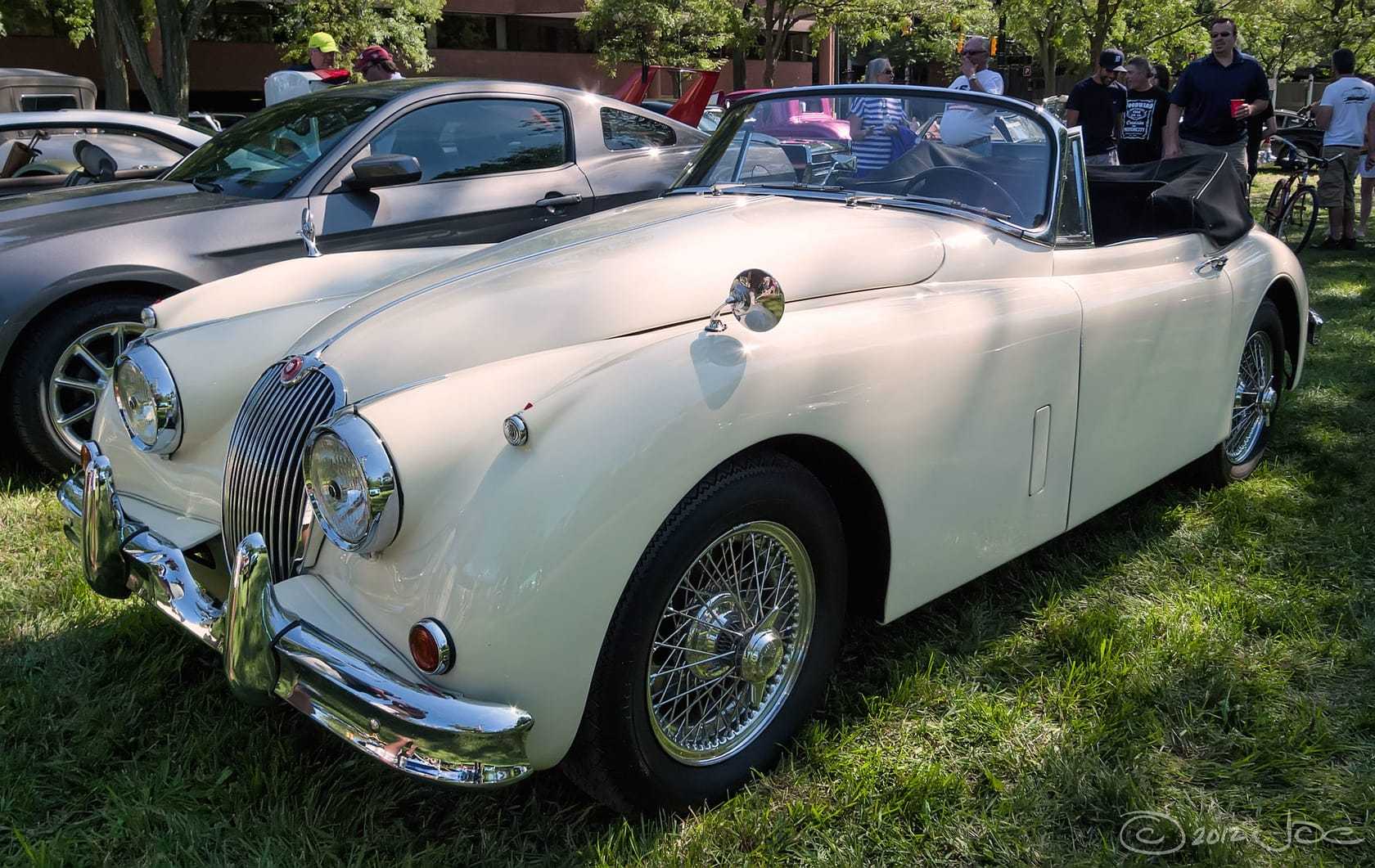
At a glance
- Years
- 1957–1961
- Body styles
- Open two-seater (roadster), drophead coupe, fixed head coupe
- Drivetrain
- Front engine, rear-wheel drive
- Engines
- 3.4 and 3.8-litre XK twin-cam straight-six
- Power
- 190 bhp to 265 bhp (3.8 S)
- Trim levels
- Standard, SE, S
- Production
- Around 9,400
- Assembly
- Coventry, England
- Designer
- Final evolution of the Lyons XK line
- Values
- Usable from around £45,000; good cars £65,000-£110,000; 3.8 S cars well beyond
- The landmark
- Four-wheel Dunlop disc brakes, race-proven at Le Mans, among the first on any production car
- The one to hunt
- The 265 bhp 3.8 S, the true bridge to the E-Type
The models
Great model lines rarely get to finish their story properly; the Jaguar XK150 did. Launched in 1957 as the last of the XK line, it brought the family’s one transformative advance, four-wheel disc brakes proven at Le Mans, wrapped it in a wider, more modern body, and then, in 3.8 S form, previewed the E-Type’s pace two years before the E-Type existed. The purists’ hearts belong to the earlier cars; the 150 is the XK you can genuinely use.
The modernised XK
Set a 150 beside an XK140 and the changes read instantly: the waistline rises, the windscreen becomes a single curved pane, the bonnet widens, and the whole car looks five years newer, because it effectively was. The cabin grew again, wind-up windows reached the roadster at last, and the old split-screen delicacy gave way to something closer to the coming decade’s grand tourers. Some mourned the purity; buyers did not, and around 9,400 cars found homes in four years.

The brakes that changed everything
The XK150’s true landmark sits behind its wheels. Jaguar had won Le Mans in 1953 partly on the strength of Dunlop disc brakes, and the 150 carried that system to the road on all four corners, among the first production cars anywhere so equipped. The difference against the drum-braked competition was not subtle: repeated hard stops without fade turned the XK’s pace from occasionally alarming into genuinely usable, and it is why the 150 remains the XK a modern owner can drive hardest with the clearest conscience.

3.4, 3.8 and the S cars
The engine story climbs steadily. The standard 3.4 carried over at 190 bhp with SE variants above it; the 1958 3.4 S brought the straight-port head and triple SU carburettors for around 250 bhp; and the 3.8 S of 1959 completed the run at around 265 bhp, good for some 135 mph and unmistakably the E-Type’s mechanical dress rehearsal. S cars were a small minority of production and the 3.8 S roadster is the family’s blue-riband collector piece, with values to match and, inevitably, replicas to watch for.

What an XK150 is like to drive
The 150 drives like the sum of everything the line learned: the rack-and-pinion steering inherited from the 140, torque everywhere from the big six, overdrive-equipped cruising that shrinks motorways, and brakes that let you use all of it. It is heavier in feel than the early cars, more grand tourer than sports car, and that is precisely its case: this is the XK for real journeys in modern traffic. An E-Type is faster; a 150 with the hood down on an A-road gives away remarkably little in the ways that count.

Choosing between XK120, XK140 and XK150
The three-way choice defines XK buying. The XK120 is the icon and the investment, the purest shape with the strongest premiums, and the least easy car to use hard. The XK140 is the driver’s compromise, the 120’s looks nearly intact over rack-and-pinion steering and a habitable cabin. The 150 trades the last of the delicacy for the family’s only modern brakes, its widest cabin and its fastest engines, which makes it the tourer’s choice and, S models aside, often the cheapest way into a genuine XK. There is no wrong answer, only a question of how much period purity you are willing to trade for usability, and the 150 plants its flag unapologetically at the usable end of that bargain, which is exactly where its first buyers stood too.

Buying a Jaguar XK150 today
Left-hand-drive imports dominate the supply here too, and a right-hand-drive conversion done well is acceptable to the market where it is declared, and poison where it is not.
The buying rules are the Jaguar silo’s standards at their strictest, because values reward fakery: verify body style, engine and head against the heritage record, treat every “S” badge as a claim to be proven, and put structure above shine, since sills, floors and inner wings rot at six-figure repair rates. Mechanical support for the XK engine is superb, disc-brake parts are no obstacle, and the S cars’ triple-carburettor setups hold no fears for the marque specialists who see them weekly. The smart money keeps buying the best-documented car in reach rather than the cheapest entry to the badge; what each body, engine and S badge actually makes, across 628 recorded sales, and what the market has done since 2019, is on the page covering Jaguar XK150 values. The era’s context lives with the sports cars of the 1950s, and the road the XK opened leads, two years on, straight to the E-Type.

More photos


XK150: what changed and when
- 1957Launched as the last of the line with four-wheel Dunlop discs, a raised waistline, a single curved windscreen and a wider bonnet.
- 1957Wind-up windows reach the roadster at last, and the cabin grows again.
- 1958The 3.4 S brings the straight-port head and triple SU carburettors for around 250 bhp.
- 1959The 3.8 S completes the run at around 265 bhp and some 135 mph, the E-Type's mechanical dress rehearsal.
- 1961Production ends at around 9,400 cars in four years; the E-Type arrives.
The XK150 viewing checklist
Identity, because values reward fakery
- Verify body style, engine and head against the heritage record
- Treat every S badge as a claim to be proven, not a description
- S cars were a small minority of production, and the 3.8 S roadster is the blue-riband piece
- A right-hand-drive conversion is acceptable where declared and poison where not
Structure
- Sills, floors and inner wings, which rot at six-figure repair rates
- Structure above shine, without exception at this money
- Buy the best-documented car in reach rather than the cheapest entry to the badge
- Aluminium doors, bonnet and boot corrode in their own way as on every XK
Mechanical
- Mechanical support for the XK engine is superb and disc-brake parts are no obstacle
- S cars' triple-carburettor setups hold no fears for specialists who see them weekly
- Overdrive transforms the car on modern roads and is worth seeking
- 3.4 and 3.8 engines and Standard, SE and S tunes all differ; confirm what is actually fitted
Frequently asked questions
What does S mean on a Jaguar XK150?
What is the difference between the Jaguar XK140 and XK150?
Was the Jaguar XK150 the first car with disc brakes?
How many Jaguar XK150s were made?
Related across themes
More from Jaguar


Recently added

British car records: the smallest, the fastest, the dearest

Morgan 4/4: the longest-running car name in the world (1936–2018)

Selling a classic car privately: what the law asks of you, what it does not, and how not to get stung
