Morgan 4/4: the longest-running car name in the world (1936–2018)
The Morgan 4/4 stayed in production for eighty-two years, the longest run of any car nameplate anywhere, changing engines with the decades while the ash-framed car around them barely changed at all. A guide to the series, the Ford years, buying checks and values.
Built 1936–2018 255 recorded sales
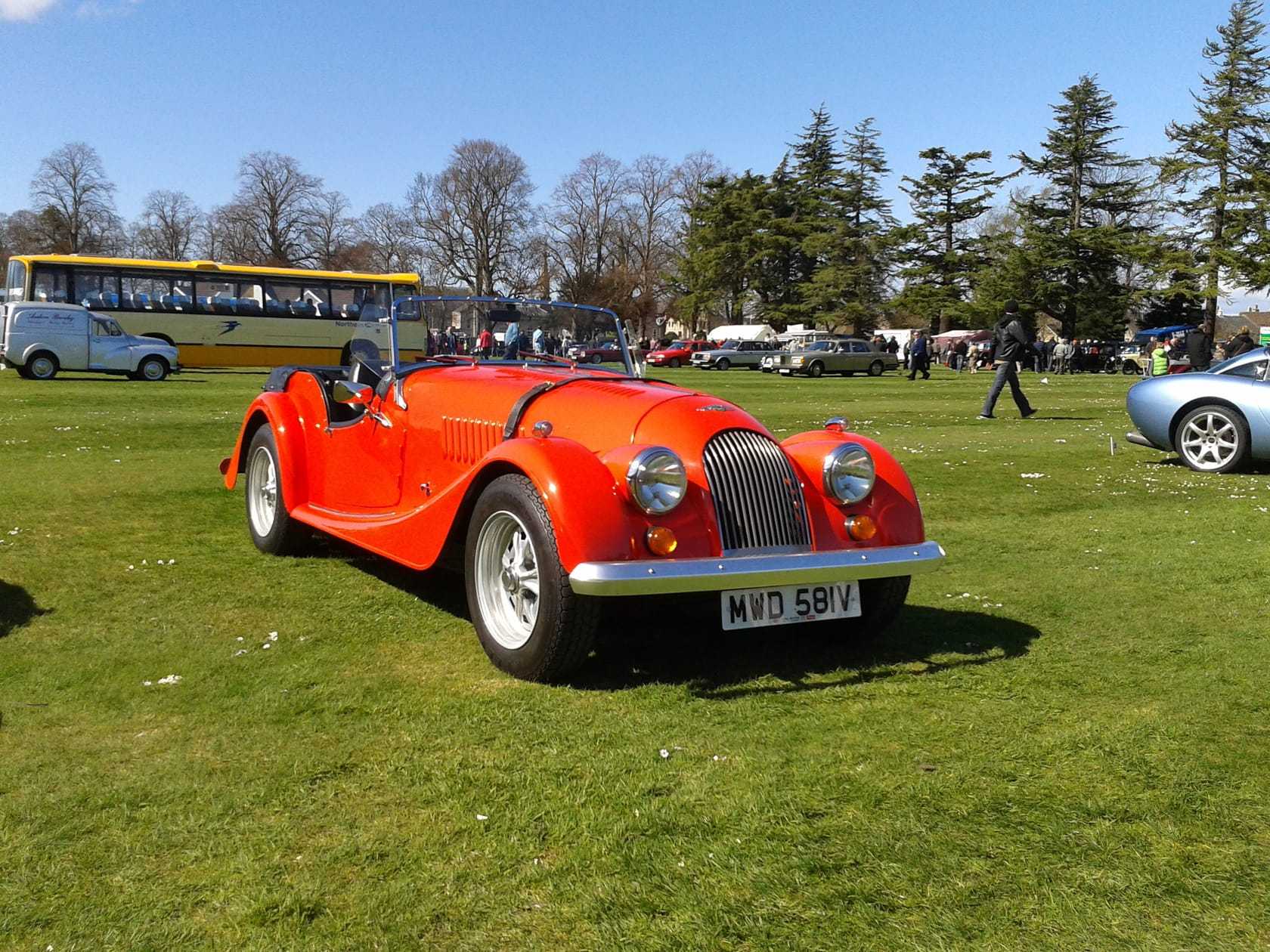
At a glance
- Years
- 1936–2018 (with a 1950–55 pause)
- Body styles
- Two-seat roadster; four-seater versions
- Drivetrain
- Front engine, rear-wheel drive; ash frame on steel chassis
- Engines
- Coventry Climax and Standard (pre-war); Ford sidevalve to Sigma (post-war)
- Power
- Around 34-110 bhp by era
- Top speed
- Around 75-115 mph by era
- Trim levels
- Series I-V, then 1600/1800 and later Ford-engined cars; two- and four-seaters
- Production
- Roughly 12,000 across eight decades
- Assembly
- Malvern Link, Worcestershire
- Designer
- H.F.S. Morgan; evolved at Malvern ever after
- Values
- Usable from around £13,000; good cars £16,000-£24,000; Series I and the best beyond
- The record
- 1936 to 2018: the longest production run of any car nameplate in the world
- The name
- 4/4 means four wheels, four cylinders, distinguishing it from the three-wheelers
The models
Every other car on this site was eventually replaced by something newer. This one, remarkably, simply was not. The Morgan 4/4 entered production in 1936 as Malvern’s first four-wheeler and left it in 2018, eighty-two years later, the longest-running car nameplate in the world, having outlasted every rival, every trend and several entire national industries. For the classic buyer the 4/4 is the gentlest door into Morgan ownership: the marque’s purest formula, powered by ordinary Ford engines the hobby knows inside out.
Four wheels at last
By 1935 the three-wheeler tax advantage was fading and H.F.S. Morgan drew the obvious conclusion: the 1936 4/4, four wheels and four cylinders, wrapped a light ash-framed body over a steel chassis and the sliding-pillar front suspension the firm had used since 1910. Coventry Climax and then Standard Special engines gave sprightly performance from little weight, and the pre-war and Series I cars established everything that mattered: the proportions, the construction, and the conviction that none of it needed changing.

Series by series, engine by engine
The post-war story is a parade of borrowed hearts in an unchanging body. The Series II of 1955 took Ford’s humble sidevalve; the Series III and IV moved through the 100E and 105E units; the Series V and the 4/4 1600 settled into the Kent crossflow that powered the car through its sixties and seventies prime. Later decades brought Ford CVH, Zetec and finally Sigma power, with a brief Fiat twin-cam interlude, and two- or four-seater bodies throughout. Around 12,000 cars covered eight decades, every one built by hand at Malvern Link at a rate the waiting list politely absorbed.

The car time forgot to change
The 4/4’s refusal to develop became its greatest feature. While rivals gained unitary shells, then aerodynamics, then electronics, the 4/4 kept its separate chassis, its ash frame, its cutaway doors and its 1910-pattern front suspension, so that by the eighties the car was selling precisely because nothing else on earth drove like it. A 2001 4/4 differs from a 1961 car in detail, not in kind, and the market prices them accordingly: condition and history move the money, age barely does. It is the closest thing motoring has to a continuously manufactured antique.

Two seats, four seats, and the competition habit
The range stayed simple but never static at the edges. The four-seater 4/4, introduced for families who refused to give the car up, remains the practical connoisseur’s choice and trades at a modest premium; lowered and lightened competition specials have contested trials, sprints and circuit racing continuously since the thirties, and the one-make Morgan Challenge grid still fields packs of 4/4s every season. That unbroken competition thread matters to buyers: preparation knowledge is mature, tuning parts for every Ford engine era are catalogue items, and a 4/4 with honest sprint or trials history carries its scrutineering scars as provenance rather than blemish.

What a 4/4 is like to drive
Vintage motoring delivered with the reliability of a Ford Fiesta engine: the little 4/4 is light enough that even modest power feels genuinely eager, the gearchange is honest, the steering is direct, and the ride, famously and unapologetically, reports the road surface back in full. Wind, weather and mechanical sound arrive unfiltered, which is the entire appeal; a summer-evening lane in a 4/4 delivers the pre-war sports-car experience without pre-war anxieties. Motorways are endured rather than enjoyed, four-seaters earn their keep with families, and no owner ever calls the car boring.

Buying a Morgan 4/4 today
The ash frame is the survey: probe the sills, door posts, wing edges and the timber around the rear panel for rot, because frame repair is skilled coachbuilding, priced accordingly, while engines and gearboxes are cheap mass-market Ford. Check the chassis for corrosion and crash repair, confirm the sliding pillars have enjoyed their greasing, and use the factory’s own records to verify identity and specification. The club scene is excellent, the factory still supports the car, and honest projects surface regularly at approachable money.

Values: continuity priced flat
Two hundred and fifty-five measured sales at a £16,900 median describe the calmest market in the specialist world: usable 4/4s from £13,000, good cars £16,000 to £24,000, Series I and pre-war examples above, and no meaningful depreciation anywhere in the record. Against a Triumph or MG of equivalent money the 4/4 offers less speed and far more time travel, and its eighty-two-year production run means the club scene spans generations of near-identical cars, a fellowship no other nameplate can convene.

More photos


The 4/4 in dates
- 1936Malvern's first four-wheeler arrives as the tax advantage of three wheels fades: ash frame, steel chassis and the sliding-pillar front suspension the firm had used since 1910.
- 1950A five-year pause in production, the only break in the run.
- 1955The Series II returns with Ford's sidevalve, beginning the parade of borrowed hearts in an unchanging body.
- 1960sThe Series V and 4/4 1600 settle into the Kent crossflow that carries the car through its prime.
- 1980s onwardsFord CVH, then Zetec and finally Sigma power, with a brief Fiat twin-cam interlude.
- 2018Production ends after eighty-two years and roughly 12,000 cars, the longest production run of any nameplate in the world.
4/4: what to check before you buy
The ash frame, which is the survey
- Probe the sills, door posts and wing edges for rot
- The timber around the rear panel, which is where water collects
- Frame repair is skilled coachbuilding and priced accordingly
- Engines and gearboxes are cheap Ford, so never let mechanical condition outweigh the timber
Chassis and running gear
- Inspect the steel chassis for corrosion and for crash repair
- Confirm the sliding pillars have enjoyed their greasing; neglect shows up quickly
- A 2001 car differs from a 1961 one in detail, not in kind, so condition and history move the money, not age
- Honest sprint or trials history is provenance rather than blemish on this car
Specification
- Use the factory records to verify identity and original specification
- Four-seaters are the practical connoisseur's choice and carry a modest premium
- Series I and pre-war cars sit above the rest of the range
- Match the engine era to the parts network you want to live with; every Ford era is supported
What the Morgan 4/4 sells for at auction
In 2025 the median Morgan 4/4 sold for £14,750 across 43 sales, 8% down on 2024. In real terms, typical Morgan 4/4 prices were down about 42% over the five years to 2025, once inflation is accounted for.
| Variant | Sold | Typical range | Median |
|---|---|---|---|
| 4/4 | 190 | £11,662 - £21,607 | £16,225 |
| 4/4 1600 | 29 | £14,300 - £20,646 | £17,488 |
| 4/4 Series V | 12 | £13,946 - £28,113 | £23,596 |
| 4/4 Series I | 10 | £18,560 - £26,578 | £20,532 |
| 4/4 1800 | 7 | £20,559 - £25,444 | £23,052 |
Show the year-by-year mediansHide the year-by-year medians
| Year | Sold | Median | In 2025 money |
|---|---|---|---|
| 2026 (so far) | 26 | £13,370 | |
| 2025 | 43 | £14,750 | £14,750 |
| 2024 | 21 | £15,979 | £16,592 |
| 2023 | 30 | £16,718 | £17,940 |
| 2022 | 20 | £19,376 | £22,190 |
| 2021 | 25 | £22,627 | £27,980 |
| 2020 | 17 | £20,025 | £25,376 |
| 2019 | 11 | £15,433 | £19,757 |
| 2018 | 7 | £15,106 | £19,666 |
| 2017 | 12 | £17,991 | £23,965 |
| 2016 | 14 | £17,280 | £23,610 |
| 2015 | 5 | £20,720 | £28,594 |
| 2014 | 9 | £18,400 | £25,494 |
| 2013 | 3 | £17,488 | £24,576 |
| 2011 | 4 | £13,350 | £19,683 |
| 2006 | 4 | £8,016 | £13,590 |
- £12,8804/4
- £14,1124/4 1800
- £11,6484/4
- £26,8804/4 1600
- £23,3004/4
Strong evidence. 255 recorded sales and a dozen or more a year: the median and the range are well founded. Based on 255 sold results from public classic car auctions (2006 to 10 August 2026). Sold prices, not asking prices, and not a valuation: condition, history and specification vary from car to car. Inflation-adjusted figures use the ONS CPIH index, in 2025 money.
Frequently asked questions
What does 4/4 mean on a Morgan?
How long was the Morgan 4/4 in production?
What engines does the Morgan 4/4 have?
Is a Morgan 4/4 hard to live with?
How much is a Morgan 4/4 worth?
What is the most expensive Morgan 4/4 ever sold at auction?
How often does a Morgan 4/4 come up for sale?
Related across themes
Recently added

British car records: the smallest, the fastest, the dearest

Selling a classic car privately: what the law asks of you, what it does not, and how not to get stung

Triumph TR3 values: TR3B over TR3A over TR3, the works cars apart, and a market back to 2010 prices
