Humber Sceptre: the last and best-loved small Humber (1963–1976)
A wood-and-leather flagship built on humble family-car bones, the Sceptre ran through three marks from 1963 to 1976 and carried the Humber name into retirement. A guide to the Mk I, II and III, what made a Sceptre special, what to check when buying, and what one is worth today.
Built 1963–1976 29 recorded sales
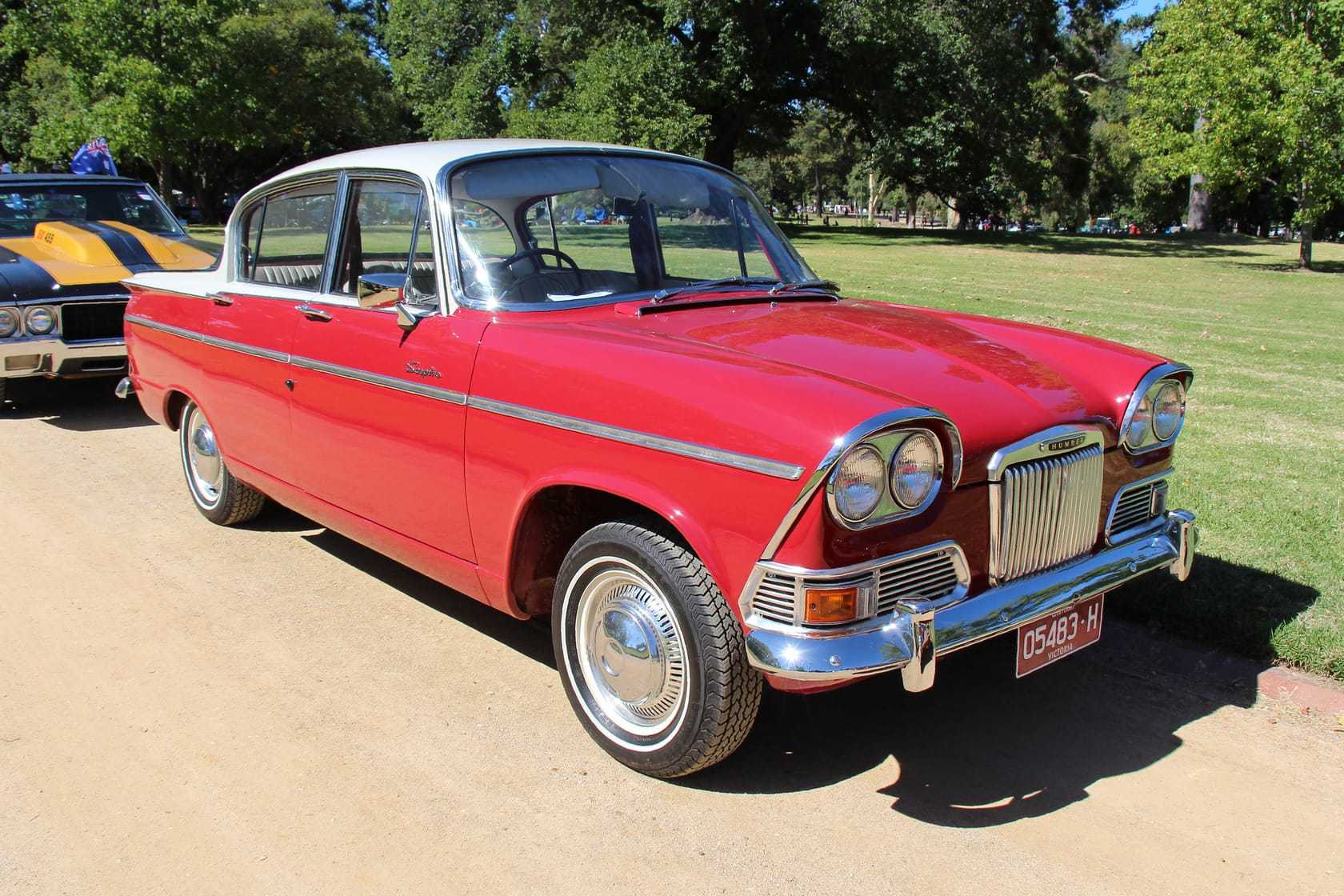
At a glance
- Years
- 1963–1976
- Body styles
- Four-door saloon; estate from 1974
- Drivetrain
- Front engine, rear-wheel drive
- Engines
- 1592cc, then 1725cc twin-carburettor overhead-valve four
- Power
- Around 80 bhp to 88 bhp
- Trim levels
- Mk I, Mk II, Mk III
- Production
- Around 17,000 Mk I; 12,000 Mk II; 44,000 Mk III
- Assembly
- Ryton-on-Dunsmore, England
- Designer
- Rootes styling studios; Mk I glasshouse a period signature
- Values
- Usable from around £3,500; good cars £6,000-£10,000; the best Mk Is beyond
- Distinction
- The last car ever to wear the Humber badge
- Standard kit
- Overdrive, four headlamps and a heater built for boardroom comfort
The models
Humber’s problem in the 1960s was that its stately limousines belonged to a fading world; the Humber Sceptre was the marque’s neat answer, boardroom luxury shrunk to a family-car footprint. Built through three marks from 1963, it dressed ordinary Rootes engineering in wood, deep carpet and four headlamps, and when production ended in 1976 it took the whole Humber name with it, the last car ever to wear the badge.
The Sunbeam that became a Humber
The Sceptre began life in the drawing office as the next Sunbeam Rapier, a sporting four-door with a dramatic wraparound glasshouse. Late in development Rootes changed its mind: the range needed a compact luxury car more than another sporting saloon, and the new car was launched in 1963 as a Humber. The switch left the Mk I with an un-Humber-like streak, a twin-carburettor engine, a rev counter and that rakish windscreen, grafted onto the group’s respectable Super Minx underpinnings, and it is exactly this mixture that makes the Mk I the collector’s Sceptre today.

Mk I and Mk II: luxury on Minx bones
The recipe was pure Rootes: take the sensible family floorpan, then spend where the buyer can see and feel. The Sceptre came with overdrive as standard, four headlamps when they were still exotic, a twin-carburettor 1592cc engine, and an interior of veneer, quality cloth or leather and full instrumentation. The Mk II of 1965 brought the stronger 1725cc engine and a plainer nose, losing some drama and gaining ease of upkeep. Neither was fast, but both were complete in a way few mid-sized British saloons of the day managed.

Mk III: the plushest Arrow
In 1967 the Sceptre moved onto the group’s new Arrow platform, becoming the luxury flagship of the family that included the Hillman Hunter. A vinyl roof, a wooden dashboard and door cappings, overdrive and the twin-carburettor 1725 marked it out, and from 1974 an estate joined, one of the more genteel load-carriers of its decade. The Mk III sold better than both earlier marks combined and carried on to 1976, when Chrysler retired the Sceptre and, with it, seventy-five years of Humber motoring.

The Sceptre against its rivals
In period the Sceptre fought the compact executive class that Britain was inventing in the 1960s: the Rover 2000, the Triumph 2000, the bigger Ford and Vauxhall flagships. Against them it gave away pace and prestige and answered with completeness. Overdrive, four headlamps, full instruments and the twin-carburettor engine were standard Sceptre equipment when rivals charged extra or did not offer them at all, and the price sat usefully below the Rover’s. The buyer it suited was the one it was designed for: comfortable, unhurried and quietly well off.
Today the same logic holds among classics. A Sceptre costs a fraction of an equivalent Rover P6 or Triumph 2000, turns up far less often at shows, and carries the conversation-starting distinction of being the last of its marque. It is not the driver’s choice of the class, the smaller engine sees to that, but as a complete, characterful period saloon for sensible money it is hard to argue with.
Buying a Humber Sceptre today
Sceptre survival is the usual story of the era’s mainstream saloons: the mechanicals comfortably outlast the body. All three marks share tough, simple running gear with millions of other Rootes products, so engines, gearboxes and overdrive units are no worry. The body is where money goes, sills, floors, wheelarches and screen surrounds, with the Mk I’s complex glasshouse particularly costly to put right, and the luxury fittings are the trap: veneer, brightwork and Sceptre-only trim are scarce, so an incomplete interior can quietly double a restoration bill, and a complete tired car beats a shiny stripped one every time.
On the road a Sceptre asks to be driven the way it was bought: unhurried. The twin-carburettor engine is willing enough, overdrive gives relaxed cruising, and the whole car feels dense and well screwed together in a way that flatters its family-saloon bones. Keep the carburettors balanced and the overdrive serviced and there is little else to trouble an owner mechanically.
Values remain modest for something this well appointed. Usable cars start around £3,500, good ones £6,000 to £10,000, with Mk Is at the top of the market and the plentiful Mk III the best value. Survivors are properly scarce, counted in hundreds rather than thousands, yet a Sceptre still costs less than the blander cars it once outclassed, which makes it one of the quiet bargains among the cars of the 1960s and 1970s. For the buyer who wants wood, wool and four headlamps without German prices, nothing else comes close.

More photos


How the Sceptre changed
- 1963Launched as a Humber after starting life as the next Sunbeam Rapier, keeping the rakish wraparound glasshouse, twin carburettors and rev counter on Super Minx underpinnings.
- 1965The Mk II brings the stronger 1,725cc engine and a plainer nose.
- 1967The Mk III moves onto the Arrow platform as the luxury flagship of the Hunter family, with vinyl roof and wooden dashboard.
- 1974An estate joins, one of the more genteel load-carriers of its decade.
- 1976Chrysler retires the Sceptre and, with it, seventy-five years of Humber motoring.
Sceptre: what to check before you buy
Body
- Sills, floors, wheelarches and screen surrounds
- The Mk I's complex wraparound glasshouse is particularly costly to put right
- Survivors are counted in hundreds, so viewing distance rarely justifies skipping a car
- The mechanicals outlast the body, so the shell decides the price
The luxury fittings, the trap
- Veneer, brightwork and Sceptre-only trim are scarce
- An incomplete interior can quietly double a restoration bill
- A complete tired car beats a shiny stripped one every time
- Mk III wood cappings and vinyl roofs bring their own checks
Mechanical and version
- Engines, gearboxes and overdrive units are shared Rootes items and no worry
- Overdrive was standard, so confirm it works rather than treating it as a bonus
- The Mk I is the collector's Sceptre; the plentiful Mk III is the best value
- The 1,725cc engine from the Mk II onward is the easier one to live with
What the Humber Sceptre sells for at auction
The Humber Sceptre comes to auction only occasionally: 29 recorded sales since 2005, typically making between £3,000 and £5,720 . With so few sales, treat any single result as a data point rather than a market price.
- £3,000Sceptre
- £5,000Sceptre
- £9,900Sceptre
- £8,250Sceptre
- £3,359Sceptre
Thin evidence. Only 29 recorded sales: read the figures as a sketch of the market, not a price. Based on 29 sold results from public classic car auctions (2005 to 10 August 2026). Sold prices, not asking prices, and not a valuation: condition, history and specification vary from car to car. Inflation-adjusted figures use the ONS CPIH index, in 2025 money.
Frequently asked questions
What is special about the Humber Sceptre?
Was the Humber Sceptre originally meant to be a Sunbeam?
What is the difference between the Sceptre Mk I, Mk II and Mk III?
How many Humber Sceptres are left?
How much is a Humber Sceptre worth?
What is the most expensive Humber Sceptre ever sold at auction?
How often does a Humber Sceptre come up for sale?
Related across themes
More from Rootes Group


Recently added

British car records: the smallest, the fastest, the dearest

Morgan 4/4: the longest-running car name in the world (1936–2018)

Selling a classic car privately: what the law asks of you, what it does not, and how not to get stung
