Jaguar XJ: the series that carried the company (1968–2009)
The Jaguar XJ series began in 1968 as the saloon that replaced Jaguar's entire range and stayed the company's flagship for four decades. This overview decodes the family, Series 1 to 3, the coupe, the XJ40 and the X300/X308, links to our detailed guides on each, and explains which classic XJ suits which buyer.
Built 1968–2009
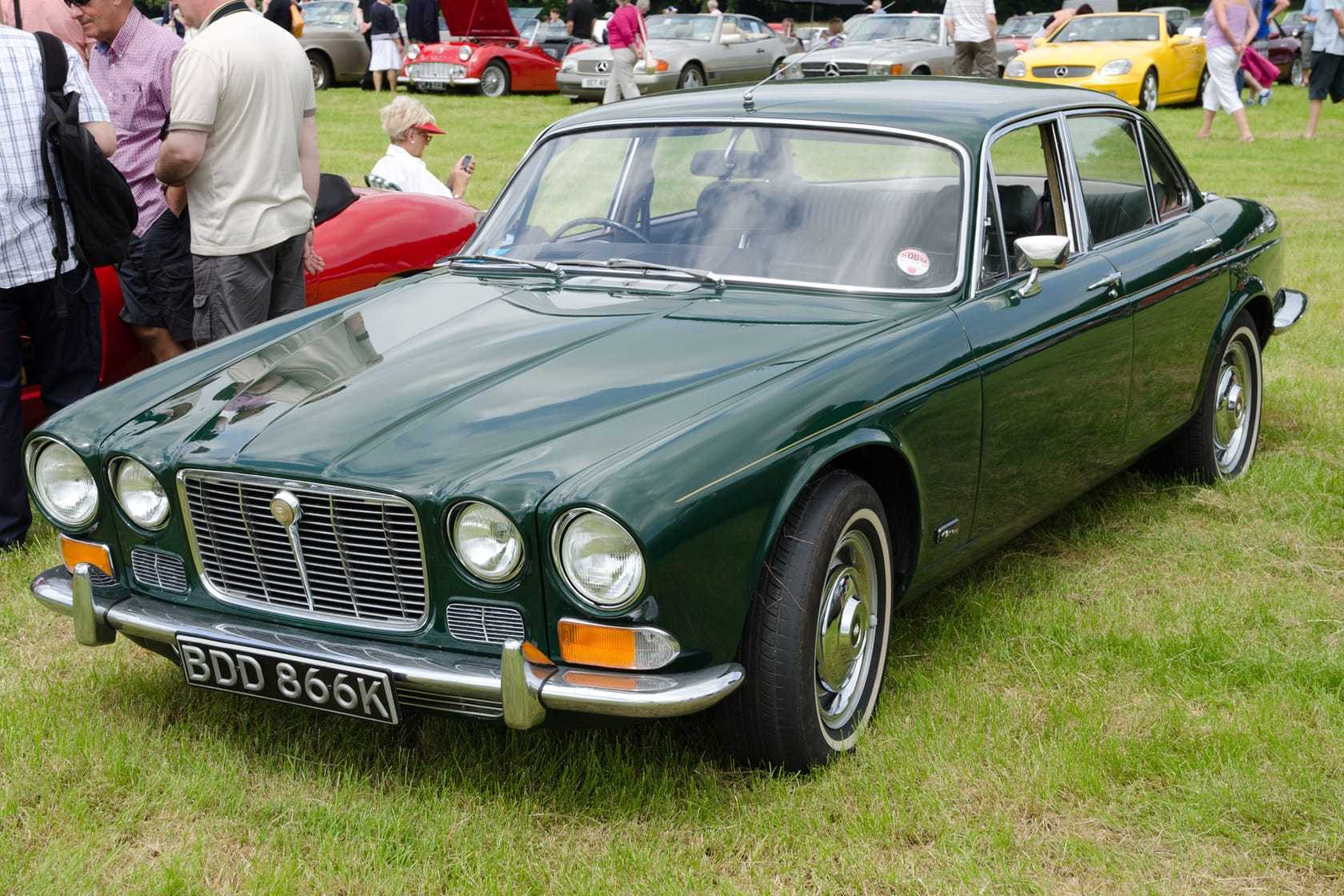
At a glance
- Years
- 1968–2009 (the classic-relevant span)
- Body styles
- Four-door saloon; two-door XJ-C coupe (1975–78); long-wheelbase versions
- Drivetrain
- Front engine, rear-wheel drive
- Engines
- XK straight-six, V12, AJ6/AJ16 six, AJ-V8
- Power
- Around 173 bhp to 400 bhp (XJR supercharged)
- Trim levels
- XJ6, XJ12, Sovereign, Daimler versions; XJR performance flagships
- Production
- Over 800,000 across all classic generations
- Assembly
- Browns Lane, Coventry; bodies latterly from Castle Bromwich
- Designer
- Sir William Lyons (original XJ)
- Values
- Running S3 and XJ40 cars from around £3,000; good Series 1-2 £10,000-£25,000; coupes beyond
- The verdict at launch
- Period testers judged the 1968 XJ6 the best saloon in the world at any price
- The span
- One name, four decades, every one of them as Jaguar's flagship
The models
From 1968 to 2009 the Jaguar XJ was less a model in Jaguar’s range than the range itself. Launched as the saloon that replaced the company’s entire line-up in one stroke, it stayed the flagship for four decades, and its classic generations now span everything from £3,000 usable elegance to six-figure coupes. This page is the map of the family; our XJ6 guide goes deep on the defining branch.
1968: one car replaces five
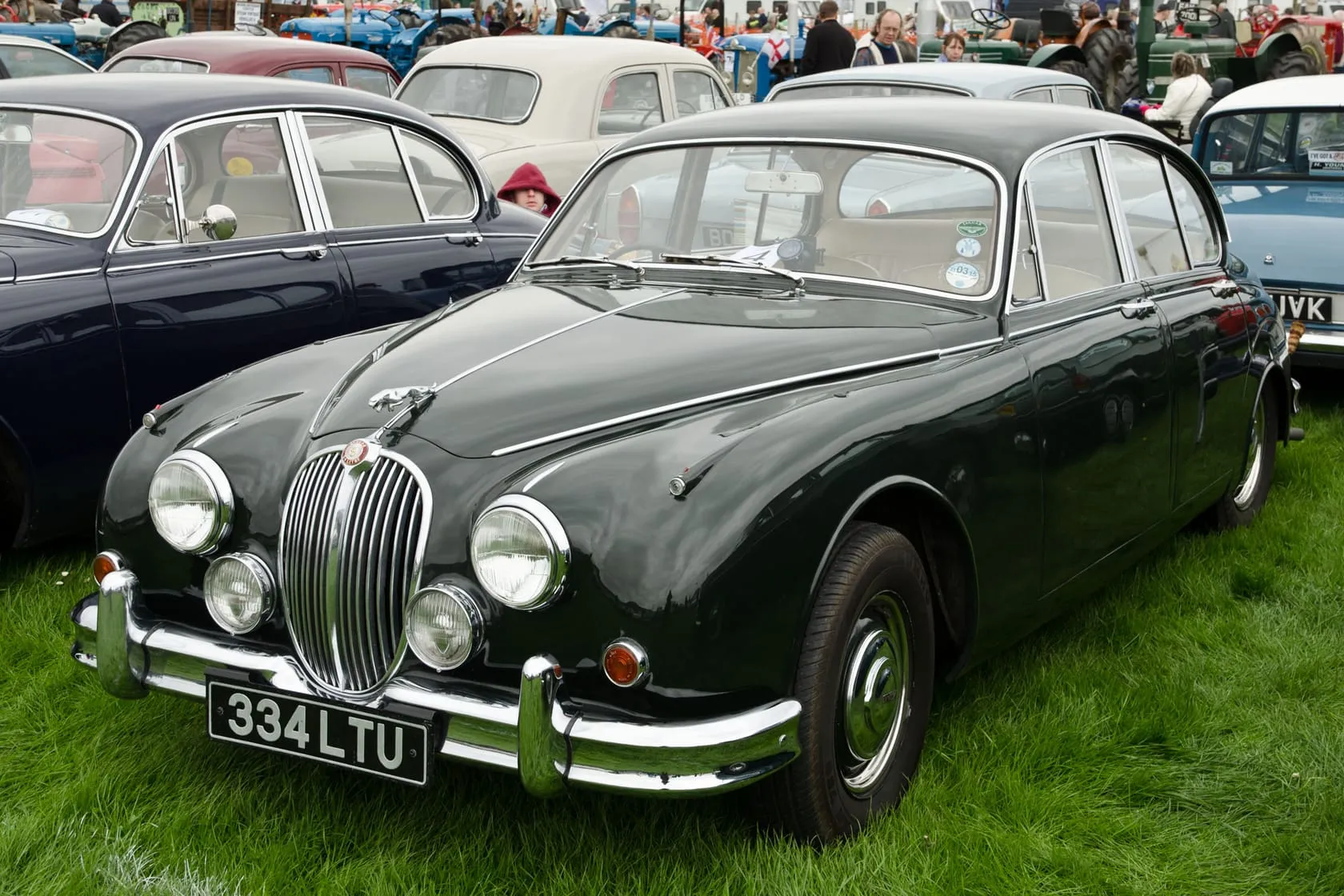
By the late 1960s Jaguar built five different saloons; Sir William Lyons replaced them all with one. The XJ6 of 1968 paired the proven XK straight-six with a new shell whose proportions remain the house style half a century later, and its blend of ride, silence and handling led period road testers to call it, flatly, the best saloon car in the world. Nothing at three times the price did so much so gracefully. Demand outran supply for years, and the XJ6 page tells that first chapter’s story in full.

Series 1, 2 and 3: decoding the classics
The classic XJ splits into three series. Series 1 (1968–73) is the original: low grille, slim bumpers, the purest Lyons line. Series 2 (1973–79) raised the bumpers for American regulation and had its quality years under British Leyland, which the survivors have long outlived. Series 3 (1979–92) brought a subtle Pininfarina roof, better build and the longest run, its V12 version outlasting everything. Long-wheelbase shells, Daimler badges and the Sovereign trim thread through all three. Values currently favour honest Series 1s and the best late Series 3s, with Series 2 the value pick.

The coupe and the twelve
Two branches give the family its glamour. The XJ-C of 1975–78, a pillarless two-door on the short wheelbase, is one of the prettiest shapes Coventry ever released and the family’s collector blue chip, in six-cylinder or V12 form. And the XJ12, the world’s only mass-made twelve-cylinder saloon at its 1972 launch, remains the smoothest way the company ever moved five people. The two combined in the Broadspeed XJ12C racers of 1976–77, Leyland’s heroic, heartbreaking touring-car campaign, whose cars are treasured survivors of the era.


XJ40 to X308: the modern classics
The 1986 XJ40, a decade in development, modernised the formula with the AJ6 engine and square-lamp styling that divided loyalists and has since aged into respect; it is today’s affordable entry. The X300 of 1994 returned curves and brought the storming supercharged XJR; the X308 of 1997 added the V8 engines that carried the shape to 2003. All now qualify as classics in spirit and increasingly in status. The aluminium XJs that followed belong to the modern era, beyond this site’s classic scope.

Daimler, Sovereign and the badge ladder
Every XJ generation carried a parallel ladder of plusher badges. Daimler versions, the Sovereign on six cylinders and the Double-Six on twelve, added the fluted grille and richer trim for buyers who found a Jaguar badge slightly loud; from 1983 Jaguar took the Sovereign name for its own top trim, and Daimler moved further upmarket still. The pattern matters when buying, because the Daimler and Sovereign cars were disproportionately garaged, serviced and cherished, and the survivor pool tilts heavily their way. Like-for-like they trade at similar money to equivalent Jaguars, which makes the better-kept badge the quiet bargain of the family.

Which XJ, for whom
The honest matching: Series 3 XJ6 or XJ40 for the buyer who wants to actually use a classic Jaguar weekly; Series 1 for the collector and the purist; XJ-C for the stylist prepared to hunt and pay; XJ12 or Double-Six for the smoothness connoisseur with fuel budget to match; X300 XJR for performance per pound. Across all of them the same three rules apply: structure before specification, history before shine, and the best car affordable over the cheapest available. The XJ6 page carries the detailed buying checks for the six-cylinder core.
On money, the family sorts itself by badge rather than by age: the trim-level cars and the XJ40 are the cheapest big Jaguars anywhere, the XJ6 and XJ8 saloons sit close together in the middle, the XJ12 and the supercharged XJR above them, and the XJ-C coupe apart from all of it at around three times a saloon. The full record, 1,818 recorded sales from 1968 to 2009 with what each badge makes and why the family has given back its 2022 gains, is on the page covering what a classic XJ sells for.

The XJ’s place
No other British car held its maker’s flagship post for forty years, and few shapes anywhere have been evolved so patiently for so long. Over 800,000 were built across the classic generations, prime ministers and royalty rode in the long-wheelbase cars, and the silhouette became shorthand for a certain kind of British arrival. The Jaguar XJ series is the through-line of the company’s modern history, from Lyons’s masterpiece to the V8 era, and its classic generations offer more car per pound than almost anything in the 1970s and 1980s catalogue. Start with the XJ6 guide; the family rewards the tour, and the right car from any of its four decades still does what Lyons intended: makes every arrival an occasion.

More photos


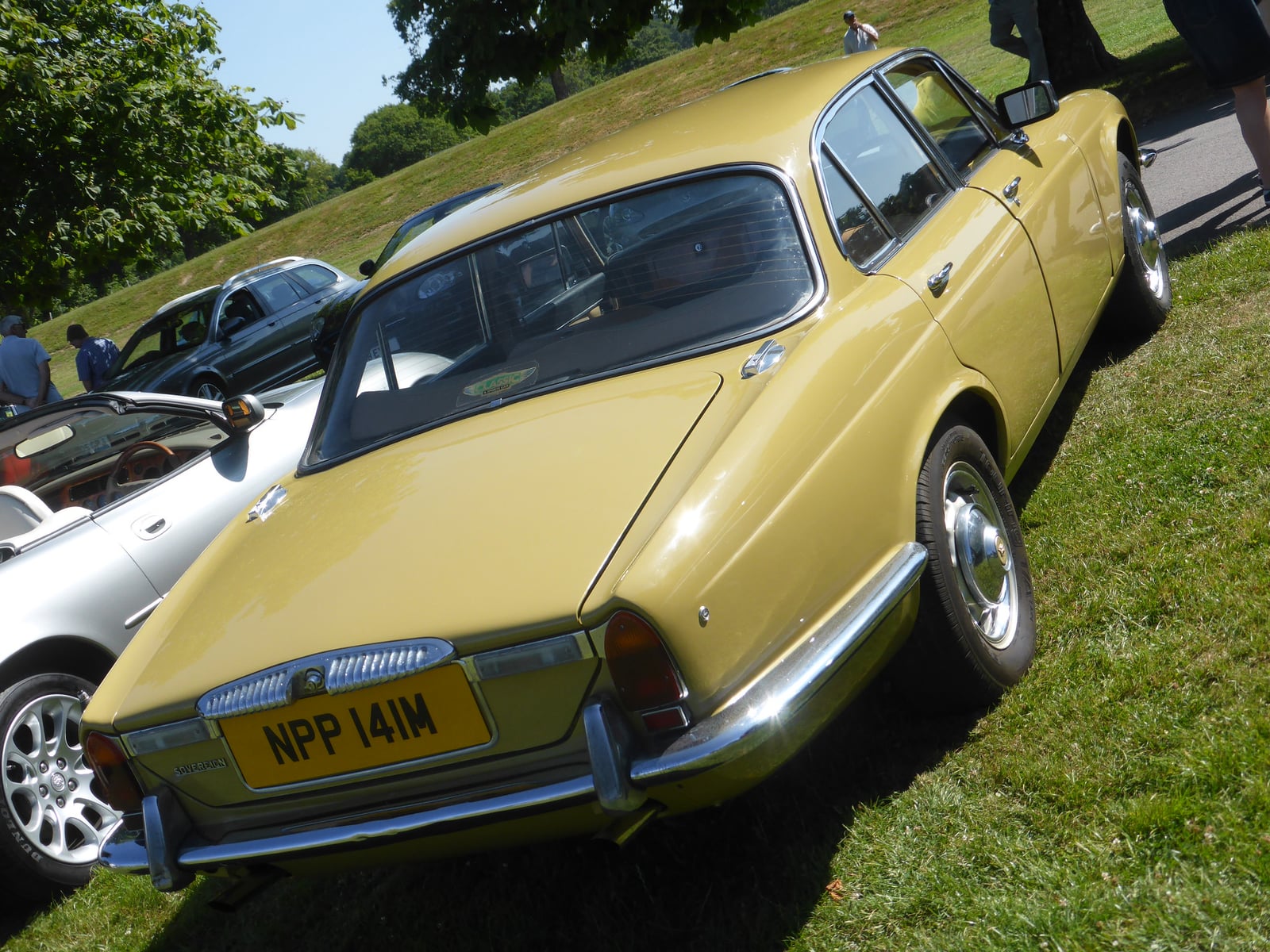
XJ family: what changed and when
- 1968The XJ6 replaces five Jaguar saloons with one, and period road testers call it flatly the best saloon car in the world.
- 1972The XJ12 becomes the world's only mass-made twelve-cylinder saloon.
- 1973Series 2 raises the bumpers for American regulation.
- 1975The pillarless XJ-C coupe arrives, running to 1978.
- 1976The Broadspeed XJ12C racers run Leyland's heroic, heartbreaking touring-car campaign.
- 1979Series 3 brings a subtle Pininfarina roof, better build and the longest run of the three.
- 1986The XJ40, a decade in development, modernises the formula with the AJ6 engine and square-lamp styling.
- 1994The X300 returns curves and brings the supercharged XJR; the X308 adds V8 engines from 1997, running to 2003.
XJ family: what to check before you buy
The three rules
- Structure before specification, on every generation
- History before shine, especially on the twelve-cylinder cars
- The best car affordable beats the cheapest available, by a wider margin here than on most classics
- The XJ6 page carries the detailed buying checks for the six-cylinder core
Which generation
- Series 3 XJ6 or XJ40 for a classic Jaguar you actually use weekly
- Series 1 for the collector and the purist; Series 2 is the value pick
- XJ-C for the stylist prepared to hunt and pay
- XJ12 or Double-Six for smoothness with a fuel budget; X300 XJR for performance per pound
Badge and trim
- Daimler Sovereign and Double-Six cars carry the fluted grille and richer trim
- From 1983 Jaguar took the Sovereign name for its own top trim and Daimler moved further upmarket
- The survivor pool tilts heavily toward the better-kept badges, which makes them the quiet bargain
- Long-wheelbase shells thread through all three classic series and eventually became standard
Frequently asked questions
What does XJ stand for on a Jaguar?
What are the differences between the Jaguar XJ Series 1, 2 and 3?
Which classic Jaguar XJ should I buy?
Are classic Jaguar XJs expensive to run?
Related across themes
More from Jaguar


Recently added

British car records: the smallest, the fastest, the dearest

Morgan 4/4: the longest-running car name in the world (1936–2018)

Selling a classic car privately: what the law asks of you, what it does not, and how not to get stung
