Triumph TR3: the first British car with disc brakes (1955–1962)
The Triumph TR3 was the rugged side-screen sports car that made Triumph's name in America, and in 1956 it became the first British series-production car fitted with front disc brakes. A guide to telling the TR3, TR3A and TR3B apart, what they are like to drive, and what to check when buying.
Built 1955–1962
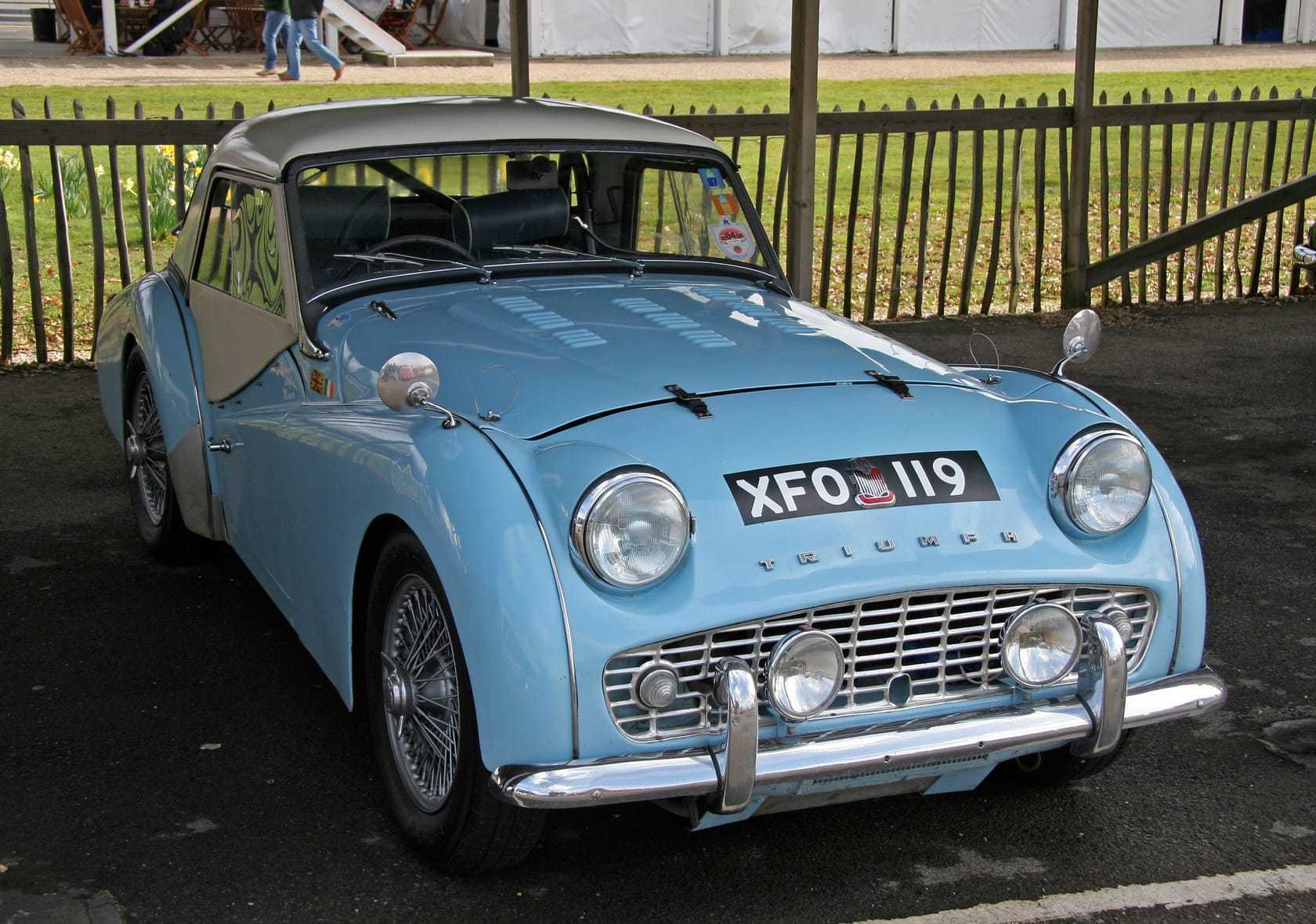
At a glance
- Years
- 1955–1962
- Body styles
- Two-door open sports car (roadster)
- Drivetrain
- Front engine, rear-wheel drive
- Engines
- 1991cc straight-four (2138cc on the final TR3B)
- Power
- 95-100 bhp (around 100 bhp on the 2.1-litre TR3B)
- Top speed
- Around 105 mph
- Trim levels
- TR3 (1955–57), TR3A facelift (1957–62), TR3B final cars (1962)
- Production
- About 75,000 in total: 13,377 TR3, 58,236 TR3A, 3,331 TR3B
- Assembly
- Canley, Coventry
- Designer
- Walter Belgrove (Standard-Triumph)
- Values
- Project around £10,000-£18,000; good £22,000-£30,000; excellent £32,000-£45,000 (early small-mouth TR3s and the rare TR3B command more)
- Engineering first
- The first British series-production car with front disc brakes, from 1956
- Place in the line
- The volume side-screen TR, between the TR2 and the TR4
The models
Ask which Triumph started it all in America and the answer is the TR3. Rugged, simple and quick for its money, it was the car that turned a small Coventry firm into a serious sports-car exporter, and it carried a genuine technical first: in 1956 the TR3 became the first British series-production car you could buy with front disc brakes.
The TR3 sits in the middle of the side-screen Triumph TR line, after the original TR2 that launched the shape in 1953 and before the smoother, Michelotti-styled TR4 that modernised it in 1961. It is the most numerous of the early cars and, for many, the definitive hairy little 1950s British roadster.
First with disc brakes
The headline fact about the TR3 is the brakes. From 1956 the front drums were replaced by discs, and the TR3 became the first British series-production car so fitted. Disc brakes had been proven on racing cars and on a handful of competition specials, but the TR3 was the first ordinary model a private buyer could order over a showroom counter with them as standard equipment.
It mattered, because it gave an affordable sports car genuinely modern stopping power at a time when most rivals still relied on drums that faded when worked hard. Combined with the torquey 1,991cc four-cylinder engine, which made between 95 and 100 bhp, it turned the TR3 into a car that could be driven hard on a back road and stopped with confidence, which is exactly what its American buyers wanted.
TR3, TR3A and TR3B: telling them apart
The TR3 changed over its life, and three names are used for the stages, though only the plain TR3 was ever an official factory designation.
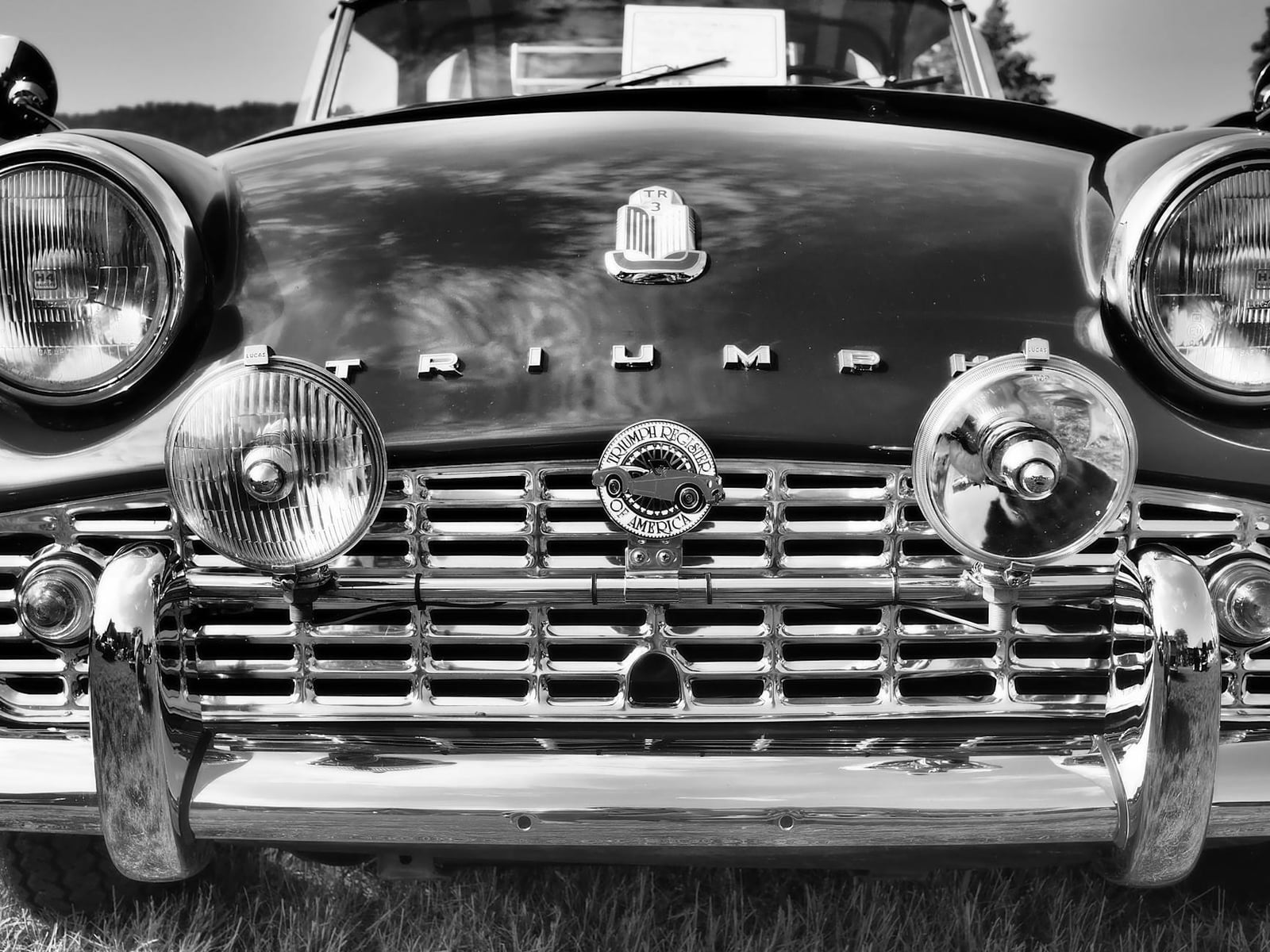
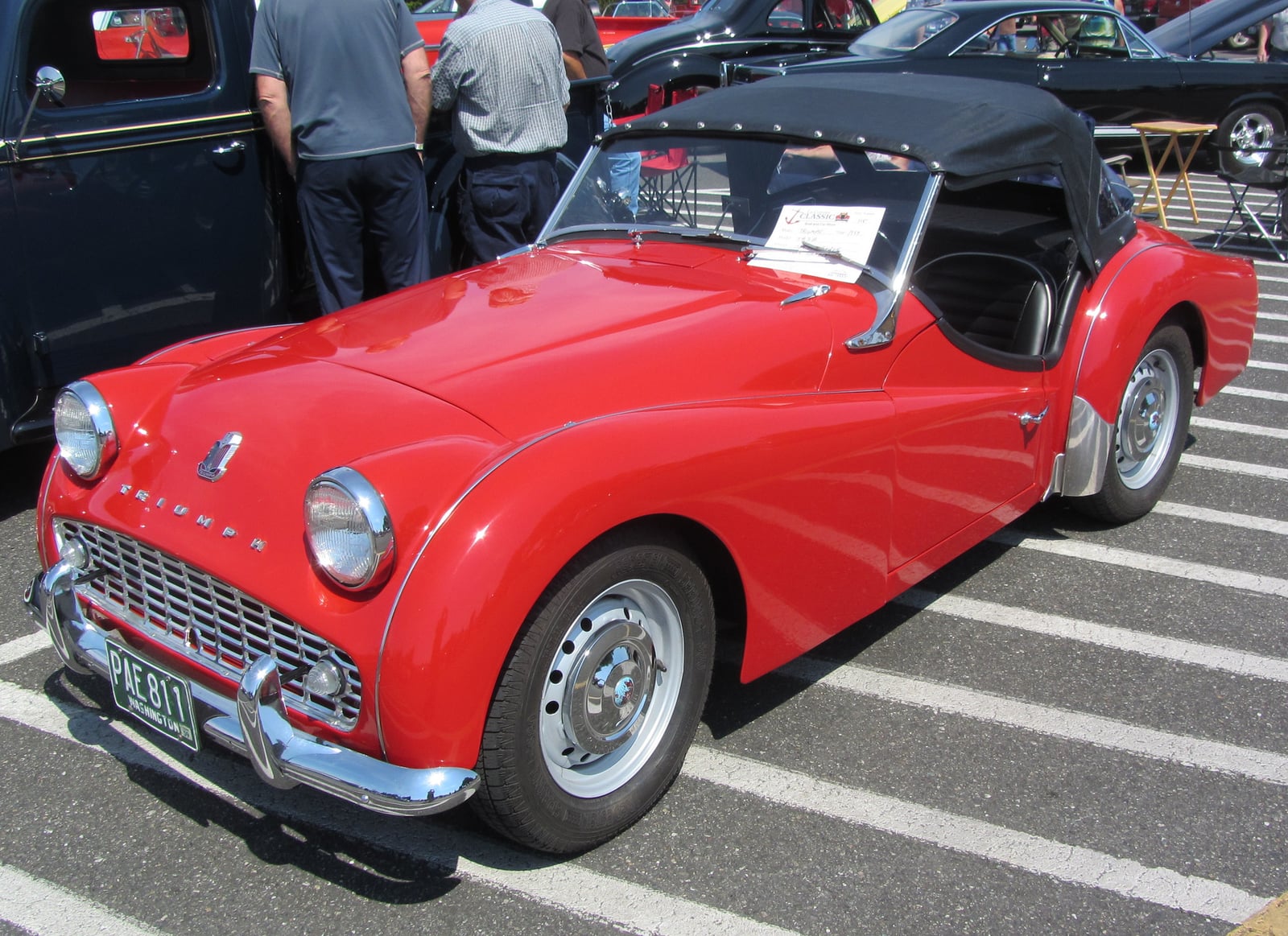
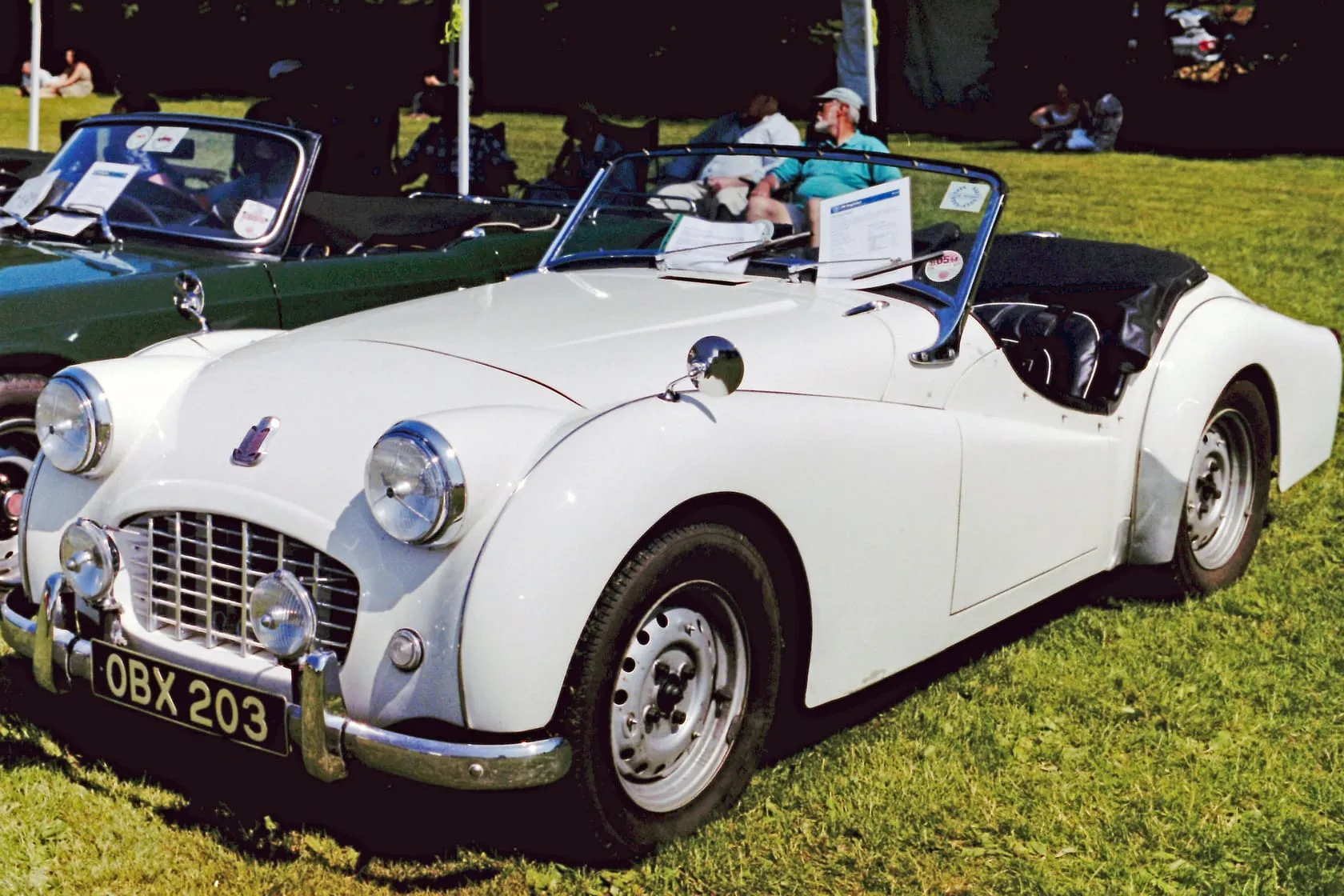
The original TR3, built from 1955 to 1957, has a narrow grille set low and recessed between the headlamps, the look enthusiasts call the small mouth. Just over 13,000 were made.
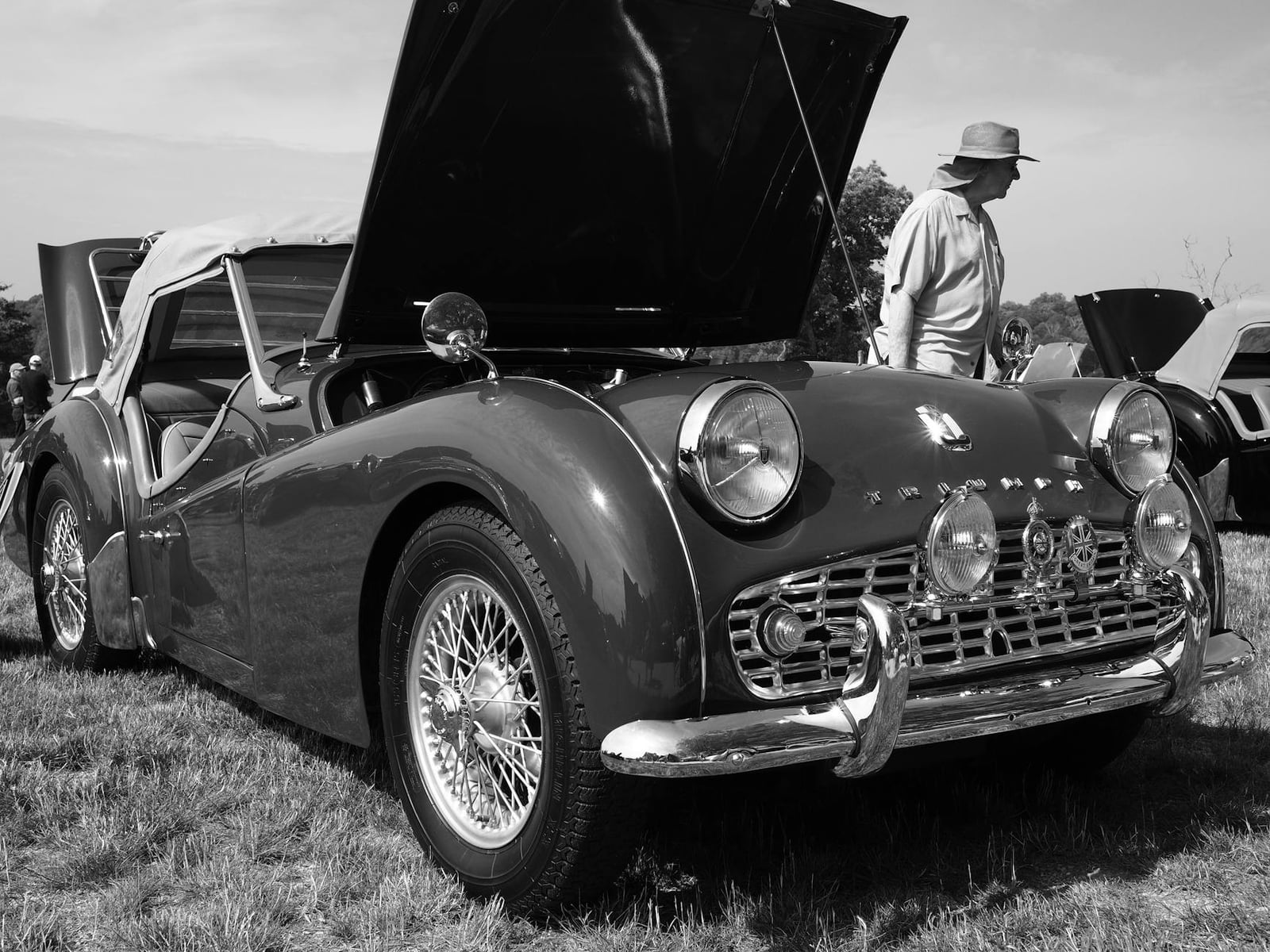
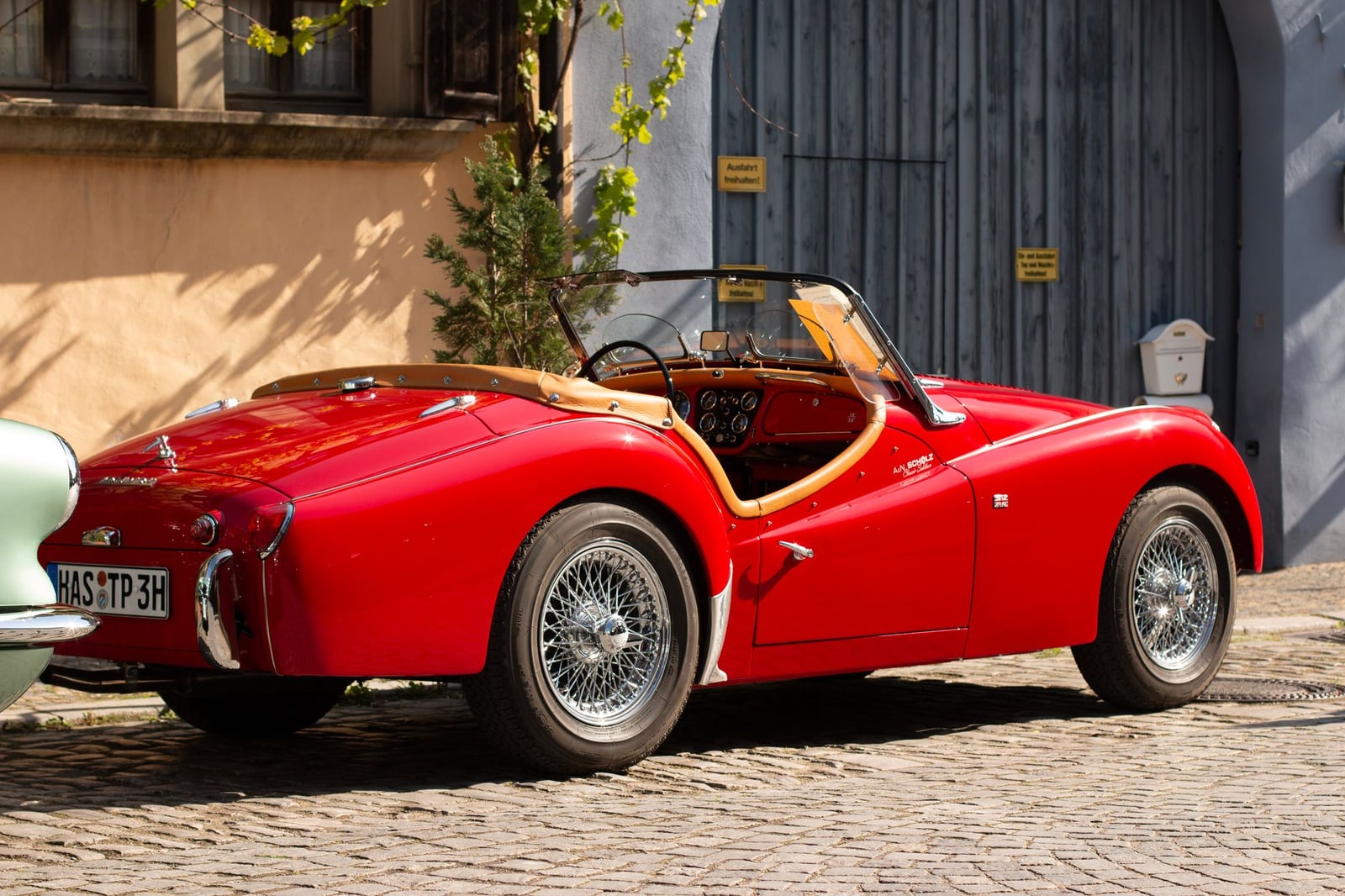
The TR3A, from 1957 to 1962, is the facelift and by far the most common version, with more than 58,000 built. The quickest way to recognise it is the full-width wide-mouth grille, and it also gained exterior door handles, a boot handle and improved lamps. From 1959 the larger 2,138cc engine became available, and front disc brakes were by now well established.
The TR3B was a short final run of around 3,300 cars built in 1962, almost all for America, to bridge the gap while the new TR4 was bedding in. Most TR3Bs used the 2.1-litre engine and the all-synchromesh gearbox from that TR4, which makes them the most usable of the side-screen cars to drive in modern traffic, and the rarest.

What it is like to drive
The TR3 drives like the honest 1950s sports car it is. The four-cylinder engine is gutsy and flexible, pulling strongly from low revs rather than needing to be revved out, and on the open road the car feels brisk and eager rather than fast by modern standards. The steering is direct, the gearchange positive, and the disc front brakes give it real stopping power.
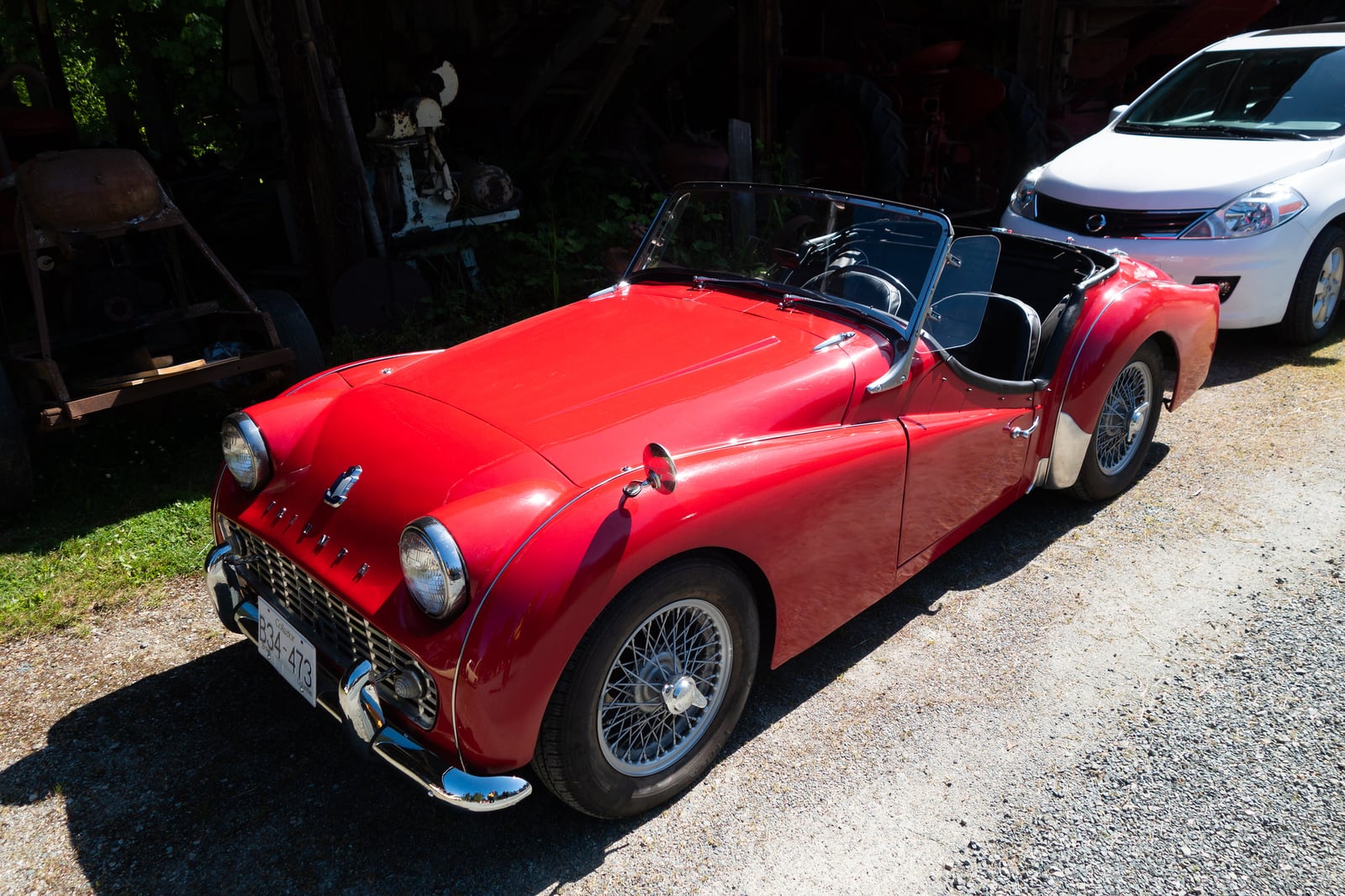
It is not a refined car, and that is the point. The side-screens clip into the cutaway doors instead of winding down, the hood is a deliberate job to erect, the ride is firm and the cockpit is snug. What you get in return is an unfiltered, mechanical driving experience and a car with genuine character, the qualities that keep the side-screen TRs sought-after.

Buying guide: what to look for
As with every TR, the separate chassis is the first thing to inspect, because a rotten one means a body-off restoration. Check the chassis rails, particularly towards the rear and around the suspension mounts, and look for past repairs and filler. A car that sits unevenly or has poor panel gaps may be hiding a tired frame.
On the body, the rot traps are the floors, the inner and outer sills, the lower front wings and the area around the battery box and boot floor. Mechanically the four-cylinder engine is tough and long-lived; listen for rumbles and check for oil pressure, but these are simple, well-understood units. The front trunnions on the suspension need regular greasing and are a known wear point if they have been neglected. The good news is that parts supply is excellent, with chassis, body, trim and mechanical parts all readily available, much of it remanufactured.

Where the TR3 sits in the market
The common TR3A is the most affordable way into a side-screen TR, while early small-mouth cars and the short-run TR3B are scarcer and sit above it, and originality and a sound chassis drive the figure far more than mileage. The full record, 490 recorded sales by version, how the TR3 compares with the TR2, the TR4 and the MGA, and why it is cheaper in real terms than it was in 2010, is on the page covering Triumph TR3 values.
In the wider story the TR3 is the car that established the formula the later TRs refined: a separate chassis, a torquey four or six up front, rear-wheel drive and no luxuries. It built Triumph’s reputation in America, funded the cars that followed, and remains the most numerous and accessible of the side-screen sports cars.

Owners’ clubs and parts
The TR Register and the TR Drivers’ Club are the two long-established clubs for the TR sports cars, both with strong sections for the side-screen cars, technical advice and events. Between the clubs and the specialist suppliers, the TR3 is one of the best-supported British classics for parts, which is a large part of why it remains such a practical car to own and restore.

More photos

The TR3 in dates
- 1955The original TR3 arrives with a narrow grille set low and recessed between the headlamps, the small mouth; just over 13,000 are built.
- 1956Front disc brakes replace the drums, a first for a British series-production car available over a showroom counter.
- 1957The TR3A facelift brings the full-width wide-mouth grille, exterior door handles, a boot handle and improved lamps; more than 58,000 follow.
- 1959The larger 2,138cc engine becomes available.
- 1962A short final run of around 3,300 TR3Bs closes the side-screen line; the Michelotti TR4 modernises the shape.
Before you buy a TR3
Chassis, as on every TR
- The rails, especially towards the rear and around the suspension mounts
- A corroded chassis means a body-off restoration
- Chassis and body sections are both remanufactured, which caps the worst case
- Buy the chassis first and the body second on any side-screen TR
Body
- Floors, inner and outer sills
- Lower wings and the boot floor
- TR3A cars gained exterior door and boot handles, which the earlier cars lack
- Small-mouth versus wide-mouth grille dates the car at a glance
Specification
- Front discs from 1956 are correct; earlier cars had drums and many were converted
- The 2,138cc engine from 1959 is the more usable, and the TR3B carries it as standard
- Only the plain TR3 was ever an official factory designation; TR3A and TR3B are enthusiasts' names
- TR3Bs number only around 3,300 and command a premium
Frequently asked questions
What is the difference between a TR3, TR3A and TR3B?
Was the Triumph TR3 really the first car with disc brakes?
Is the Triumph TR3 a good car to own?
Related across themes
More from Triumph


Recently added

British car records: the smallest, the fastest, the dearest

Morgan 4/4: the longest-running car name in the world (1936–2018)

Selling a classic car privately: what the law asks of you, what it does not, and how not to get stung
