Triumph TR5: the rare fuel-injected six (1967–1968)
The Triumph TR5 was built for barely a year and only 2,947 were made, which makes it the rarest of the mainstream TRs and one of the most valuable. It was the first six-cylinder TR, with 150 bhp from a Lucas fuel-injected 2.5-litre straight-six wrapped in the familiar TR4 body. A guide to the TR5 versus the American TR250, what to look for, and what they are worth.
Built 1967–1968 129 recorded sales
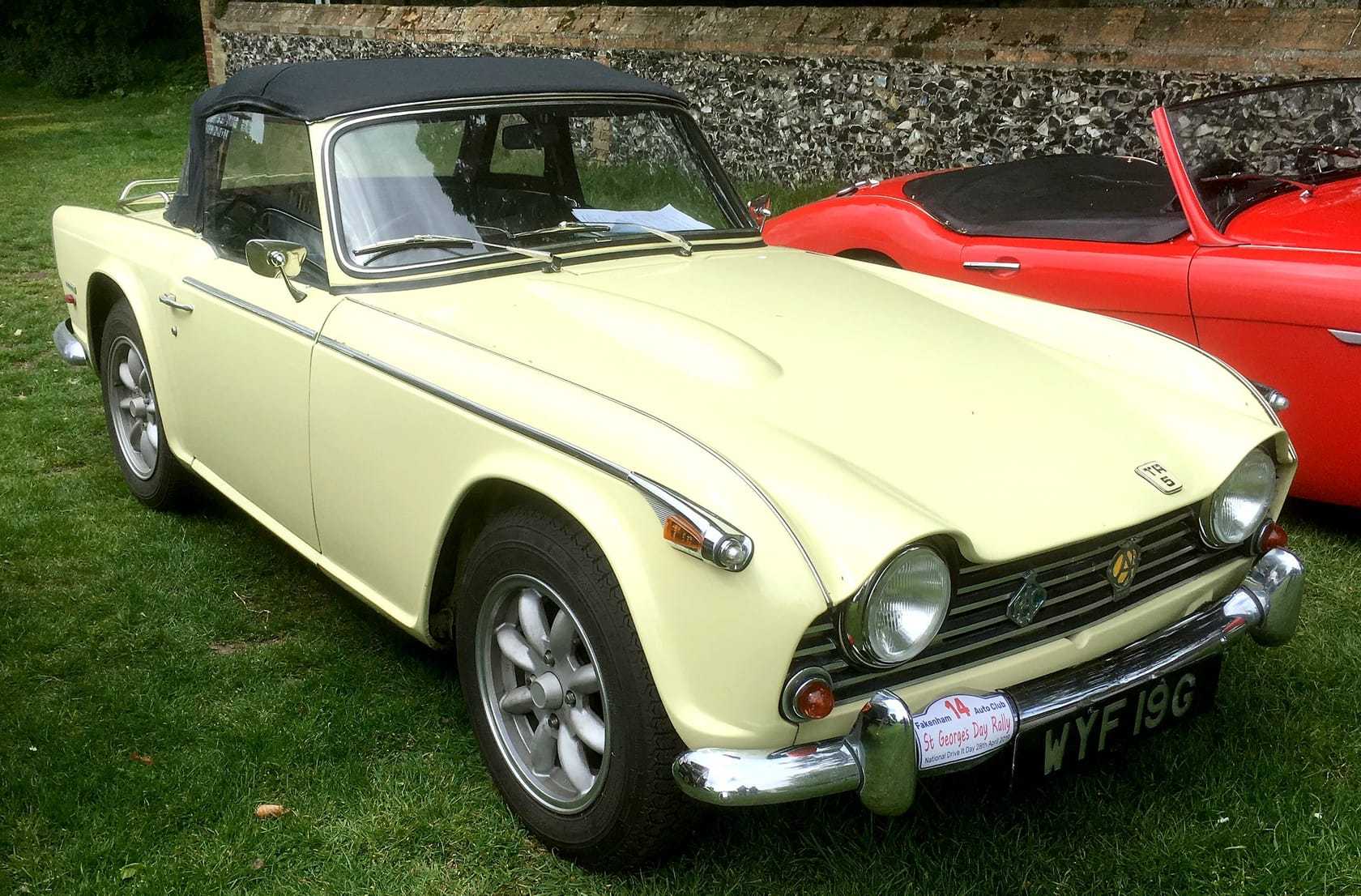
At a glance
- Years
- 1967–1968
- Body styles
- Two-door open sports car (roadster)
- Drivetrain
- Front engine, rear-wheel drive, independent rear suspension
- Engines
- 2498cc straight-six
- Power
- 150 bhp (UK and European TR5 PI); around 104 bhp (US TR250)
- Top speed
- Around 120 mph (PI)
- Trim levels
- TR5 PI (UK and Europe, Lucas fuel injection), TR250 (US, twin carburettors)
- Production
- Just 2,947 TR5 PI built (1,161 to the UK), plus 8,484 US-market TR250
- Assembly
- Canley, Coventry
- Designer
- Giovanni Michelotti (body, carried over from the TR4)
- Values
- Project around £25,000-£35,000; good £40,000-£55,000; excellent £55,000-£80,000 (TR5 PI; the carburettor TR250 sells for noticeably less)
- Rarity
- Just 2,947 TR5 PI built in about 13 months, the rarest mainstream TR
- Place in the line
- The first six-cylinder TR, the bridge from the TR4A to the TR6
The models
The Triumph TR5 is the one the enthusiasts chase. It was built for barely thirteen months, only 2,947 were made, and it was the first of the TRs to carry a six-cylinder engine. To look at it is almost a TR4; to drive it is something else entirely, because under that familiar body sits a fuel-injected 2.5-litre straight-six making 150 bhp.
That combination of rarity, speed and the familiar Michelotti shape has made the TR5 one of the most valuable and sought-after of all the Triumph sports cars, the quiet, fast bridge between the four-cylinder side-screen era and the muscular TR6 that followed.
The first six-cylinder TR
The TR5 arrived in 1967 to solve a simple problem: the four-cylinder TR4A was running out of performance against newer rivals. Rather than design a new car, Triumph dropped a 2.5-litre straight-six into the existing body and added Lucas mechanical fuel injection, the system badged PI.
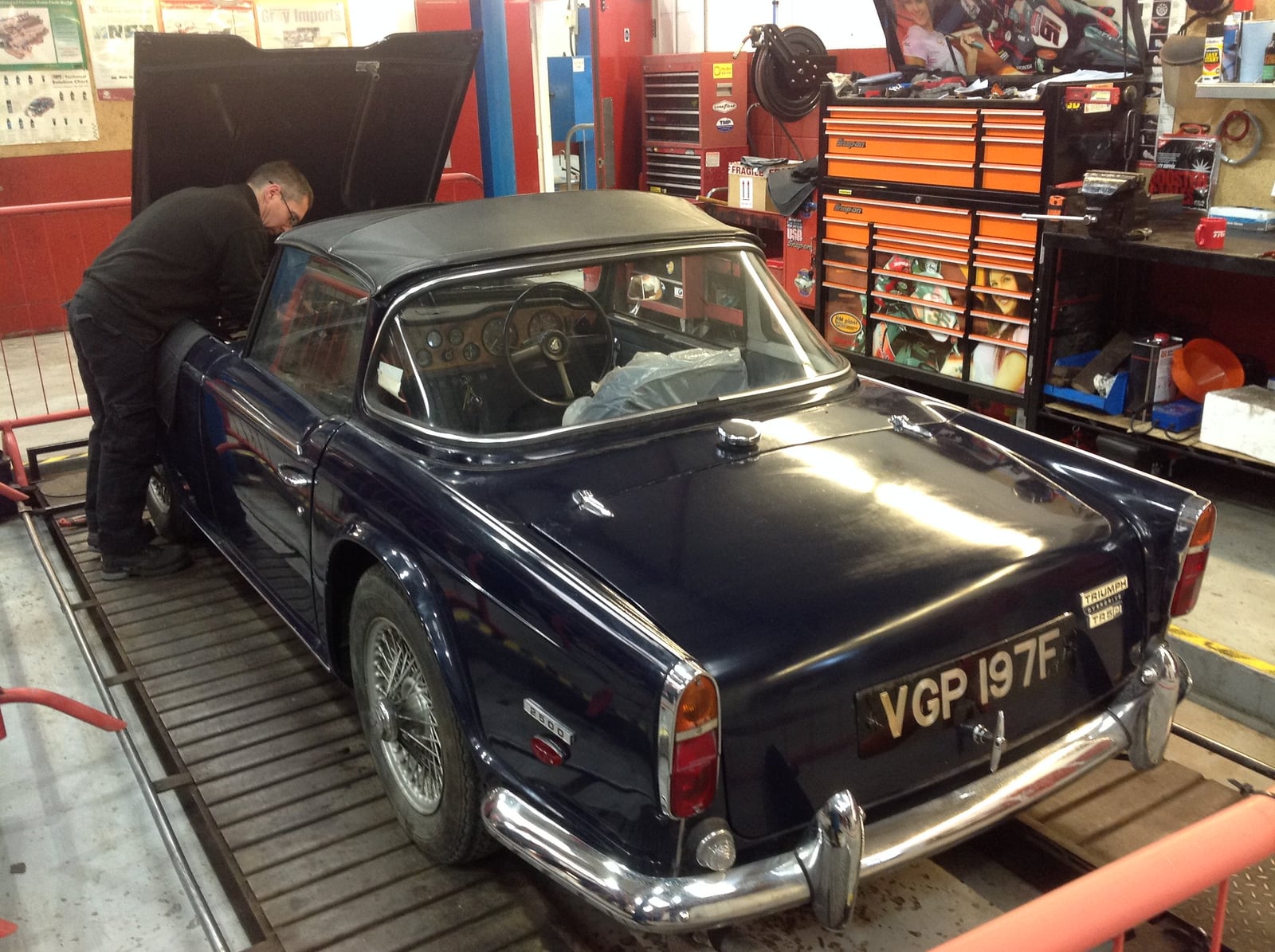
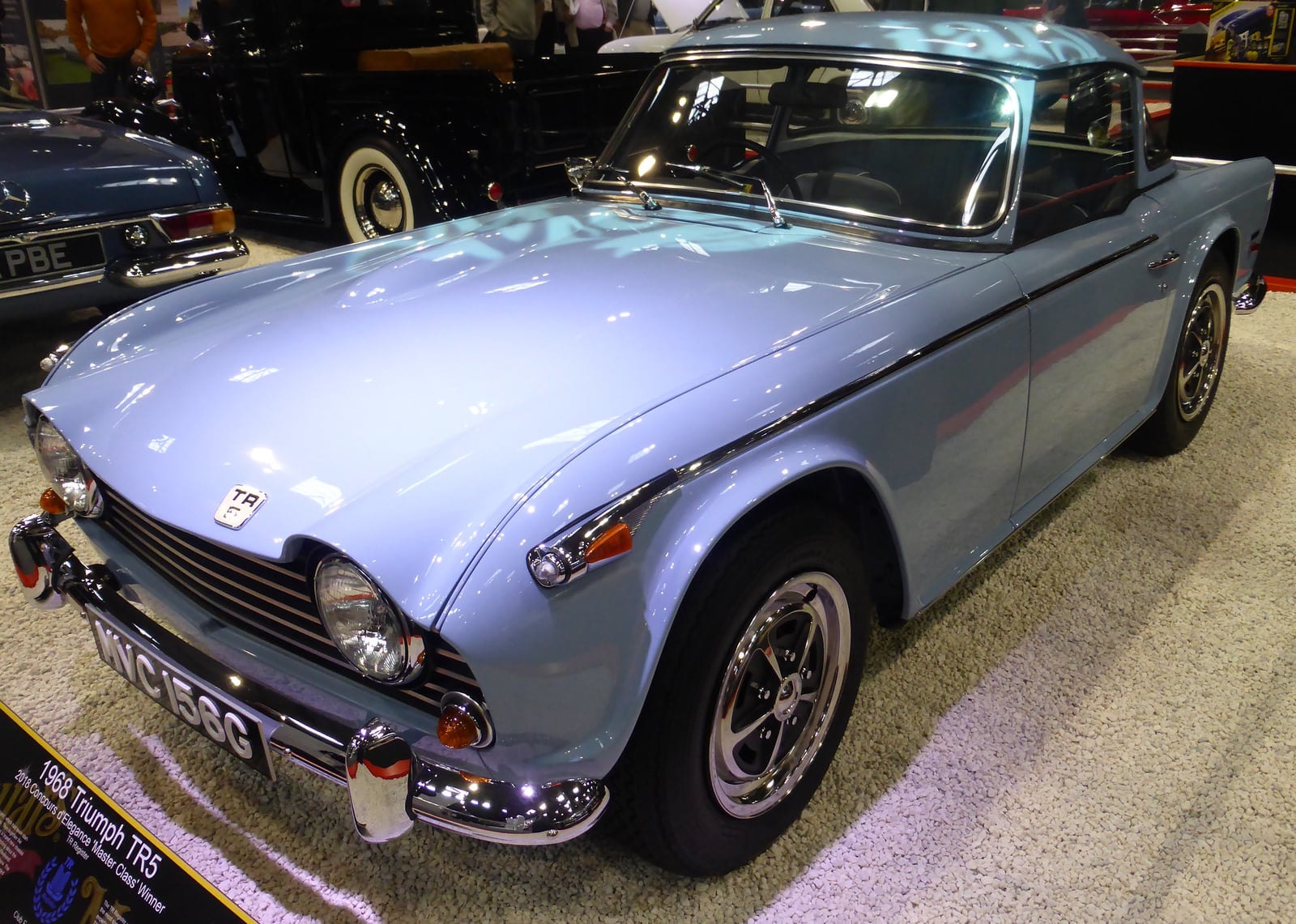
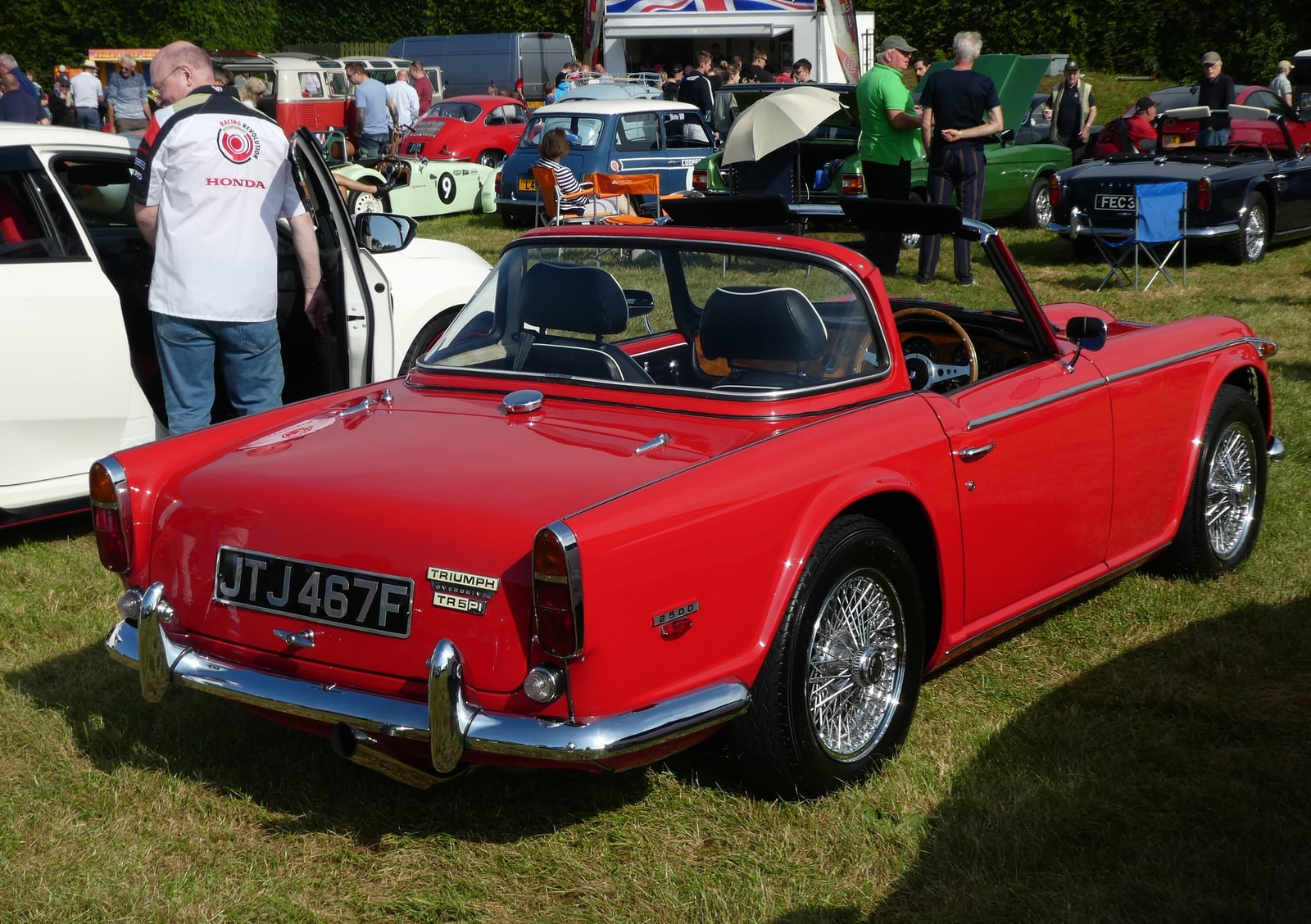
The result was a genuine step up. The injected six made 150 bhp, enough for a top speed around 120 mph and a 0 to 60 time of roughly eight seconds, quick for a 1967 sports car and a world away from the side-screen TRs. The car kept the independent rear suspension introduced on the TR4A, so it handled as well as it went. The only outward giveaways were the discreet PI badging and the new bonnet, because Triumph had spent its money on the engineering, not the styling.

TR5 PI versus the American TR250
The single most important thing to understand about the car is the split between home-market and American versions.
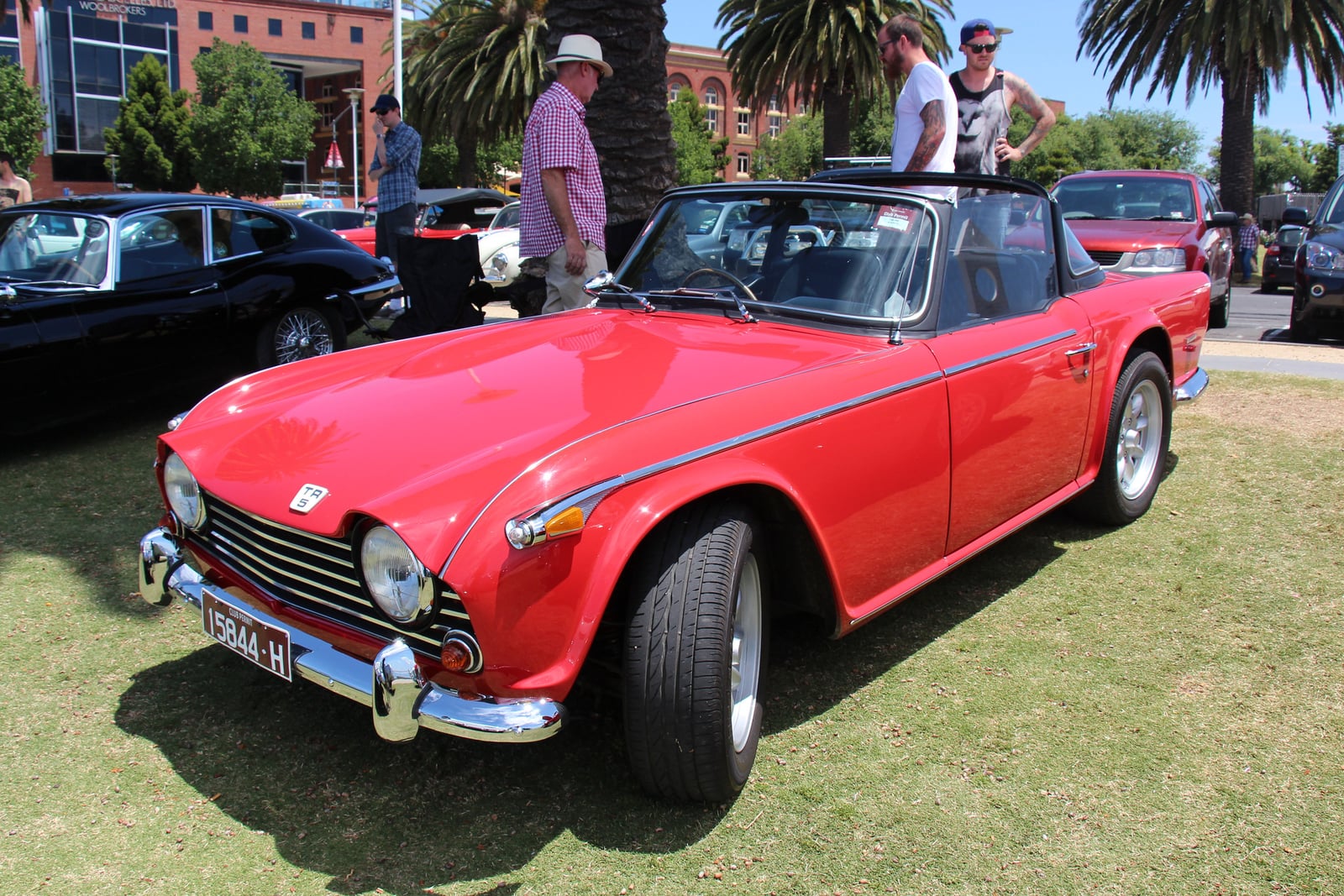
UK and European cars were the injected TR5 PI, with 150 bhp. American cars were a different animal: badged TR250, fitted with twin Zenith-Stromberg carburettors to meet US emissions rules, and making only around 104 bhp. The TR250 also wore the distinctive transverse “go-faster” stripes across the nose. Crucially, the numbers were lopsided: just 2,947 injected TR5s against 8,484 carburettor TR250s.
For a buyer the consequences are large. The TR5 PI is rare, powerful and the more valuable by a wide margin, while the TR250 is more common, softer and far more affordable. The badge on the tail, and the presence or absence of the injection system, tell you which you are looking at and roughly what it is worth.

What it is like to drive
The TR5 is a wolf in TR4 clothing. The straight-six is smooth and torquey, pulling hard from low revs, and on a properly sorted injection car the performance is still genuinely brisk today. It feels notably quicker and more grown-up than the four-cylinder cars, yet it keeps the compact size and the direct, mechanical feel of the side-screen TRs. With the independent rear suspension it rides and corners better than the early cars, and it makes a relaxed, fast long-distance roadster.
Buying guide: what to look for
The TR5 shares its structure with the TR4A, so the chassis is the first thing to inspect, particularly the rails towards the rear and the suspension and differential mounts, because a rotten chassis means a body-off rebuild. The usual body rot traps apply: sills, floors, lower wings and the boot area.
The defining mechanical issue is the Lucas fuel injection. It has a reputation for being temperamental, which is largely a question of correct set-up and a healthy metering unit and pump rather than a fundamental flaw; many cars now run uprated pumps. Because the TR5 is rare and valuable, provenance matters more than on any other TR: check the commission number, the documentation and that the car is a genuine injected TR5 rather than a converted TR250 or a rebodied four-cylinder car. Parts supply is excellent thanks to the shared TR6 mechanicals.
Why it is so collectable
The TR5’s value rests on three things: it is rare, with under 3,000 built; it is fast, as the first and arguably purest of the injected sixes; and it is significant, as the car that introduced the engine and running gear that would define the best-selling TR6. A good TR5 PI is now firmly into five-figure territory and the best cars beyond, making it one of the most valuable TRs. The TR250, by contrast, remains an affordable way into six-cylinder TR ownership for anyone less concerned about the injection system.
Owners’ clubs and parts
The TR Register and the TR Drivers’ Club both have strong followings for the six-cylinder cars and real depth of knowledge on the Lucas injection, which is exactly the expertise a TR5 owner wants. Mechanical parts supply is excellent because the engine and running gear are shared with the far more numerous TR6.
More photos
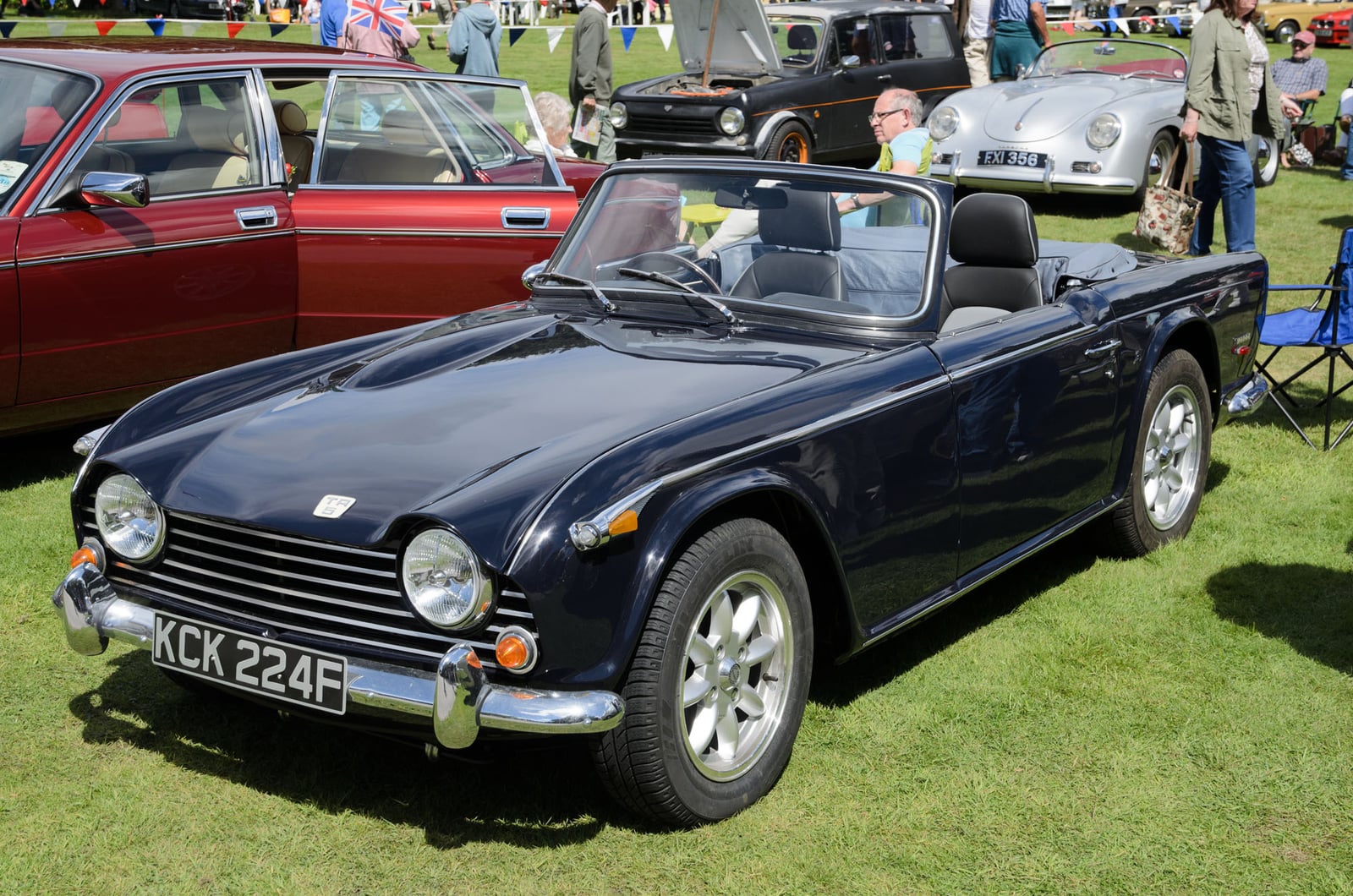
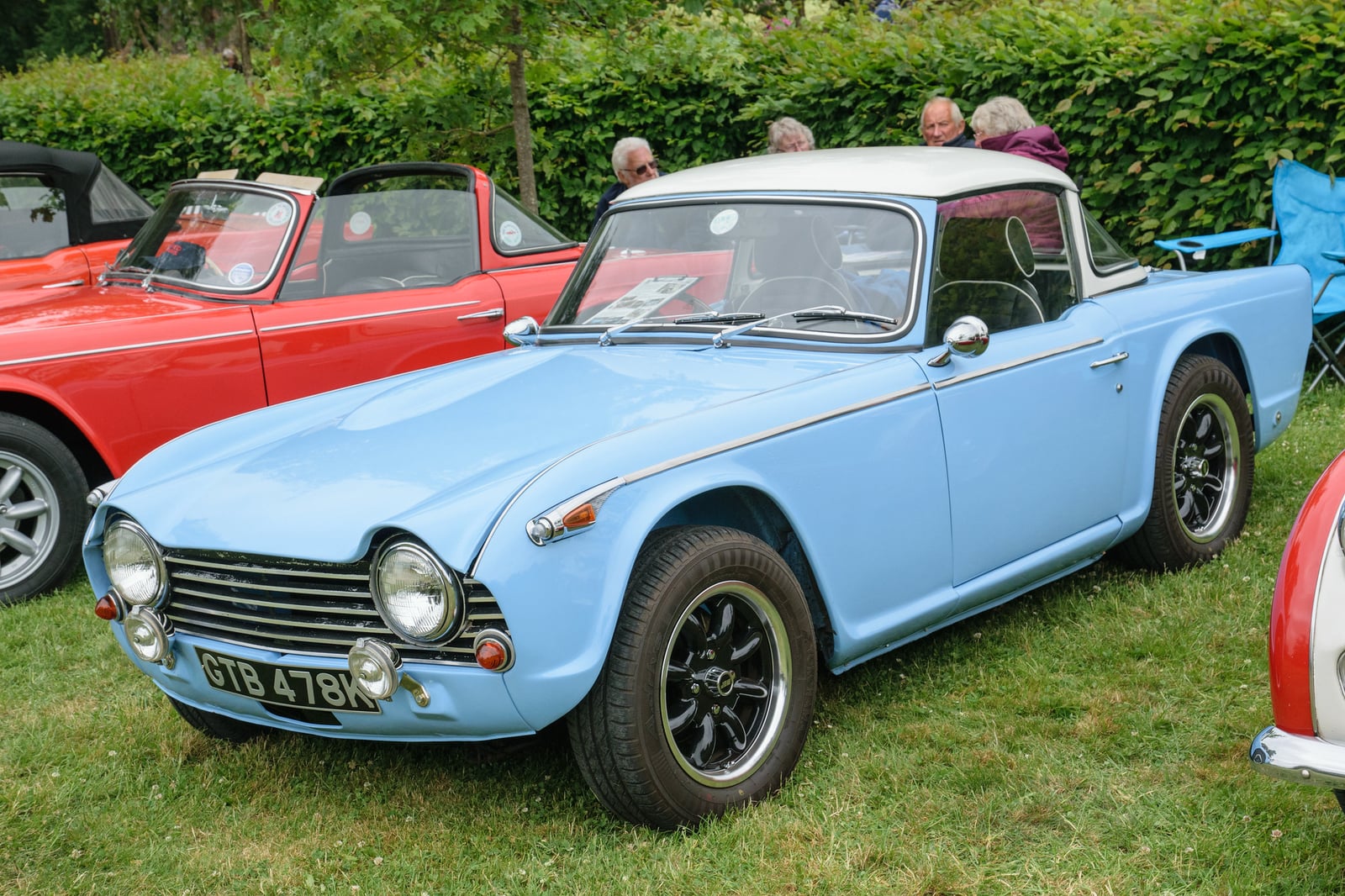
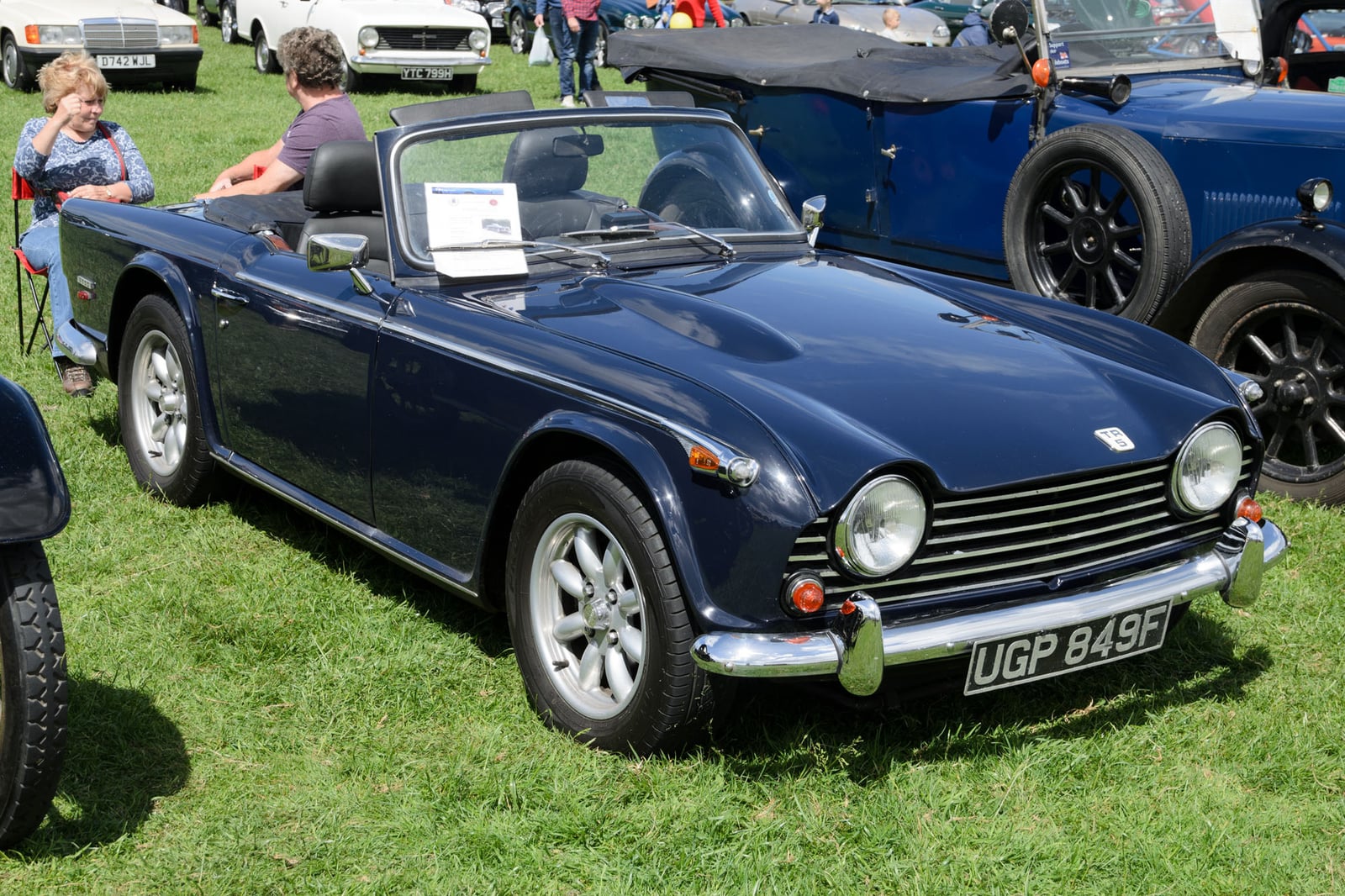
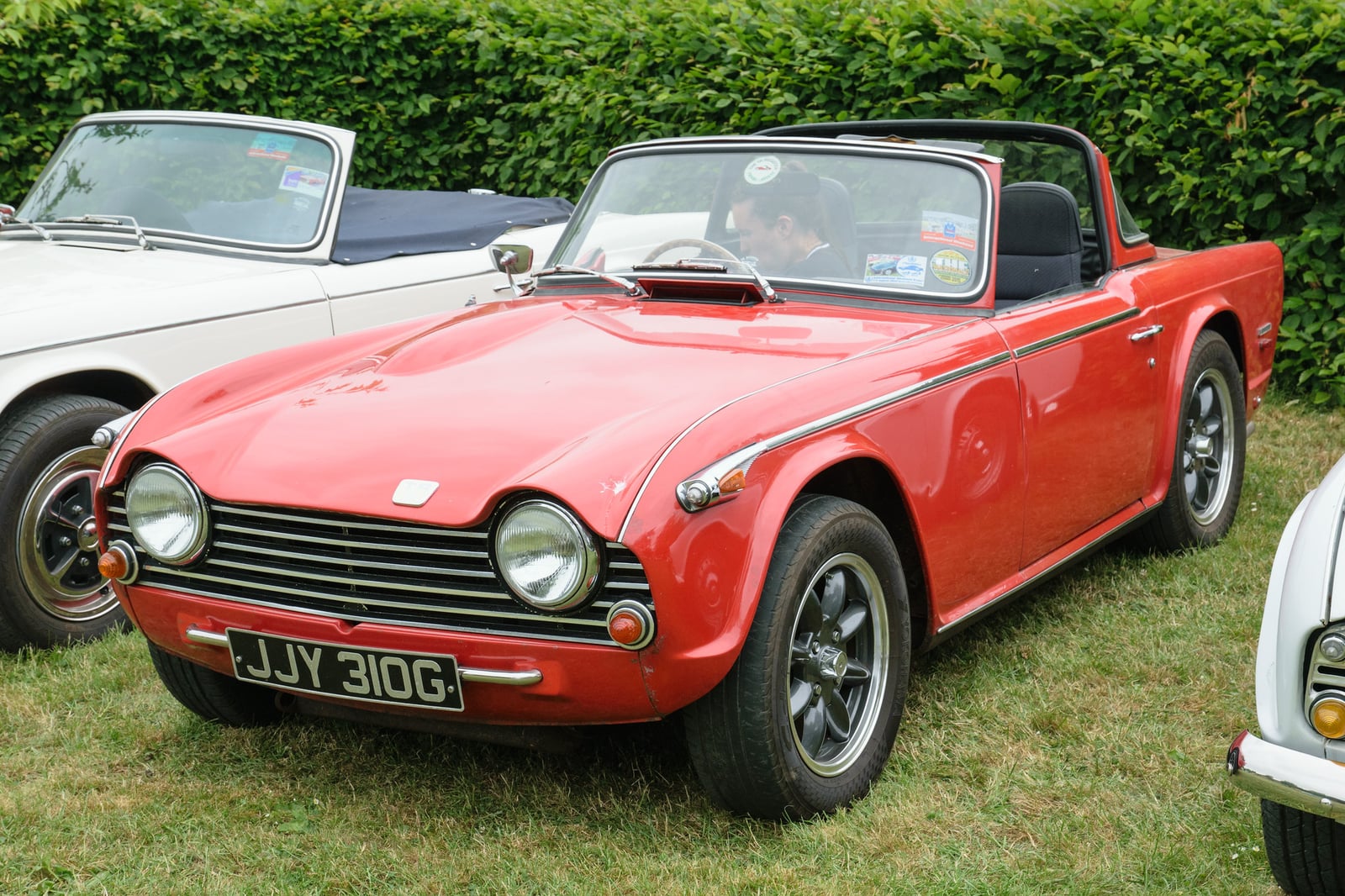
Key dates for the TR5
- 1967Launched to answer the four-cylinder TR4A's performance shortfall: a 2.5-litre straight-six with Lucas mechanical injection at 150 bhp, in the existing body.
- 1967The American market gets the TR250 instead, with twin carburettors and around 104 bhp, of which 8,484 are built.
- 1968Production ends at just 2,947 TR5 PIs, 1,161 of them to the UK, the rarest mainstream TR.
- 1968The TR6 inherits the engine and running gear and carries them to 1976.
Buying checklist: the TR5 in front of you
Provenance, which matters most here
- Check the commission number and the documentation
- Confirm it is a genuine injected TR5 rather than a converted TR250
- Rule out a rebodied four-cylinder car
- At these values a specialist or register check is cheap insurance
Chassis and body
- The rails towards the rear, and the suspension and differential mounts
- A rotten chassis means a body-off rebuild
- Sills, floors, lower wings and the boot area
- Structure is shared with the TR4A, so the same inspection applies
The injection
- The metering unit and pump are what determine whether the system behaves
- Many cars now run uprated pumps, which is a sensible modification rather than a black mark
- The reputation is largely a set-up question, not a fundamental flaw
- The TR Register and TR Drivers' Club hold the PI knowledge
What the TR5 sells for at auction
In 2025 the median TR5 sold for £21,460 across 19 sales, 12% down on 2024. In real terms, typical TR5 prices were down about 37% over the five years to 2025, once inflation is accounted for.
| Variant | Sold | Typical range | Median |
|---|---|---|---|
| TR250 | 77 | £18,925 - £29,592 | £23,298 |
| TR5 | 52 | £26,102 - £46,466 | £37,322 |
Show the year-by-year mediansHide the year-by-year medians
| Year | Sold | Median | In 2025 money |
|---|---|---|---|
| 2026 (so far) | 7 | £23,404 | |
| 2025 | 19 | £21,460 | £21,460 |
| 2024 | 23 | £24,318 | £25,251 |
| 2023 | 21 | £36,166 | £38,810 |
| 2022 | 15 | £27,819 | £31,859 |
| 2021 | 11 | £20,750 | £25,659 |
| 2020 | 6 | £26,820 | £33,986 |
| 2019 | 9 | £24,854 | £31,817 |
| 2018 | 4 | £25,254 | £32,878 |
| 2015 | 5 | £35,840 | £49,459 |
- £8,258TR250
- £28,500TR5
- £20,611TR250
- £23,404TR250
- £29,250TR250
Reasonable evidence. 129 recorded sales: enough for the range to mean something, though a few unusual cars can still move a single year's median. Based on 129 sold results from public classic car auctions (2009 to 10 August 2026). Sold prices, not asking prices, and not a valuation: condition, history and specification vary from car to car. Inflation-adjusted figures use the ONS CPIH index, in 2025 money.
Frequently asked questions
How many Triumph TR5s were made?
What is the difference between a TR5 and a TR250?
How much is a Triumph TR5 worth?
Is the Triumph TR5 just a TR4 with a six-cylinder engine?
What is the most expensive TR5 ever sold at auction?
How often does a TR5 come up for sale?
Related across themes
More from Triumph


Recently added

British car records: the smallest, the fastest, the dearest

Morgan 4/4: the longest-running car name in the world (1936–2018)

Selling a classic car privately: what the law asks of you, what it does not, and how not to get stung
