Triumph Renown: razor-edge grandeur on a Vanguard chassis (1949–1954)
The Triumph Renown dressed sturdy Vanguard mechanicals in coachbuilt razor-edge styling that looked like a Bentley at a fifth of the price. A guide to the razor-edge saloons, the 1800 that started it, the rare limousine, buying checks and values.
Built 1946–1954 20 recorded sales
At a glance
- Years
- 1946–1954
- Body styles
- Four-door saloon; long-wheelbase limousine
- Drivetrain
- Front engine, rear-wheel drive
- Engines
- 1776cc OHV four (1800); 2088cc Vanguard wet-liner four (Renown)
- Power
- Around 65-68 bhp
- Top speed
- Around 75 mph
- Trim levels
- 1800 Saloon; Renown; Renown Limousine (1951–52)
- Production
- About 4,000 (1800) + 9,301 Renowns, around 190 of them limousines
- Assembly
- Canley, Coventry (bodies by Mulliners, Birmingham)
- Designer
- Walter Belgrove (razor-edge styling)
- Values
- Usable from around £4,000; good cars £6,000-£10,000; limousines and the best beyond
- The look
- Razor-edge coachwork in the Bentley idiom, at a fifth of Bentley money
- The rarity
- Around 190 long-wheelbase limousines, the smallest-engined limousine of its day
The models
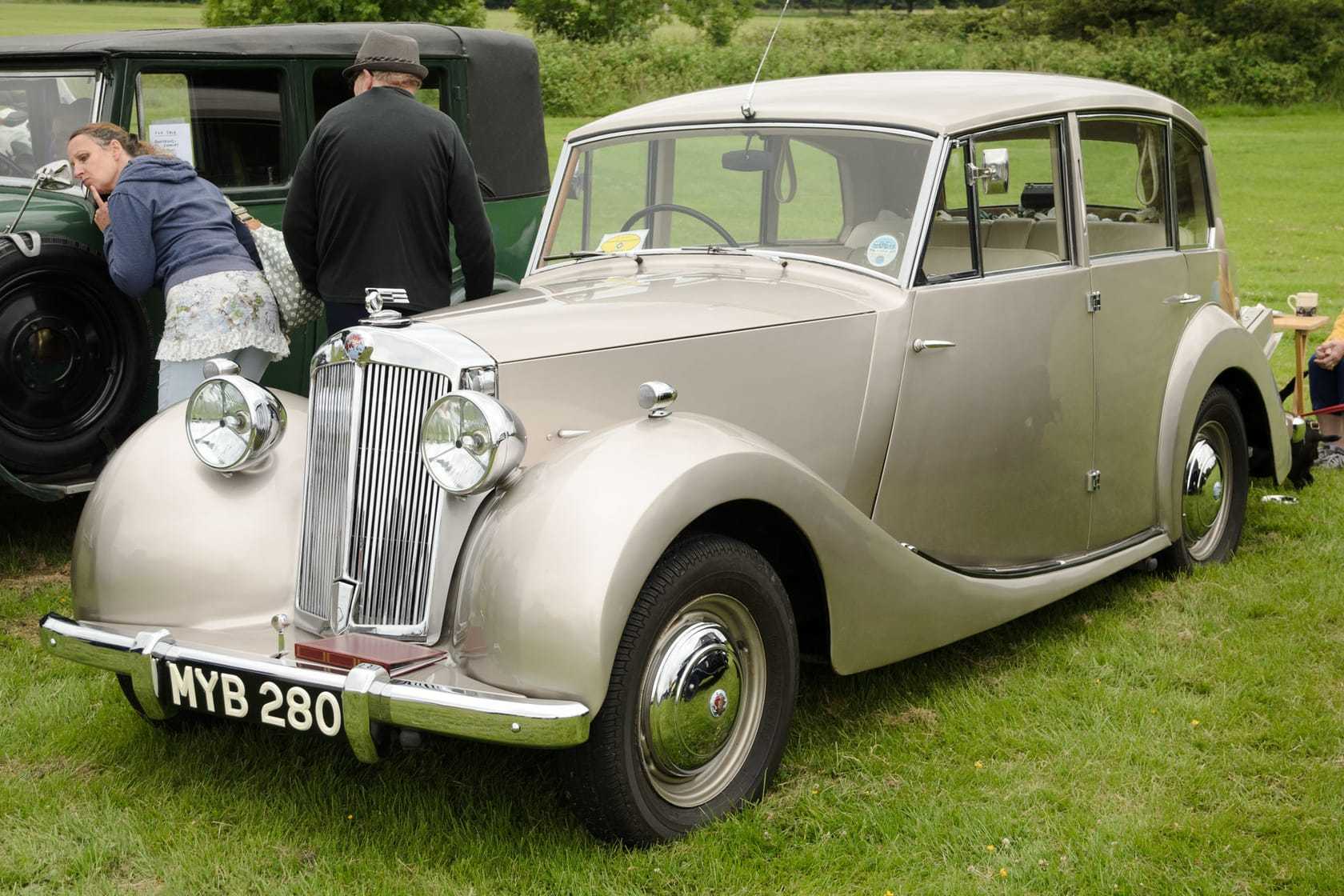
No British maker before or since ever offered more visual grandeur per pound than Triumph managed between 1946 and 1954. The razor-edge saloons, the 1800 and the Triumph Renown that it became, wore formal, knife-creased coachwork straight from the Bentley school over the rugged mechanicals of the Standard Vanguard, and sold dignity to doctors, mayors and bank managers at a fifth of what the look cost elsewhere. Today the Renown is one of the great undervalued British classics, coachbuilt presence at everyday money.
Selling dignity: the razor-edge idea
Sir John Black’s brief to stylist Walter Belgrove was audacious: make a Triumph look like a coachbuilt Bentley. Belgrove drew flat panels and razor-crease edges in the formal idiom of Hooper and H.J. Mulliner, Mulliners of Birmingham built the steel bodies over ash framing, and the 1946 Triumph 1800 Town and Country Saloon arrived looking like nothing else in austerity showrooms. The advertising said it plainly, all that is best in Britain, photographed outside Tudor houses, and the customers it sought, professional men trading up in appearance rather than price, understood immediately.

From 1800 to Renown
The 1800 Saloon carried the 1,776cc overhead-valve four also supplied to Jaguar, on a tubular chassis. In 1949 the car gained the Standard Vanguard drivetrain, the 2,088cc wet-liner four and three-speed column change, plus the Vanguard’s box-section chassis, and with them a new name: Renown. The TDA and TDB series refined the recipe, and from 1951 the TDC added three inches of wheelbase for rear-seat lordliness. Production ended in 1954 at about 9,300 Renowns plus 4,000 earlier 1800s, the last razor-edge saloons offered by any volume maker anywhere.

The limousine: civic dignity, two-litre bills
The family’s curiosity is the Renown Limousine of 1951: a glass division, occasional seats and formal trim on the long chassis, creating possibly the smallest-engined catalogued limousine of its era. Around 190 were built, and they found exactly the buyers Black imagined, town halls, funeral directors and hire fleets that wanted ceremonial presence without Daimler running costs. Survivors are the club’s treasures, and a limousine at a show still performs its original trick: passers-by assume it cost ten times what it did.

Club life: the Razoredge world
Renown ownership runs through its club, and few single-model organisations work harder: the Triumph Razoredge Owners Club tracks surviving cars by their TDB and TDC commission numbers, remanufactures otherwise extinct parts, and holds the pattern knowledge that razor-edge body repair demands, where a freehand curve ruins a panel that must carry a crease. The club’s registers also police the family’s history, matching cars to original registrations and separating the 1800s from the true Renowns. For a car this rare and this specialised, membership is less a social nicety than the practical difference between a supported classic and an orphan, and wise buyers join before they buy.

What a Renown is like to drive
The Renown goes about its business like the institutions it served: steadily, quietly, without complaint. The Vanguard four pulls its 65 bhp from low revs through the three-speed column change, cruising at 55-60 with dignity intact; the ride is soft, the steering stately and low-geared, and the brakes adequate with period anticipation. Later cars offered overdrive, worth seeking for modern roads, and the tall seating position gives a commanding view over the knife-edge wings that no modern car reproduces. The cabin is the reward, wood, leather and tall glass, a genuinely formal environment at a family-car scale. Nothing about it hurries, and hustling one would feel like running in a cathedral.

Buying a Triumph Renown today
Bodywork decides everything with a razor-edge car: steel over ash rots at the sills, wings, door bottoms and within the timber frame itself, and knife-crease panelwork punishes casual repair mercilessly, so the club’s knowledge of individual cars (tracked by commission number) is worth more than any advert’s photographs. Mechanically the Vanguard engine is tractor-tough with excellent parts supply through the Standard and tractor networks. Interior wood and correct trim are the expensive hunts. Limousines deserve their premium; honest saloons with sound timber are the sensible buy.

Values: coachwork for hatchback money
Twenty measured sales at a £5,200 median tell a story values have not yet caught up with: usable Renowns from £4,000, good cars £6,000 to £10,000, limousines and the finest beyond. For coachbuilt razor-edge styling, leather-and-walnut formality and a drivetrain shared with the world’s most rebuildable engines, that remains one of the quiet bargains among 1940s and early-fifties British saloons, and the smart money in the club world has noticed.

More photos


Renown: what changed and when
- 1946The Triumph 1800 Town and Country Saloon arrives, Walter Belgrove drawing flat panels and razor creases in the Hooper and Mulliner idiom, bodies built by Mulliners of Birmingham.
- 1949The Vanguard drivetrain and box-section chassis arrive, and with them the Renown name: a 2,088cc wet-liner four and a three-speed column change.
- 1951The TDC adds three inches of wheelbase for rear-seat lordliness; the Renown Limousine follows with a glass division and occasional seats.
- 1952Limousine production closes at around 190 cars, possibly the smallest-engined catalogued limousine of its era.
- 1954Production ends at about 9,300 Renowns plus 4,000 earlier 1800s, the last razor-edge saloons offered by any volume maker anywhere.
Renown: what to check before you buy
Bodywork, which decides everything
- Sills, wings and door bottoms, then the ash frame the steel sits on
- Knife-crease edges show casual repair from across a car park, so inspect the creases themselves
- The club knows individual cars by commission number, which is worth more than any advert's photographs
- Honest saloons with sound timber are the sensible buy; shine over rot is the trap
Mechanical
- The Vanguard four is tractor-tough and shares parts with the Standard and tractor worlds
- Overdrive on later cars is worth seeking out for modern roads
- The three-speed column change should be unhurried, not vague
- Brakes are adequate with period anticipation, so judge them by that standard
Identity and trim
- The club registers separate the 1,776cc 1800s from the true Vanguard-engined Renowns
- Interior wood and correct trim are the expensive hunts
- Limousines deserve their premium, and around 190 exist
- TDA, TDB and TDC differ; the TDC is the long-wheelbase car
What the Triumph Renown sells for at auction
| Variant | Sold | Typical range | Median |
|---|---|---|---|
| Renown | 15 | £4,382 - £8,270 | £5,656 |
| 1800 Saloon | 5 | £650 - £2,268 | £1,610 |
- £5,656Renown
- £6,200Renown
- £2,2681800 Saloon
- £2,850Renown
- £10,976Renown
Thin evidence. Only 20 recorded sales: read the figures as a sketch of the market, not a price. Based on 20 sold results from public classic car auctions (2006 to 10 August 2026). Sold prices, not asking prices, and not a valuation: condition, history and specification vary from car to car.
Frequently asked questions
What is razor-edge styling on the Triumph Renown?
What is the difference between the Triumph 1800 Saloon and the Renown?
Was there a Triumph Renown limousine?
How many Triumph Renowns are left?
How much is a Triumph Renown worth?
What is the most expensive Triumph Renown ever sold at auction?
How often does a Triumph Renown come up for sale?
Related across themes
More from Triumph

Triumph Mayflower: the watch-charm Rolls-Royce that dared to be different (1949–1953)

Triumph 2000 and 2500: the six-cylinder saloons that invented a class (1963–1977)

Triumph Spitfire: a real roadster on a shortened saloon chassis (1962–1980)

Triumph TR6: the last of the hairy-chested roadsters (1968–1976)
Recently added

British car records: the smallest, the fastest, the dearest

Morgan 4/4: the longest-running car name in the world (1936–2018)

Selling a classic car privately: what the law asks of you, what it does not, and how not to get stung
